Aare River
The Aare River serves as a vital natural feature in Switzerland, though its primary role in commerce and infrastructure is centered on energy production…
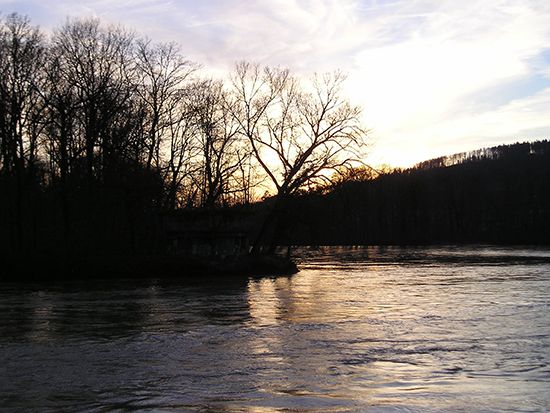
What role does the Aare River play in Swiss transportation and commerce?
The Aare River serves as a vital natural feature in Switzerland, though its primary role in commerce and infrastructure is centered on energy production rather than as a major artery for waterborne transportation.
The river is a significant site for hydroelectric power generation, with stations such as the Handegg I facility located along its course. Furthermore, the Aare flows through the canton of Aargau, a region that leverages its geography for diverse economic activities, including the manufacture of electrical products, chemicals, and machinery, as well as the operation of nuclear power stations. While the river itself is not described as a primary commercial shipping route, the surrounding Mittelland region—where the Aare flows—is the heart of Swiss industry, hosting extensive rail and highway networks that facilitate the nation’s commerce.123
How does the Aare River contribute to Switzerland’s hydroelectric power generation?
The Aare River is a critical resource for Switzerland’s hydroelectric power generation, particularly in the mountainous regions where it originates.
The river’s steep descent from the Bernese Alps provides the necessary elevation and water volume to support energy infrastructure. A notable example of this utilization is the Handegg I hydroelectric station, which is situated near the base of the Handegg Falls. By harnessing the kinetic energy of the river as it plunges through the landscape, these facilities contribute to the nation’s renewable energy supply.14
What is the source of the Aare River and where does it eventually flow into?
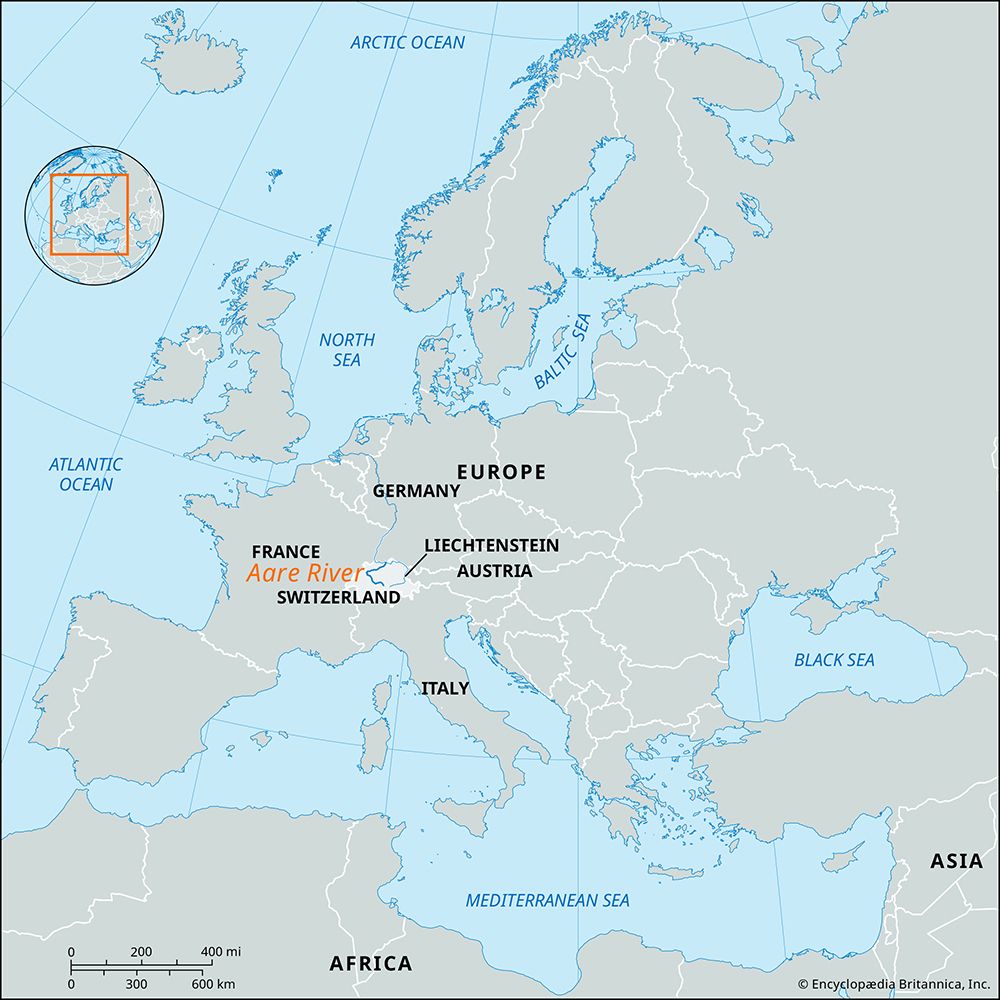
The Aare River originates in the Aare Glacier of the Bernese Alps in the canton of Bern, situated below the Finsteraarhorn and west of the Grimsel Pass.1
After traversing a winding course through the Swiss landscape—including passages through Lake Brienz, Lake Thun, and Lake Biel—the river continues its journey northeastward. It eventually flows into the Rhine River at Koblenz, Switzerland, after being joined by the Reuss and Limmat rivers below the town of Brugg.1
How has the Aare River influenced the development of settlements and culture in the region?
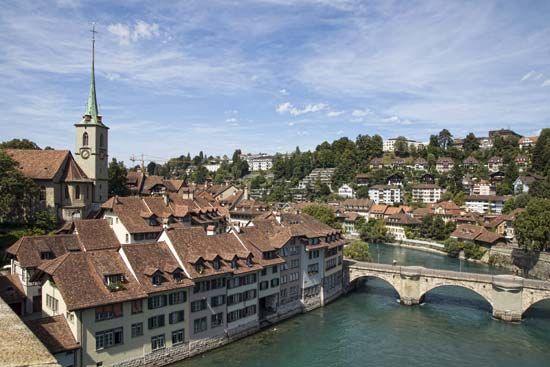
The Aare River has been a foundational element in the development of Swiss settlements and regional identity. Its course through the landscape has dictated the location of major urban centers, most notably the city of Bern, which was established within a deep, protective loop formed by the river’s path.13
The river’s influence extends across the Mittelland, the agricultural heartland of Switzerland, where it provides essential water for the fertile valleys that support the nation’s population and industry. The canton of Aargau, named directly for the Aare, highlights this connection; the region’s history is deeply tied to the river, from its medieval acquisition by the Swiss Confederation to its modern role as a hub for hydroelectric power and industrial manufacturing.267
Furthermore, the river’s scenic beauty and the surrounding Alpine landscape have fostered a culture centered on tourism, traditional crafts like wood carving, and regional agriculture, such as cheese making and viticulture. By shaping both the physical geography and the economic pathways of the region, the Aare remains central to the Swiss way of life.756
Sources
- Aare River — Encyclopædia Britannica
- Aargau — Encyclopædia Britannica
- Switzerland - Relief and drainage — Encyclopædia Britannica
- Handegg Falls — Encyclopædia Britannica
- Linth River — Encyclopædia Britannica
- Switzerland - Folk arts — Encyclopædia Britannica
- Aare — Merriam-Webster
- Bern — Encyclopædia Britannica
Published on · 2 min read