Achelous River
The Achelous River is primarily significant in Greek mythology rather than as a site of major historical battles. It is personified by the shape-shifting…
Are there any notable historical events or archaeological discoveries associated with the Achelous River?
The Achelous River is primarily significant in Greek mythology rather than as a site of major historical battles. It is personified by the shape-shifting river god Achelous, who was worshipped as the chief deity of fresh water.12
In mythological accounts, Achelous famously battled Heracles for the hand of Deianeira, a struggle frequently depicted in Greek pottery. Additionally, the river is associated with the Ekhinádhes, a group of small islands at its mouth that have been enveloped by the river’s silt.12
In modern times, the river has been the site of significant engineering projects, including the construction of two hydroelectric dams. The Kremasta Dam is notable for being the highest earth-fill dam in Europe. Please note that the Battle of Aegospotami, a decisive event in the Peloponnesian War, occurred in the Hellespont and is not associated with the Achelous River.23
How does the Achelous River compare to other major rivers in Greece in terms of size and importance?
The Achelous River stands as one of the longest rivers in Greece, spanning approximately 140 miles (220 km) from its source in the Pindus Mountains to the Ionian Sea.24
While the provided search results do not offer a direct comparative ranking against every other Greek river, the Achelous is distinguished by its significant role in both geography and infrastructure:
- Geographic Role: It serves as a natural boundary, historically dividing the regions of Aetolia and Acarnania.2
- Infrastructure: The river is vital for energy production, hosting two major hydroelectric dams. Notably, the Kremasta Dam is recognized as the highest earth-fill dam in Europe.2
- Cultural Significance: Beyond its physical size, the river holds immense cultural importance; its name is synonymous with the most familiar form of the Greek river god, reflecting its prominence in ancient cult and mythology.2
Where is the Achelous River located in Greece, and what are its major geographical features?
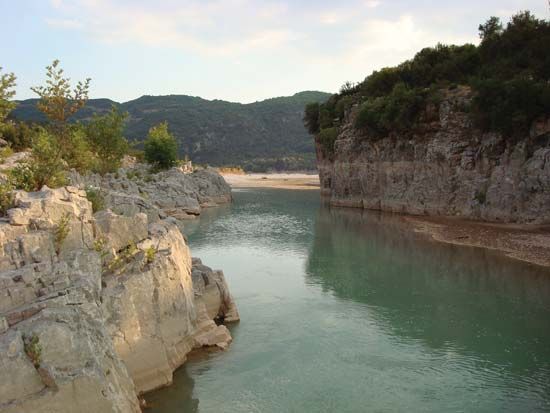
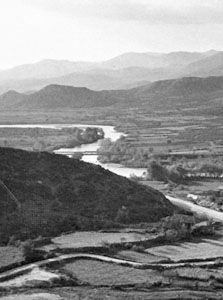
The Achelous River is located in western Greece, originating in the Pindus Mountains of central Epirus. It flows for approximately 140 miles (220 km) before emptying into the Ionian Sea.2
Key geographical features of the river include:
- Course and Terrain: The river travels primarily through deep gorges, serving as a natural boundary that separates the historical regions of Aetolia and Acarnania.25
- Hydroelectric Infrastructure: The river has been harnessed by two major dams located above Agrínion. One is at Kastraki, and the other, the Kremasta Dam, is the highest earth-fill dam in Europe, standing at 490 feet (150 meters).2
- River Mouth: At its terminus, the river is shallow (less than 2 feet deep) and has enveloped a group of small islands known as the Ekhinádhes through the accumulation of silt.2
What is the mythological significance of the Achelous River in Greek mythology?
In Greek mythology, the Achelous River is personified by the god Achelous, a shape-shifting deity who served as the chief of all fresh water. As the son of Oceanus and either Tethys or Gaea, he was believed to be the source from which all rivers, springs, and oceans originated.16
His mythological significance is highlighted by several key narratives:
- Battle with Heracles: Achelous famously competed against the hero Heracles for the hand of Deianeira. He was ultimately defeated by the hero, a struggle frequently depicted in Greek pottery.12
- Progenitor of the Sirens: He is credited in mythology as the father of the Sirens, whom he reportedly sired with one of the Muses.1
- Cult Status: Beyond specific myths, Achelous was widely worshipped as the most familiar form of the Greek river god, representing the vital importance of fresh water in the ancient world.16
Sources
- Achelous — Encyclopædia Britannica
- Achelous River — Encyclopædia Britannica
- Battle of Aegospotami — Encyclopædia Britannica
- Achelous — Merriam-Webster
- Acarnania — Encyclopædia Britannica
- Heracles — Encyclopædia Britannica
Published on · 3 min read