Al-Bāṭinah
Al-Bādinah is a narrow, densely populated coastal plain located in northeastern Oman. It stretches for approximately 150 miles (240 km) along the Gulf of…
Where exactly is Al-Bāṭinah located in Oman, and what are its geographical features?
Al-Bādinah is a narrow, densely populated coastal plain located in northeastern Oman. It stretches for approximately 150 miles (240 km) along the Gulf of Oman, extending from the border with the United Arab Emirates near Shināṣ southeast to Al-Sīb.1
The region’s geography is defined by several key features:
- Dimensions: The plain varies in width between 10 and 30 miles (15 and 45 km).1
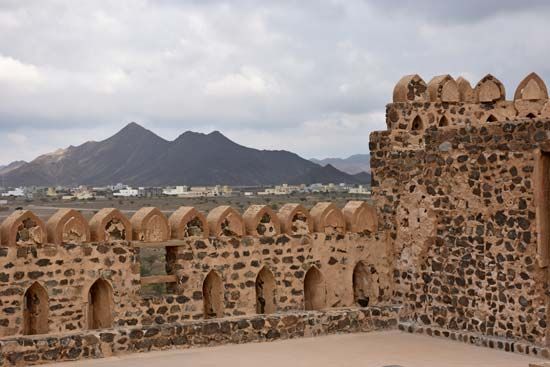
- Topography: It is bordered by the rugged Al-Ḥajar mountain chain to the southwest. Numerous wadis descend from these mountains, crossing the plain toward the coast.12
- Landscape: While the coastal strip is lush due to intensive irrigation from wells and underground channels, areas further inland are characterized by barren, pebbly terrain near the mountain foothills.1
- Agriculture: The region is known for its vast date palm plantations and irrigated gardens producing limes, papayas, mangoes, and vegetables.1
What traditional industries or crafts are unique to the Al-Bāṭinah region?
The provided search results do not identify any traditional industries or crafts that are unique specifically to the Al-Bāṭinah region. While Omani artisans are widely recognized for traditional crafts such as woodcarving, weaving, and the manufacture of silver and gold jewelry, daggers, and swords, these practices are described as national traditions rather than being exclusive to Al-Bāṭinah.4
Economically, the Al-Bāṭinah coast is a significant area for commercial fishing and agricultural development, supported by government-established research stations and model farms. However, the specific traditional crafts mentioned in the available literature are associated with the broader cultural heritage of Oman rather than being localized to this specific coastal plain.54
How has the coastal nature of Al-Bāṭinah influenced its historical and cultural development?
The coastal nature of Al-Bāṭinah has been the primary driver of its historical and cultural development, shaping it into one of Oman’s most densely populated and economically significant regions.13
Historical Significance and Trade Since ancient times, the region’s position along the Gulf of Oman facilitated extensive trade. The coast served as a gateway for exporting local goods, including dates, horses, dried limes, copper, and ambergris found along the shore. This strategic maritime access also made the region a target for various foreign powers, leading to periods of domination or conflict involving the Persians, the Carmathians, the Turks, and the Portuguese.1
Economic and Cultural Development
- Agriculture and Fishing: The coast supports a unique ribbon of oases, where intensive cultivation is made possible by wells and underground channels. This agricultural productivity, combined with the region’s vital commercial fishing industry, has historically sustained a large population.134
- Settlement Patterns: Because of these resources, Al-Bāṭinah has long been a hub for settlement, housing approximately one-fourth to one-third of Oman’s population. Its major towns, such as Ṣuḥār, developed as critical coastal ports.13
- Architecture: The coastal environment influenced traditional housing, which historically featured palm-frond huts, distinct from the mud-brick structures found in the interior regions.7
What is the climate like in Al-Bāṭinah, and how does it affect agriculture in the region?
The provided search results do not contain specific information regarding the climate of the Al-Bāṭinah region. Consequently, I cannot describe the climate or its direct impact on the area’s agriculture.
However, the region is known for its intensive cultivation, which is sustained by a ribbon of oases along the coast. This agricultural productivity is made possible by wells and underground channels that irrigate gardens producing dates, papayas, limes, mangoes, vegetables, and cereal grains.1
Sources
- Al-Bāṭinah — Encyclopædia Britannica
- Oman - Relief — Encyclopædia Britannica
- Oman - Settlement patterns — Encyclopædia Britannica
- Oman - Agriculture and fishing — Encyclopædia Britannica
- Oman - The arts — Encyclopædia Britannica
- Oman: Top Questions — Encyclopædia Britannica
- Oman - Housing — Encyclopædia Britannica
Published on · 3 min read