Arno River
The Arno River is the principal waterway of the Tuscany region in central Italy. It originates on the slopes of Monte Falterona in the Apennine Range and…
What is the geographical location and course of the Arno River in Italy?
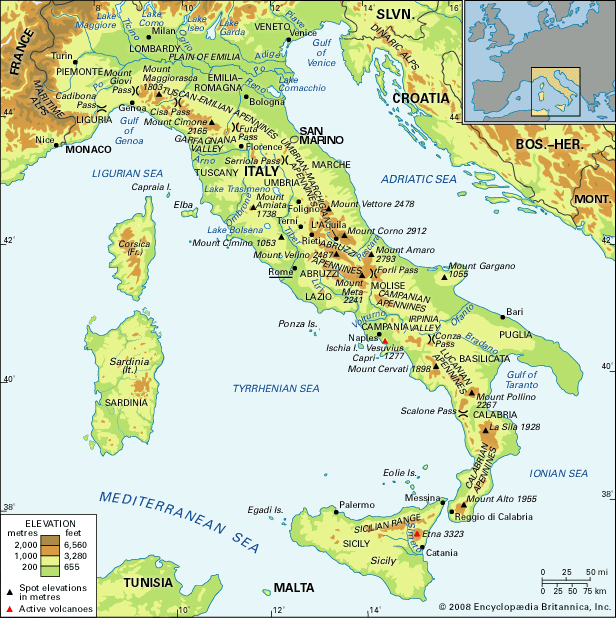
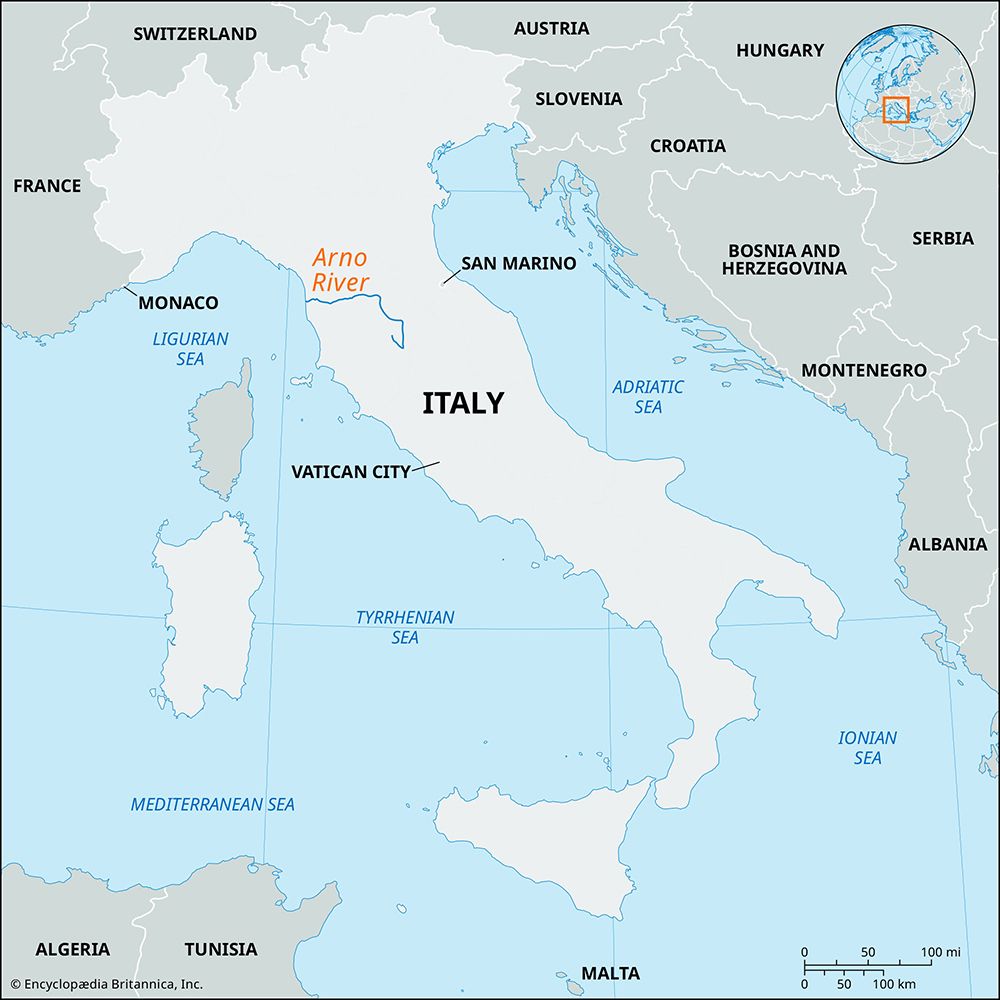
The Arno River is the principal waterway of the Tuscany region in central Italy. It originates on the slopes of Monte Falterona in the Apennine Range and flows for 150 miles (240 km) before emptying into the Ligurian Sea.1
The river’s course follows a distinct path:
- Upper Course: It flows south through the Casentino basin before turning west and north at Arezzo1.
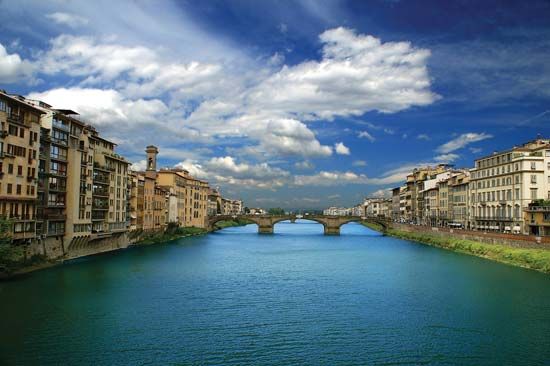
- Middle Course: Known as the Valdarno, this fertile valley passes through Florence, where the river historically served as a vital crossing point.12
- Lower Course: Below Florence, the river enters the Golfolina gorge and flows westward past Empoli and Pisa to the sea.1
The river’s landscape has been significantly modified by human intervention, including historical flood-control works and the reclamation of its ancient delta.1
What historical significance does the Arno River hold for the city of Florence?
The Arno River has been central to the development and survival of Florence throughout its history.
Strategic and Economic Importance
Florence was founded specifically to control the most practical north-south crossing of the Arno, linking the city to vital Apennine passes. Beyond its role as a transport hub, the river provided essential water for the city’s historic cloth industry, facilitating the washing, fulling, and dyeing of textiles.1
Architectural and Cultural Legacy
The river is home to the Ponte Vecchio, an engineering marvel of the Middle Ages completed in 1345. Its segmental arch design was innovative, allowing for better floodwater passage. During World War II, the bridge was famously the only one in Florence spared by retreating German forces.23
Environmental Challenges
Nature has often been an adversary; the river has caused devastating floods throughout history, most notably in 1966, which caused catastrophic damage to the city’s cultural treasures. These events have necessitated significant public works and flood-control efforts, some of which were historically designed by Leonardo da Vinci.34
How does the Arno River contribute to the agriculture of the Tuscan region?
The Arno River serves as a vital water source for the Tuscany region, which is recognized as one of Italy’s most prosperous agricultural areas. The river’s middle course, known as the Valdarno, provides a fertile valley that supports the region’s diverse agricultural output, including cereals like wheat, olives, and grapes for wine production.16
While the river is essential for irrigation, the landscape has been significantly modified by human intervention to manage its flow and support land use. This includes historical flood-control works and the reclamation of the river’s ancient delta near the Ligurian Sea. Despite its importance, the river also poses risks to the agricultural sector; for instance, the severe storms and floods of 1966 caused significant damage to agricultural lands across the region.16
Are there any notable bridges crossing the Arno River, and what is their historical importance?
The Arno River in Florence is spanned by several bridges of significant historical and engineering importance:
- Ponte Vecchio: Completed in 1345 by Taddeo Gaddi, this is the oldest segmental arch bridge in the West. Its design was a major engineering achievement of the Middle Ages, as the segmental arches required fewer piers, allowing for better navigation and floodwater passage. It is famously known for being the only bridge in Florence spared from destruction by the retreating German army during World War II. The bridge also features a unique two-story gallery structure that once connected various palaces and provided space for shops.47
- Santa Trinita Bridge: Designed by Bartolommeo Ammannati and completed in 1569, this bridge was celebrated for its elegant elliptical arches. It served as a vital transport link until it was destroyed during World War II, though it was later rebuilt using many of the original materials recovered from the riverbed.3
Sources
- Arno River — Encyclopædia Britannica
- Florence - City site — Encyclopædia Britannica
- Florence - Evolution of the modern city — Encyclopædia Britannica
- Ponte Vecchio — Encyclopædia Britannica
- Arno — Merriam-Webster
- Tuscany — Encyclopædia Britannica
- bridge - Stone arch bridges — Encyclopædia Britannica
Published on · 3 min read