Calico Cat
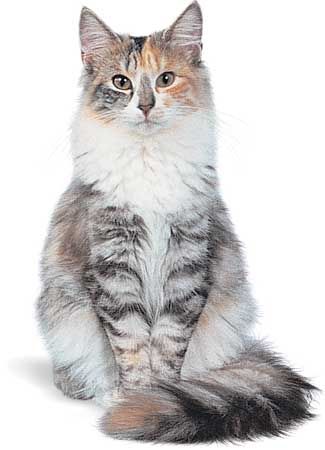
A calico cat is a domestic cat characterized by a distinctive coat pattern of white, black, and orange patches. In North America, this pattern is also…
What is calico cat?
A calico cat is a domestic cat characterized by a distinctive coat pattern of white, black, and orange patches. In North America, this pattern is also referred to as tortoiseshell-and-white.12
The unique coloration is primarily a result of genetics. The genes responsible for the black and orange fur colors are located on the X chromosome. Because female cats possess two X chromosomes, they can inherit both color-coding genes, leading to the calico pattern. The white patches are produced by a separate, non-sex-linked gene.1
Male cats typically carry only one X chromosome and therefore cannot express both black and orange colors simultaneously. While rare, male calico cats can occur if they possess an extra X chromosome (XXY), though such individuals are usually sterile due to this chromosomal anomaly.1
How does the X chromosome influence cat coat colors?
The X chromosome plays a fundamental role in determining coat color in cats because the genes responsible for orange and black fur are located on this sex chromosome.314
Genetic Influence on Coat Color
- Female Cats: Possessing two X chromosomes, females can inherit different color-coding genes from each parent. If a female inherits an orange gene on one X chromosome and a black gene on the other, she will express both colors, resulting in a calico or tortoiseshell pattern.314
- Male Cats: Typically having only one X chromosome paired with a Y chromosome, males can only express either orange or black, but not both simultaneously.314
- White Patches: The white areas seen in calico cats are produced by a separate white spotting factor gene, which is not located on the sex chromosomes.15
Male cats can only exhibit the calico or tortoiseshell pattern in rare instances of a chromosomal anomaly (XXY), which usually renders them sterile.14
What is the difference between a calico and a tortoiseshell cat?
The primary difference between a calico cat and a tortoiseshell cat lies in the presence of white fur. While both patterns result from the expression of orange and black genes located on the X chromosome, they are distinguished by the white spotting factor gene.2536
- Calico: These cats are characterized by a predominantly white coat featuring distinct patches of orange and black. In North America, this specific tricolor pattern is sometimes referred to as “tortoiseshell-and-white.”25
- Tortoiseshell: These cats typically display a mottled or “brindled” coat of orange and black (or cream and gray) without significant white patches, though some may have a small amount of white, such as a blaze on the face.46
Because the orange and black genes are sex-linked, both patterns are almost exclusively found in female cats, who possess two X chromosomes and can therefore carry both color genes simultaneously. Male cats with these patterns are extremely rare and typically possess a chromosomal anomaly (XXY), which usually renders them sterile.236
Why are male calico cats typically sterile?
Male calico cats are typically sterile because of a chromosomal anomaly known as Klinefelter syndrome, where the cat possesses an extra X chromosome, resulting in an XXY constitution.1
In typical feline genetics, males carry one X and one Y chromosome, while females carry two X chromosomes. Because the genes for orange and black fur are located on the X chromosome, a cat must possess two X chromosomes to express both colors simultaneously, which is why calico patterns are almost exclusively found in females.17
When a male cat exhibits the calico pattern, it is because he has inherited an extra X chromosome (XXY). This abnormal sex chromosome constitution disrupts normal reproductive development; specifically, individuals with an XXY configuration typically have small testes and are unable to produce spermatozoa, rendering them sterile.13
Sources
- Why are most calico cats female? — Encyclopædia Britannica
- calico cat — Encyclopædia Britannica
- Why are orange cats more likely to be male? — Encyclopædia Britannica
- cat - Tortoiseshell cats — Encyclopædia Britannica
- cat - Colors and patterns — Encyclopædia Britannica
- tortoiseshell cat — Merriam-Webster
- cat - Sexual behavior — Encyclopædia Britannica
- Sex - Abnormal chromosome effects — Encyclopædia Britannica
Published on · 3 min read