Demographics
The demographic transition is a historical generalization describing the shift from high birth and death rates to low birth and death rates as a society…
What is the concept of a demographic transition, and how does it relate to a country’s development?
The demographic transition is a historical generalization describing the shift from high birth and death rates to low birth and death rates as a society undergoes industrialization and economic development.12
Stages of Transition
- Stage 1: Characterized by high birth and death rates, resulting in a stable, small population.13
- Stage 2: Improvements in public health, medical knowledge, and food supply drastically reduce death rates, while birth rates remain high, causing rapid population growth.13
- Stage 3: As societies become more urbanized and industrialized, birth rates decline due to socioeconomic changes—such as increased education and the reduced economic value of children—eventually leading to a stable population plateau.132
Relation to Development
This transition is closely linked to a country’s development. In industrialized nations, development fostered social changes that voluntarily lowered fertility. Conversely, many developing countries experienced rapid post-WWII population growth because mortality fell quickly due to imported medical technology, while fertility remained high due to persistent social and economic structures. Slowing this growth is often considered vital for economic development, as it allows resources to be redirected toward increasing per capita income and savings.145
What are demographics, and why are they important in studying populations?
Demographics refer to the specific characteristics of a large population at a given time, such as age, race, gender, income, and education level. The statistical study of these populations, including their size, density, and vital statistics (such as births, marriages, and deaths), is known as demography.67
Why Demographics Are Important
Demographic analysis is essential because population trends influence nearly every aspect of human society, including economic prosperity, health, education, and family structure. By understanding who a population is and what it needs, government agencies, policymakers, and businesses can make informed decisions.89
Key reasons for studying populations include:
- Resource Planning: Governments use census data to allocate resources and plan for future needs.97
- Economic Insight: Demography examines the interplay between population growth and economic development, helping to track labour force statistics.7
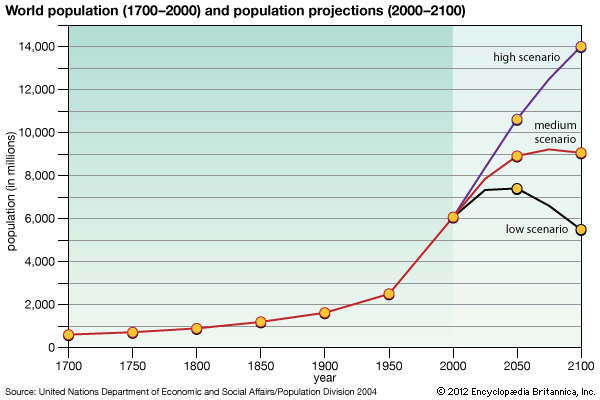
- Future Projections: Through population projections, experts can model potential future scenarios based on assumptions about fertility, mortality, and migration.10
How do birth rates, death rates, and migration patterns affect a country’s demographics?
Birth rates, death rates, and migration patterns are the fundamental drivers of demographic change. Together, they determine both the total size of a population and its internal composition, including age, sex, and ethnic distribution.11
The Components of Population Change
For any given region, the population at the end of a specific interval is calculated by taking the starting population, adding the number of births, subtracting the number of deaths, adding the number of in-migrants, and subtracting the number of out-migrants.11
- Births and Deaths: These vital rates define the “natural increase” or decrease of a population. High fertility rates typically result in a younger population with a larger proportion of children, while low fertility rates—often coupled with increased life expectancy—lead to population aging, where the proportion of older individuals rises.121314
- Migration: Unlike births and deaths, which are biological events, migration is a geographic movement. It can significantly alter a population’s structure, particularly when it involves young adults. In-migration often swells the working-age and child populations in a receiving area, while out-migration can leave the originating area with a higher proportion of elderly residents.1114
These factors do not act in isolation; they interact to shape the socioeconomic landscape of a country, influencing labor markets, resource demands, and the overall trajectory of economic development.121315
How do demographics influence marketing strategies and consumer behavior?
Demographics are essential tools for corporations and advertisers to understand their target audience, allowing them to identify who the public is and what they need or want. By analyzing specific characteristics—such as age, location, or preferences—marketers can tailor their messaging to appeal to particular groups, such as the “18-to-24-year-old demographic”.6
Strategic Marketing and Consumer Behavior
Beyond broad demographic segments, modern marketing has evolved toward serving “segments of one.” Through database marketing, companies retain individual customer characteristics and purchase histories in their information systems. This allows businesses to:17
- Customize Offerings: Large retailers and catalog houses use comprehensive data to adapt their products and services to individual needs.17
- Personalize Communication: Companies can refine their communication strategies to better resonate with specific customers, a practice common among large industrial firms that design unique solutions for major clients like United Airlines, Inc. or American Airlines, Inc..17
By leveraging both broad demographic trends and granular individual data, businesses can create more effective strategies that align with consumer behavior.
Sources
- modernization - Population change — Encyclopædia Britannica
- population pyramid — Encyclopædia Britannica
- population - Theory of the demographic transition — Encyclopædia Britannica
- economic development - Population growth — Encyclopædia Britannica
- population - The developing countries since 1950 — Encyclopædia Britannica
- Did you know? — Merriam-Webster
- Demographics — Encyclopædia Britannica
- demography — Encyclopædia Britannica
- population - Population projections — Encyclopædia Britannica
- population — Encyclopædia Britannica
- population - The basic components of population change — Encyclopædia Britannica
- Are Declining Birth Rates a Problem? — Encyclopædia Britannica
- vital rates — Encyclopædia Britannica
- India - Demographic trends — Encyclopædia Britannica
- How Do You Balance a Chemical Equation? — Encyclopædia Britannica
- age distribution — Encyclopædia Britannica
- marketing - Marketing to individuals — Encyclopædia Britannica
Published on · 4 min read