Doberman Pinscher
Breed standards for the Doberman Pinscher are established by national kennel clubs, which serve as the official registries for purebred dogs in their…
What organizations are responsible for setting breed standards for Doberman Pinschers?
Breed standards for the Doberman Pinscher are established by national kennel clubs, which serve as the official registries for purebred dogs in their respective countries. In the United States, the American Kennel Club (AKC) is responsible for maintaining the breed standard, which serves as the blueprint for evaluating the physical and behavioral characteristics of the dog. Similarly, in other regions, organizations such as the Kennel Club of England and other national kennel councils maintain their own standards for the breeds they recognize.123
These standards are developed by breed fanciers and associations to define the ideal qualities of the Doberman Pinscher, ensuring the breed’s characteristics are perpetuated consistently. While the AKC and other national registries track lineage and set these standards, they also provide the rules and regulations for conformation shows where dogs are evaluated against these established criteria.13
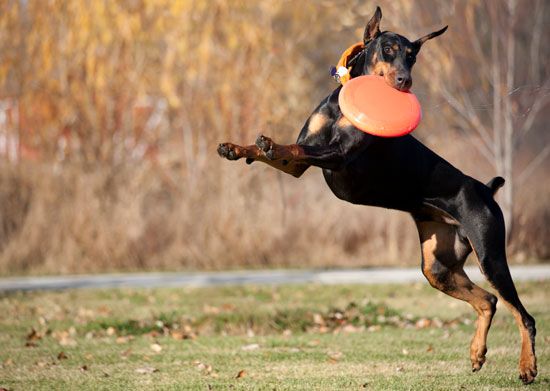
What is the average lifespan of a Doberman Pinscher?
The average lifespan of a Doberman Pinscher is 10–12 years.1
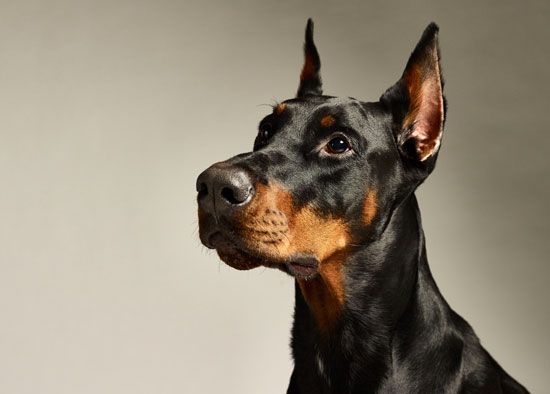
Are there different varieties or colors of Doberman Pinschers?
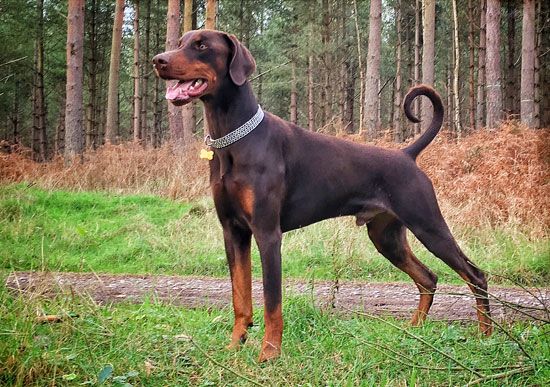
Doberman Pinschers are recognized for their sleek, short, and smooth coats, which come in four primary colors: black, blue, fawn, or red. Regardless of the base coat color, the breed is characterized by distinct rust-colored markings located on the head, throat, chest, base of the tail, and feet.1
It is a common misconception that there are different “varieties” of Dobermans beyond these recognized colorations. While the Miniature Pinscher is often mistaken for a smaller version of the Doberman, it is a distinct breed of toy dog with a different genetic history, likely resulting from the crossbreeding of German Pinschers, Dachshunds, and Italian Greyhounds.1
How does the Doberman Pinscher compare to other guard dog breeds?
The Doberman Pinscher is widely recognized as one of the most effective working dogs for guarding, military, and police applications. When compared to other prominent guard breeds, the Doberman is distinguished by its unique combination of sleek, muscular agility and high intelligence.156
Comparison with Other Guard Breeds
While many guard dogs share traits like strength, alertness, and loyalty, they often differ in their physical build and primary historical purpose:
- Physicality: Unlike the massive, heavy-boned Mastiff or Bullmastiff, which rely on sheer size and power, the Doberman is a medium-to-large breed with a sleek, athletic frame that allows for greater speed and maneuverability.16
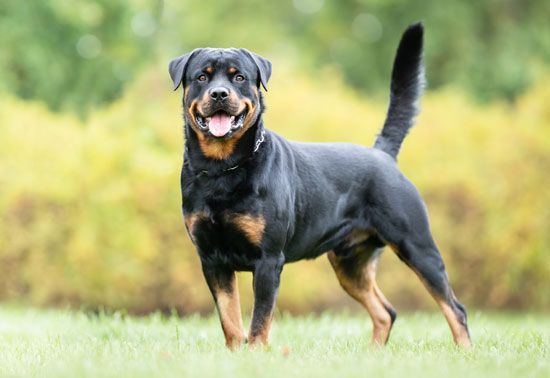
- Temperament: The Doberman is noted for being a “gifted student” capable of learning complex tasks, making it highly versatile for police and military work. While breeds like the Rottweiler are also powerful guard and police dogs, the Doberman is often characterized by a quiet, alert nature that sounds an alarm only when necessary.16
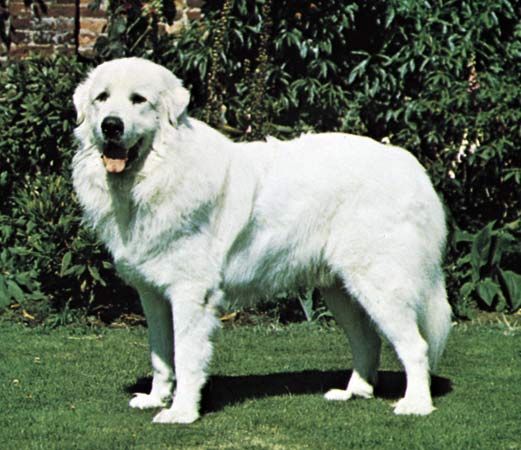
- Specialization: Some breeds, such as the Great Pyrenees, are specifically bred for guarding livestock, whereas the Doberman was developed primarily for personal protection and guarding property.65
Sources
- Doberman Pinscher — Encyclopædia Britannica
- American Kennel Club — Encyclopædia Britannica
- dog - Breed standards — Encyclopædia Britannica
- dog - The breeds — Encyclopædia Britannica
- dog - Working dogs — Encyclopædia Britannica
- working dog — Encyclopædia Britannica
Published on · 2 min read