Shetland Sheepdog
The Shetland Sheepdog, often called a "Sheltie," is a small herding breed developed in Scotland’s Shetland Islands to manage livestock. While they are…
What is a Shetland Sheepdog?
The Shetland Sheepdog, often called a “Sheltie,” is a small herding breed developed in Scotland’s Shetland Islands to manage livestock. While they are sometimes referred to as “Miniature Collies,” this is inaccurate; they descend from several breeds and differ from the Collie in head shape, temperament, and coat characteristics.1
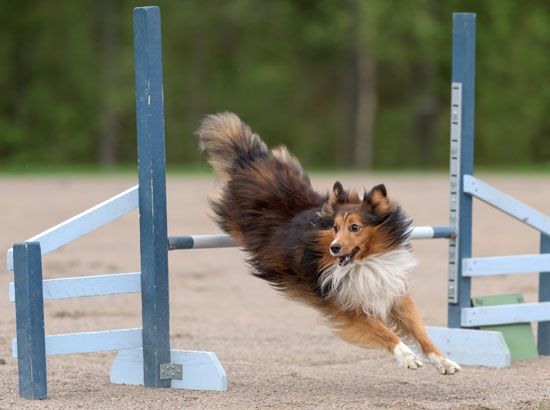
These dogs were intentionally bred to be small to survive the islands’ harsh, resource-scarce environment. Today, they are known for being intelligent, agile, and affectionate, though they can be cautious around strangers and sensitive to stress. Their dense, long-haired coats require regular grooming, particularly during heavy shedding periods. Because they are high-energy and biddable, they excel in dog sports like agility and obedience.1
Where did the Shetland Sheepdog come from?
The Shetland Sheepdog, or “Sheltie,” originated in the 1800s in Scotland’s Shetland Islands, the northernmost point of the United Kingdom.2
It is a common misconception to label them as “Miniature Collies.” While they share a resemblance to the Collie, they are a distinct breed with a diverse genetic history. The breed was intentionally developed to be small to survive the islands’ harsh, cold, and rocky environment, where sparse vegetation made food scarce. By breeding larger herding dogs down to a smaller size, the resulting animals required less sustenance.2
Early specimens, which stood only 8–10 inches tall, were known as “Toonie dogs,” a Shetland dialect term for farm dogs. These dogs were specifically tasked with controlling the islands’ small sheep, poultry, and ponies.2
What does a Shetland Sheepdog look like?
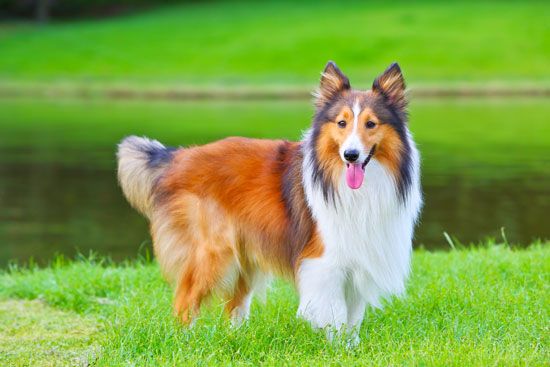
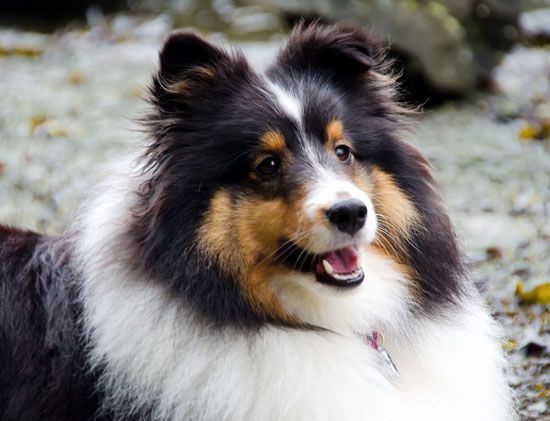
The Shetland Sheepdog, or “Sheltie,” is a small, sturdy, and agile herding dog that stands 13–16 inches (33–41 cm) tall and weighs between 15–25 pounds (7–11 kg). While they are often compared to the Collie, they are a distinct breed with a shorter head and a blunter muzzle.2
Key physical characteristics include:
- Coat: They possess a long, straight outer coat and a very dense undercoat. The coat comes in several colors, including sable (brownish gold to mahogany), black, or blue merle (blue-gray with black mottling), frequently featuring bi- or tri-color markings of tan and white.2
- Ears: Their ears are typically trained to stand with the tips folded forward.2
- Build: They are compact and athletic, reflecting their history as working farm dogs in the rugged Shetland Islands.2
Because of their dense double coat, they require regular grooming to prevent matting, especially during their twice-yearly shedding periods.2
What kind of personality do Shetland Sheepdogs have?
Shetland Sheepdogs are known for being sturdy, agile, intelligent, and alert animals with an affectionate nature. As a highly biddable breed, they are eager to please, smart, and active, which makes them relatively easy to train and excellent competitors in dog sports such as agility and obedience.1
Their personality traits include:
- Family-Oriented: They are amiable dogs that generally get along well with people of all ages and other pets.1
- Sensitive: Shelties are a sensitive breed that responds best to gentle handling. They can be timid around strangers and are often sensitive to loud noises or stress.1
- High-Energy: They require daily exercise and mental stimulation. Without sufficient activity, they may become bored, leading to destructive chewing or excessive barking.1
- Vocal: The breed is naturally vocal and possesses a piercing bark, which makes them effective watchdogs.1
- Attachment: They are prone to separation anxiety and should not be left alone for extended periods.1
Sources
- Shetland Sheepdog — Encyclopædia Britannica
- Shetland sheepdog — Merriam-Webster
- sheepdog — Encyclopædia Britannica
Published on · 3 min read