Greenpeace
Greenpeace is primarily defined by its use of direct, nonviolent confrontation to challenge polluting corporations and governmental authorities, rather than…
How does Greenpeace collaborate with other environmental organizations and governments?
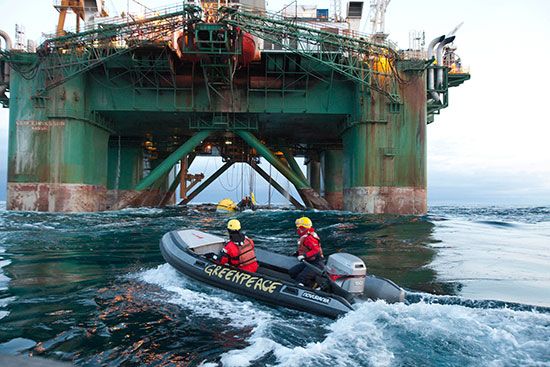
Greenpeace is primarily defined by its use of direct, nonviolent confrontation to challenge polluting corporations and governmental authorities, rather than through traditional collaborative partnerships.1
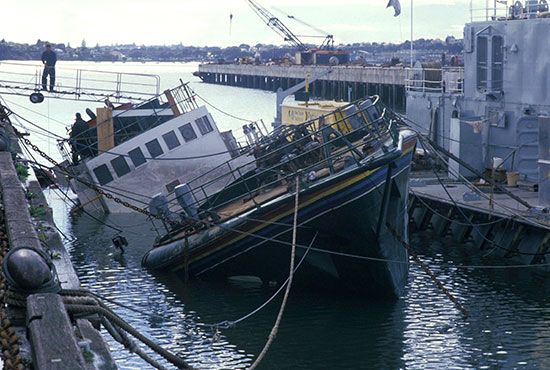
The organization’s strategy focuses on mobilizing public opinion and exerting pressure on decision-makers to prevent environmental abuses. While Greenpeace does not typically engage in formal collaborative alliances with governments, it actively seeks favorable rulings from national and international regulatory bodies to enforce environmental protections. Its history includes high-profile confrontations, such as protesting nuclear testing and industrial waste disposal, which have occasionally led to significant international tensions and legal challenges.1
Because the organization prioritizes independent, direct action to hold institutions accountable, it maintains a distinct stance that often places it in opposition to, rather than in partnership with, the entities it targets.1
What are some criticisms of Greenpeace’s tactics and how does the organization respond to them?
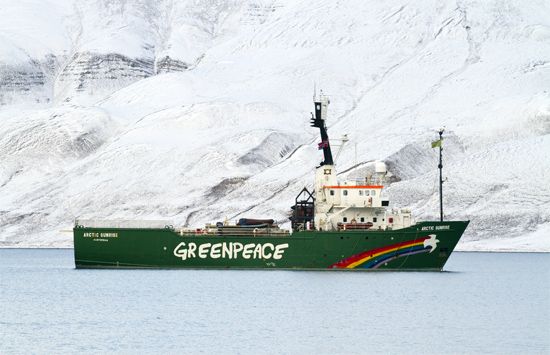
Greenpeace has faced significant criticism regarding its methods, particularly concerning the legal and financial consequences of its activism. Critics, such as the energy company Energy Transfer Partners, have alleged that the organization’s tactics go beyond peaceful protest by encouraging criminal behavior and conducting calculated misinformation campaigns that damage reputations and delay infrastructure projects.1
In response to these accusations, Greenpeace maintains that its actions are strictly nonviolent and that it is being unfairly targeted for exercising its fundamental right to free speech. Regarding the 2025 civil suit in which it was found liable for damages, the organization has argued that it does not advocate for violence and that the legal penalties threaten the existence of its American affiliate. Greenpeace continues to frame its “direct, nonviolent actions”—such as obstructing industrial activities—as necessary tools to mobilize public opinion and hold powerful entities accountable for environmental abuses.1
How has Greenpeace’s approach to activism evolved over the years, and what challenges does it face today?
Since its founding in 1971, Greenpeace has evolved from a loose-knit group focused on specific anti-nuclear and wildlife protection campaigns into a major international organization with a global presence. While its core identity remains rooted in “direct, nonviolent actions”—such as obstructing industrial pipes or intervening in whaling operations—the organization has increasingly complemented these tactics by engaging with national and international regulatory bodies to influence policy and environmental standards.1
Today, Greenpeace faces significant modern challenges, particularly regarding the legal and financial risks associated with its activism. A major turning point occurred in March 2025, when the organization was found liable for over $660 million in damages in a civil suit brought by Energy Transfer Partners. The company alleged that Greenpeace’s campaigns against the Dakota Access Pipeline involved defamation and the encouragement of criminal behavior. Greenpeace contends that it is being unfairly targeted for exercising its right to free speech and warns that such legal penalties threaten the viability of its American affiliate, Greenpeace USA.1
How and when was Greenpeace founded, and what inspired its creation?
Greenpeace was founded in 1971 in British Columbia, Canada. The organization was created by a group of ecologically minded individuals specifically to oppose United States nuclear testing at Amchitka Island in Alaska.1
Following its inception, the organization expanded its mission to address a broader range of environmental concerns, including the protection of endangered species such as whales and seals, the cessation of toxic chemical and radioactive waste dumping at sea, and the global end of nuclear-weapons testing. Greenpeace became known for its “direct, nonviolent actions,” such as using small craft to physically intervene between whalers and their prey, a strategy designed to generate media attention and mobilize public opinion against environmentally destructive practices.1
Sources
- Greenpeace — Encyclopædia Britannica
- environmentalism - History of the environmental movement — Encyclopædia Britannica
Published on · 3 min read