Gulf of Agíou Orous
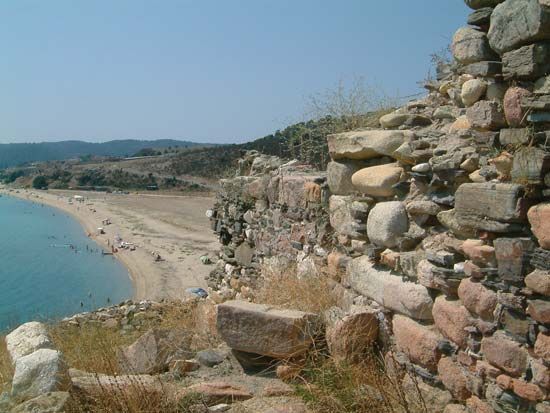
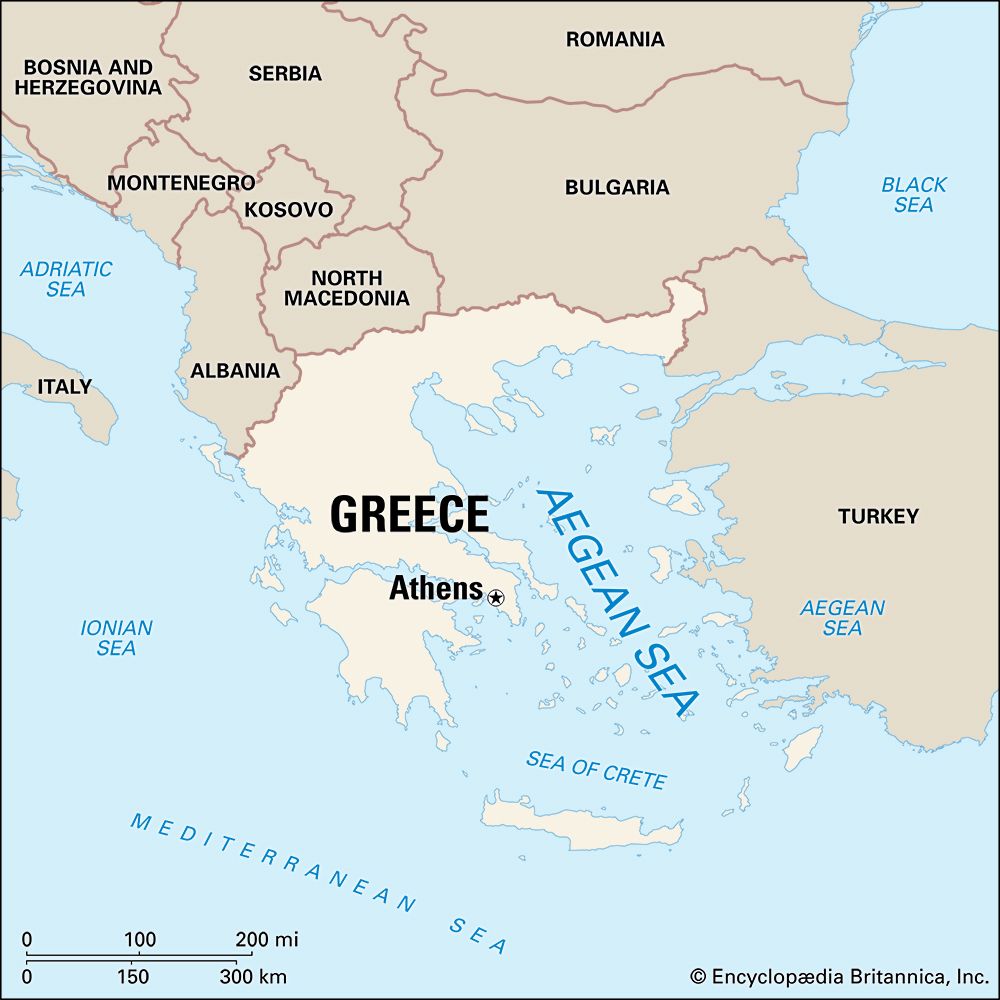
The Gulf of Agíou Orous is an inlet of the Aegean Sea located in northeastern Greece. Situated within the historical region of Macedonia, it is the larger…
What is Gulf of Agíou Orous?
The Gulf of Agíou Orous is an inlet of the Aegean Sea located in northeastern Greece. Situated within the historical region of Macedonia, it is the larger and deeper of two gulfs that indent the peninsula; the other is the Ierisoú Gulf. These two bodies of water are linked by the silted-up remains of a canal that was completed by the Persian king Xerxes I in 480 bce.1
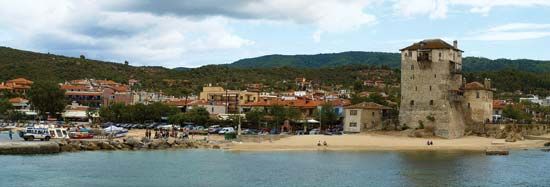
The primary community located on the gulf is Ouranópolis, which serves as a gateway for tourists and visitors traveling to Mount Athos—also known as Mount Ágio—a site renowned for its historic Greek Orthodox monastic communities.12
What is the historical significance of the canal built by Xerxes I?
The canal built by the Persian king Xerxes I in 480 bce holds historical significance primarily as a feat of massive engineering designed to facilitate his invasion of Greece.45
During his campaign, Xerxes sought to avoid the treacherous cape at the tip of the Chalcidice Peninsula, where previous Persian naval forces had suffered heavy losses due to storms. To ensure the safe passage of his vast fleet—which served as the essential supply line for his land army—he ordered a 1.5-mile (2.4-km) channel to be dug across the neck of the Aktí promontory near Mount Athos.456
The construction of this canal underscores the immense scale of the Persian military effort and the strategic importance Xerxes placed on maintaining a secure supply chain for his troops. Traces of this ancient engineering project remain visible today, serving as a physical testament to the logistical preparations undertaken during the Greco-Persian Wars.45
What makes the monastic communities of Mount Athos unique?
The monastic communities of Mount Athos are unique due to their status as a semiautonomous, pan-Orthodox monastic republic. Located on a remote promontory in northern Greece, this federation of 20 self-governing monasteries and smaller ascetic settlements (skítes) has functioned as a center of Eastern Orthodox life since the 10th century.69
Key features that distinguish Mount Athos include:
- Semiautonomy: While the Greek government appoints a governor to oversee the region, the mountain is administered by the Holy Council (Ierá Sýnaxis), composed of representatives from each monastery, ensuring internal self-governance.69
- Strict Traditions: A long-standing prohibition bars women and female animals from the territory. Additionally, the monasteries maintain a blend of conservative and liberal governance, with some adhering to strict communal discipline and others allowing monks more personal autonomy.6
- Cultural and Spiritual Heritage: The site houses invaluable Byzantine art, icons, and vast libraries of medieval manuscripts. It remains a primary destination for those seeking the contemplative, Hesychast tradition of prayer.69
- UNESCO Recognition: Designated a World Heritage site in 1988, it serves as a living repository of Orthodox history.6
How did the Chalkidikí Peninsula get its distinctive three-pronged shape?
The distinctive three-pronged shape of the Chalkidikí Peninsula is primarily the result of geological fracturing of the Hercynian block, a process that also shaped much of the surrounding mountainous terrain in northern Greece.10
The peninsula’s three fingerlike promontories—Kassándra, Sithonía, and Áyion Óros—were once islands. Their current configuration is defined by steep sides created by recent geological rifting and uplift. Because these promontories were originally separate from the mainland, their isthmuses are composed of loose sediments rather than solid rock.11
This unique geography has historically influenced human activity in the region, including the construction of canals through the narrow isthmuses to facilitate maritime passage, such as the ancient canal commissioned by Xerxes I and the modern Kassándra Canal.11
Sources
- Gulf of Agíou Orous — Encyclopædia Britannica
- Greece - Northeastern Greece: Makedonía and Thráki — Encyclopædia Britannica
- Greece - Southern Greece: the Pelopónnisos — Encyclopædia Britannica
- Greco-Persian Wars - The expedition of Xerxes (480–479 bce ) — Encyclopædia Britannica
- Xerxes I — Encyclopædia Britannica
- Mount Athos — Encyclopædia Britannica
- Greco-Persian Wars - The Battle of Thermopylae — Encyclopædia Britannica
- ancient Greek civilization - Greek alliances — Encyclopædia Britannica
- Eastern Orthodoxy - Monasticism — Encyclopædia Britannica
- Chalcidice — Encyclopædia Britannica
- Europe - Mesozoic and Cenozoic eras — Encyclopædia Britannica
Published on · 3 min read