Community
Invasive species are nonnative organisms that disrupt the ecosystems they colonize, often by possessing a competitive advantage over indigenous species. When…
How do invasive species impact biological communities?
Invasive species are nonnative organisms that disrupt the ecosystems they colonize, often by possessing a competitive advantage over indigenous species. When these species establish breeding populations in environments lacking natural predators, they can cause significant ecological harm.1
Their impacts on biological communities include:
- Resource Competition: Invasive species may outcompete native organisms for food, living space, and other essential resources, often leading to the localized extinction of native species1.
- Predation: Invasive predators can decimate native prey populations, sometimes eliminating them entirely from an ecosystem.1
- Habitat Alteration: Some invasive species, such as the purple loosestrife, can overrun vast areas, replacing diverse native vegetation with monocultures. Others, like the giant sensitive tree, form thickets that disrupt native wetland ecosystems.23
- Disease Transmission: Invasive organisms can act as vectors for parasites and pathogens, spreading disease to native populations.1
These disruptions reduce overall biodiversity and can negatively affect the economic resources that human communities derive from these ecosystems.1
How do different species interact within a biological community?
Within a biological community, species interact through a complex web of relationships that dictate the structure, stability, and development of the ecosystem. These interactions are categorized by their effects on the participating species, which can be positive (+), negative (–), or neutral (0).5
Types of Interspecific Interactions
- Mutualism (+, +): Both species benefit from the association.5
- Exploitation (+, –): One species benefits at the expense of another, such as in predation or parasitism.5
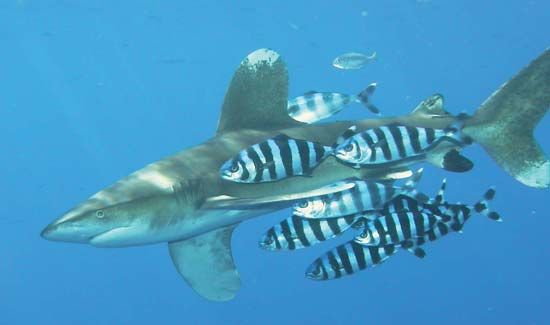
- Commensalism (+, 0): One species gains benefits like food, shelter, or transport, while the other is neither helped nor harmed.56
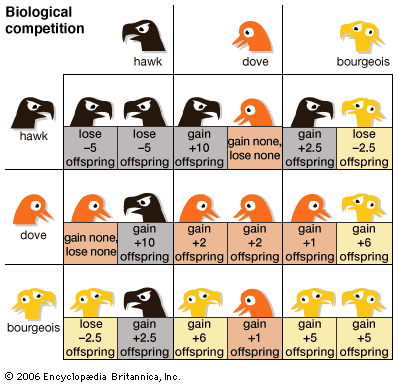
- Interspecific Competition (–, –): Both species incur costs as they vie for limited resources like food or living space.54
- Amensalism (–, 0): One species suffers harm while the other experiences no measurable effect.5
- Neutrality (0, 0): Neither species is affected by the presence of the other.5
Community Dynamics
These interactions often manifest as trophic cascades, where changes in top predator populations trigger reciprocal shifts throughout the food chain, impacting herbivores and primary producers. Furthermore, species diversity is critical to community resilience; species-rich communities generally recover faster from disturbances and maintain greater stability than species-poor ones. Over time, these intricate biotic interactions create a web that sustains the ecosystem, helping it resist the disruptive effects of invasive species.71
How do ecologists study and measure biological communities?
Ecologists study and measure biological communities by integrating diverse quantitative and qualitative methods, often adapting techniques from physics, chemistry, and mathematics to account for the complexity of living systems. Because environmental variables are difficult to control in the field, researchers frequently employ a combination of statistical approaches, experimental designs, and advanced technology.10
Quantitative and Statistical Approaches
- Biostatistics and Modeling: Ecologists use statistical procedures and computer models to analyze field data, simulate ecosystems, and predict population interactions.1011
- Species Richness: A fundamental metric is the count of unique species within a defined area. To address different spatial scales, researchers categorize this into alpha diversity (local area), beta diversity (rate of change between habitats), and gamma diversity (large-scale regional richness).12
- Community Analysis: In plant ecology, researchers often count species within standard areas to determine factors like ground cover, species dominance, and aggressiveness.11
Field and Laboratory Techniques
- Controlled Experiments: Laboratory microcosms—small-scale aquatic or soil ecosystems—allow for the replication of experiments and the manipulation of specific variables. Similarly, controlled environmental chambers maintain precise conditions of light, temperature, and humidity to study organism responses.10
- Remote Sensing and Tracking: Biotelemetry and electronic tracking equipment enable the remote monitoring of free-ranging organisms. In marine environments, researchers use satellite and aircraft remote sensing, as well as acoustic recording, to chart the distribution and behavior of life-forms.1013
- Sampling Devices: Marine biologists utilize specialized tools like plankton nets and midwater trawls to collect biological samples. Quantitative samplers, such as the Clark-Bumpus sampler, include flow meters to measure the volume of water filtered, allowing for the calculation of organism concentration.13
- Tracing Pathways: Radioisotopes are employed to trace the movement of nutrients and energy through different components of an ecosystem, helping to define food chains.10
How does energy flow through a biological community?
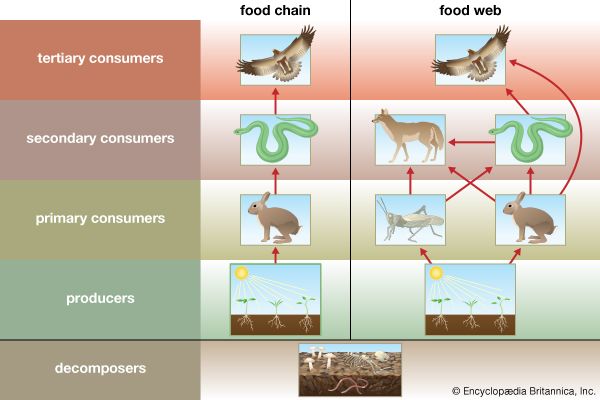
Energy flow through a biological community is structured as a trophic pyramid, where energy moves upward from one trophic level to the next through food chains and food webs.
The Trophic Structure
- Producers (Autotrophs): The base of the pyramid consists of organisms like plants, algae, and phytoplankton that harness solar energy via photosynthesis to create organic substances from inorganic materials.151617
- Consumers (Heterotrophs): These organisms depend on producers or other consumers for energy. They are categorized into primary consumers (herbivores), secondary consumers (carnivores or omnivores), and tertiary consumers (often apex predators).1617
- Decomposers: Organisms such as bacteria and fungi break down dead organic matter, returning nutrients to the ecosystem to be reused by producers.1816
Energy Loss and Efficiency
Energy transfer is inefficient; on average, only about 10 percent of energy is passed from one level to the next. Most energy—roughly 80 to 90 percent—is lost as heat during metabolic processes, such as digestion and maintaining body temperature. Consequently, less energy is available at higher levels of the pyramid, which limits the number of organisms that can be supported at the top. Unlike nutrients, which are recycled through biogeochemical cycles, energy flows through the biosphere in one direction and cannot be reused.191517
Sources
- invasive species — Encyclopædia Britannica
- conservation - Removing invasive species — Encyclopædia Britannica
- Wetland - Disturbances caused by humans — Encyclopædia Britannica
- trophic cascade — Encyclopædia Britannica
- population ecology - Interspecific interactions — Encyclopædia Britannica
- community ecology - Community equilibrium and species diversity — Encyclopædia Britannica
- community ecology - Competition — Encyclopædia Britannica
- community ecology - Effect on community structure — Encyclopædia Britannica
- commensalism — Encyclopædia Britannica
- ecology - Methods in ecology — Encyclopædia Britannica
- biodiversity - Measuring biodiversity — Encyclopædia Britannica
- species richness — Encyclopædia Britannica
- undersea exploration - Collection of biological samples — Encyclopædia Britannica
- botany - Ecological aspects — Encyclopædia Britannica
- community ecology - Autotrophs and heterotrophs — Encyclopædia Britannica
- trophic level — Encyclopædia Britannica
- food web — Encyclopædia Britannica
- Biosphere - Energy transfers and pyramids — Encyclopædia Britannica
- ecosystem — Encyclopædia Britannica
Published on · 4 min read