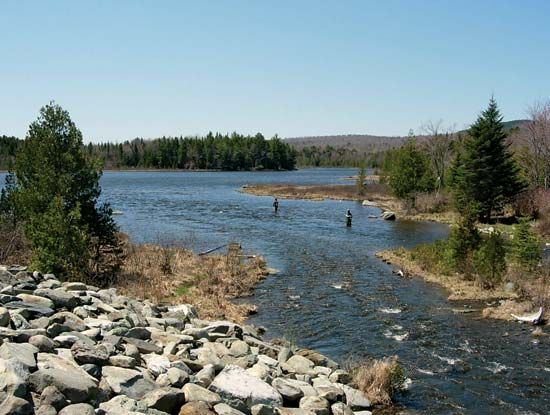
Hongze Lake
Modernization and industrialization have significantly reshaped the management of Hongze Lake and its surrounding Huai River valley. Historically, the lake…
How has modernization and industrialization impacted Hongze Lake and its surrounding areas?
Modernization and industrialization have significantly reshaped the management of Hongze Lake and its surrounding Huai River valley. Historically, the lake grew to its current size after the Huang He (Yellow River) diverted its course in 1194, blocking the Huai’s natural outlet to the sea and causing widespread inundation of fertile land.1
To address the resulting chronic flooding and drainage challenges, large-scale water conservancy projects were implemented. In the 1930s, a new channel was excavated to provide a direct outlet to the sea, which was later restored and improved as the Subei Canal in 1951–52. These engineering efforts, integrated into the broader development of the Huai River valley, have been essential in mitigating flood risks. Despite these advancements, the lake remains shallow, and drainage continues to be a persistent issue for the region.1
How does Hongze Lake contribute to the local ecosystem and biodiversity?
Sorry, the Britannica knowledge base does not contain information regarding the specific contributions of Hongze Lake to the local ecosystem and biodiversity. The available records focus primarily on the lake’s historical formation, its role in regional water management, and the impact of human-engineered canals on flood control.
What is the geographical location and size of Hongze Lake in China?
Hongze Lake is a large lake situated in the Huai River valley, located on the border between Jiangsu and Anhui provinces in eastern China.1
The lake currently covers a surface area of approximately 757 square miles (1,960 square km). Its size has increased significantly over time; during the Tang and early Song dynasties, it was less than one-third of its modern size. The expansion occurred primarily after 1194, when the Huang He (Yellow River) shifted its course, blocking the Huai River’s natural outlet to the sea and causing the Huai’s waters to discharge into the lake, which subsequently inundated surrounding fertile lands.1
Are there any major cities or towns situated around Hongze Lake?
While Hongze Lake is a significant geographical feature in the Huai River valley, the provided information does not identify any major cities or towns situated directly on its shores.
Historically, the area around the lake has been characterized by its role in water management and agricultural land use rather than as a site for large urban centers. The lake’s expansion in the 12th century resulted in the inundation of fertile lands, and its shallow nature has historically limited navigation to small boats, which may have influenced settlement patterns in the immediate vicinity. While the broader region—spanning Jiangsu and Anhui provinces—contains many large cities, these are generally located along major river systems or in the Yangtze River delta rather than directly around the perimeter of Hongze Lake.
Sources
- Hongze Lake — Encyclopædia Britannica
- Jiangsu - Settlement patterns — Encyclopædia Britannica
- Anhui - People — Encyclopædia Britannica
- Chongqing - Suburban and outlying districts — Encyclopædia Britannica
- Huzhou — Encyclopædia Britannica
- Anhui - Drainage — Encyclopædia Britannica
Published on · 2 min read