Moosehead Lake
Moosehead Lake is the largest lake in the U.S. state of Maine, covering an area of 120 square miles (310 square km). Located in the west-central part of the…
What is Moosehead Lake?
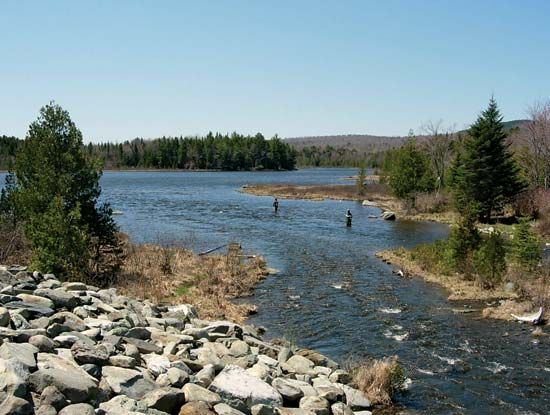
Moosehead Lake is the largest lake in the U.S. state of Maine, covering an area of 120 square miles (310 square km). Located in the west-central part of the state, the lake sits at an elevation of 1,023 feet (312 meters) and is approximately 35 miles (56 km) long.12
The lake is characterized by its irregularly shaped shoreline, which provides numerous coves for fishing and recreation, and it is dotted with many islands, including the largest, Sugar Island. It serves as the source of the Kennebec River. On the southern end of the lake lies Greenville, a community that functions as a summer resort, outfitting center, and seaplane station. The name is derived from the lake’s appearance when viewed from Mount Kineo, which is said to resemble the head of a moose.1
What is the significance of the Kennebec River?
The Kennebec River is a vital waterway in west-central Maine that has played a significant role in the region’s history, economy, and ecology. Rising from Moosehead Lake, the river flows 150 miles south to the Atlantic Ocean.34
Historical and Economic Significance
The river was explored by Samuel de Champlain in the early 17th century. Its banks hosted the state’s first English settlement, Fort St. George, established in 1607 near present-day Augusta. Historically, the river has been a cornerstone of Maine’s economy, providing essential hydropower for industrial centers like Waterville and Gardiner.35
Environmental Restoration
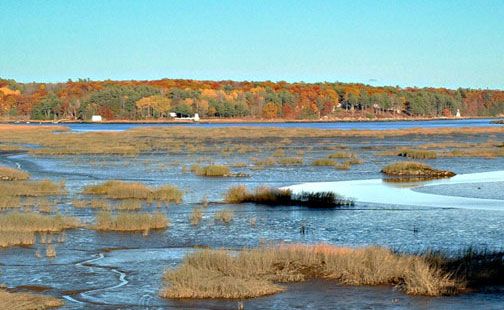
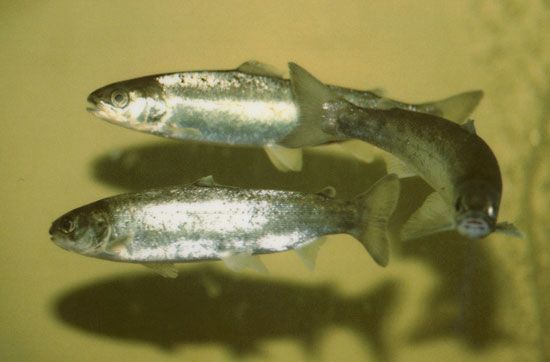
The river’s ecological importance was highlighted by the 1999 removal of the Edwards Dam. This project restored a critical spawning ground for species such as the Atlantic salmon and short-nosed sturgeon, demonstrating a commitment to environmental stewardship and the preservation of natural habitats.3
What makes Mount Kineo a popular destination?
Mount Kineo is a prominent landmark located on the east-central shore of Moosehead Lake. It is a popular destination primarily because it offers a unique vantage point from which to view the lake.
According to local lore, the perspective from the mountain provides a distinct silhouette of the water that supposedly resembles the head of a moose or a crouching moose, which is the namesake for the lake itself.1
What kind of wildlife lives around Moosehead Lake?
The region surrounding Moosehead Lake, situated within the upland New England boreal forest, supports a diverse array of wildlife.
Mammals
The forests and surrounding areas are home to several large mammals, including moose, deer, and elk. Black bears are also frequently observed, particularly in areas with berry patches. Additionally, the region hosts various fur-bearing animals, such as beavers, muskrats, martens, mink, and squirrels.1
Birds and Aquatic Life
The area supports a significant bird population. Year-round residents include owls, ravens, woodpeckers, and jays. During the summer, the lake attracts migratory waterfowl such as the common loon, mallard ducks, and Canada geese.1
The cool, deep waters of the lake provide a habitat for fish species like lake trout. Furthermore, insects such as blackflies and mosquitoes are prevalent in the summer, serving as a vital food source for the local bird and fish populations.1
Sources
- Moosehead Lake — Encyclopædia Britannica
- Moosehead Lake — Merriam-Webster
- Kennebec River — Encyclopædia Britannica
- Kennebec — Encyclopædia Britannica
- Kennebec — Merriam-Webster
- North America - The boreal forest — Encyclopædia Britannica
Published on · 2 min read