Irish Water Spaniel
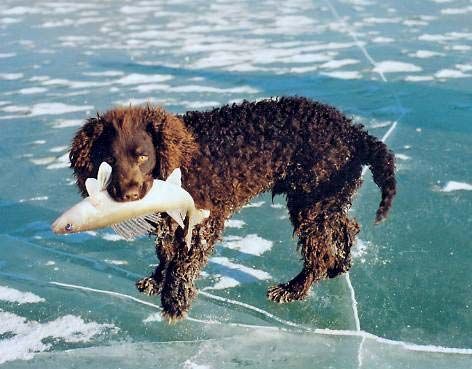
The Irish water spaniel is a breed of sporting dog developed in Ireland during the 1830s specifically for retrieving game.
What is Irish water spaniel?
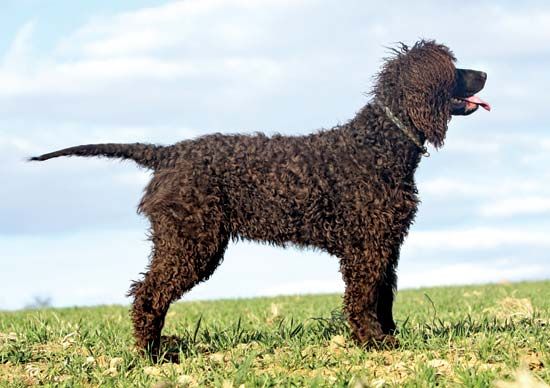
The Irish water spaniel is a breed of sporting dog developed in Ireland during the 1830s specifically for retrieving game.1
This breed is easily identified by its liver-coloured (brown-red) curly coat, which is designed to shed water and provide protection in cold conditions. A unique feature of the breed is its “rat” tail and a characteristic topknot of curls that falls over its head and ears. Standing between 21 and 24 inches tall and weighing 45 to 65 pounds, the Irish water spaniel is well-suited for retrieving waterfowl in marshy areas or lakes.1
Beyond its physical utility, the breed is recognized for its playful disposition and high level of trainability. It was officially recognized by the American Kennel Club in 1878.1
What other dog breeds were developed for retrieving waterfowl?
Several dog breeds have been developed specifically for their ability to retrieve waterfowl and game from land and water. These breeds are typically categorized as sporting dogs, known for their intelligence, activity levels, and water-repellent coats.23
Key breeds developed for retrieving include:
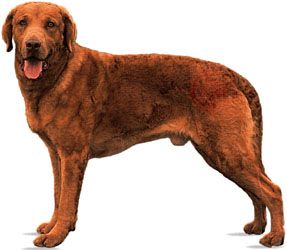
- Chesapeake Bay retriever: Developed in the United States during the 19th century, this powerful breed was specifically designed to retrieve downed fowl from icy coastal waters.4
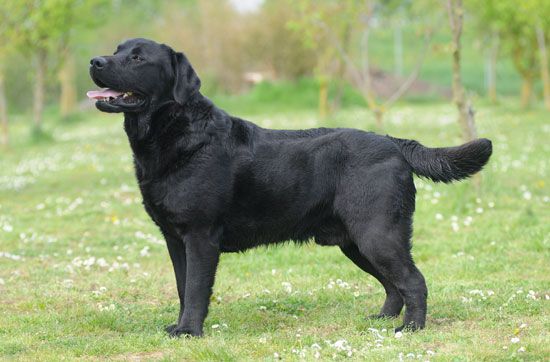
- Labrador Retriever: Originating in Newfoundland, this breed is an outstanding gun dog. Its “otterlike” tail acts as a rudder while swimming, and its dense coat is well-suited for cold, wet conditions.5
- Golden Retriever: Developed in Scotland, this breed possesses a powerful body and a water-repellent coat, making it highly effective in the field.62
- American water spaniel: Originating in the United States in the late 1800s, this breed was bred to retrieve birds on land or by leaping into the water from a boat.7
- Curly-coated retriever: One of the oldest retriever breeds, it was developed in England to work as a tireless retriever in both land and water environments.8
How does a dog’s coat help it stay warm in cold water?
A dog’s coat helps it stay warm in cold water primarily through its texture and density, which act as a barrier against the elements. In breeds like the curly-coated retriever, the coat consists of short, tight curls that provide insulation and help shed water, preventing the dog’s skin from becoming saturated and chilled during work in the field or water. By keeping the dog dry and trapping a layer of air against the body, these specialized coats effectively maintain the animal’s core temperature in cold environments.6
What are the main differences between sporting and working dog groups?
The primary differences between sporting and working dog groups lie in the specific tasks they were bred to perform and their resulting temperaments.
Sporting Dogs
Sporting dogs are bred to assist hunters by scenting, pointing, flushing, or retrieving game on land and in water. They are generally characterized as:
- Temperament: Highly social, active, and adventurous. They are known to follow their noses and respond enthusiastically to human interaction.910
- Types: The group includes pointers, retrievers, setters, and spaniels.9
Working Dogs
Working dogs were developed to serve humans in practical, high-stakes roles. They are characterized by:
- Temperament: Business-like and protective. These dogs tend to evaluate situations independently and are often loyal, alert, and strong.710
- Functions: This group includes breeds bred for guarding property or livestock, pulling sleds or carts, and performing rescue work.711
- Physicality: They are typically medium to large in size, possessing robust, sturdy, and muscular builds suited for their demanding tasks.711
While both groups are intelligent and loyal, sporting dogs are defined by their cooperative hunting instincts, whereas working dogs are defined by their utility in guarding, hauling, and lifesaving.710
Sources
- Irish water spaniel — Encyclopædia Britannica
- Chesapeake Bay retriever — Encyclopædia Britannica
- spaniel — Encyclopædia Britannica
- American water spaniel — Encyclopædia Britannica
- Labrador Retriever — Encyclopædia Britannica
- curly-coated retriever — Encyclopædia Britannica
- sporting dog — Encyclopædia Britannica
- dog - Sporting dogs — Encyclopædia Britannica
- dog - Working dogs — Encyclopædia Britannica
- working dog — Encyclopædia Britannica
- dog - Breed-specific behaviour — Encyclopædia Britannica
- American Kennel Club — Encyclopædia Britannica
Published on · 3 min read