Kerry Blue Terrier
The Kerry blue terrier is a versatile, long-lived breed of working terrier that originated in County Kerry, Ireland, in the 1820s. Historically used for…
What is Kerry blue terrier?
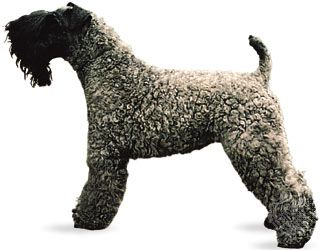
The Kerry blue terrier is a versatile, long-lived breed of working terrier that originated in County Kerry, Ireland, in the 1820s. Historically used for hunting, retrieving on land and water, and herding sheep and cattle, the breed is known for being lively, hardy, and demonstrative.1
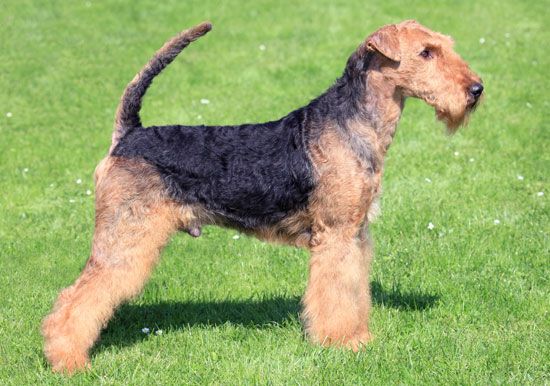
Physically, the Kerry blue terrier stands 17.5 to 19.5 inches (44.5 to 49.5 cm) tall and weighs between 29 and 40 pounds (13 to 18 kg). It possesses a distinctive soft, wavy coat that is black at birth but matures into a slate blue or blue-gray color. Its boxy, muscular appearance is often compared to that of the Airedale terrier. As a member of the terrier group, it shares the active and vocal traits common to its kin, though it is categorized among the larger terrier breeds.12
What are the main differences between working terriers and other dog groups?
The primary differences between the Terrier group and the Working group lie in their historical functions, physical development, and temperament.
Functional Roles
- Terriers: These dogs were primarily developed to hunt and control vermin, guard barns, and assist in activities like foxhunting or ratting. Because they were often required to confront prey that fought back—sometimes underground—they were bred to be tenacious and capable of making the actual kill.32
- Working Dogs: This group was bred for broader, practical service to humans, including guarding property, herding livestock, pulling carts, or performing rescue operations. They are generally associated with protecting, guiding, or saving lives rather than hunting small game.45
Physical Traits
- Terriers: Many are small to medium-sized to fit into rodent burrows, often possessing wiry coats for protection and long heads with strong jaws. While some larger breeds exist, their form is dictated by their need to chase and confront.32
- Working Dogs: These breeds are typically medium to large, characterized by a robust, muscular, and sturdy build designed for strength, endurance, and heavy-duty tasks.45
Temperament
- Terriers: Known for being spirited, vocal, and fearless, they often exhibit a more pugnacious temperament due to their history as hunters. They are frequently independent and can be quarrelsome with other dogs.32
- Working Dogs: These breeds are generally defined by their intelligence, loyalty, and alertness, with a focus on being reliable partners in guarding or service roles.45
How did the original purpose of terriers influence their physical traits?
The physical traits of terriers are a classic example of the principle that form follows function. Because these dogs were originally developed to hunt, control vermin, and confront prey that often fought back, their bodies evolved to suit specific working environments.32
Adaptations for Underground Work
Terriers bred to hunt in rodent burrows required a compact size to navigate tight spaces. Consequently, these breeds often feature shorter legs and a lean, agile build. To protect them while working in rough, subterranean conditions, they were bred with tough, wiry coats that are weather-resistant and durable.32
Structural Features for Confrontation
Regardless of their size, terriers were frequently required to make the actual kill rather than just flushing out prey. This necessity influenced several key physical characteristics:
- Head and Jaw: They typically possess a long head and a strong, square jaw, providing the power needed to confront and dispatch quarry.32
- Eyes: Deep-set eyes were developed to provide protection during intense encounters.32
- Tail: Descendants of those that worked underground often have a strong tail, which historically allowed hunters to pull the dog out of a burrow if it became stuck.3
While those working underground remained smaller, terriers bred for aboveground work often developed squarer, more robust proportions to support their active, tenacious nature.2
What are some other dog breeds that originated in Ireland?
Ireland has a rich history of developing distinct dog breeds, many of which were originally bred for hunting, herding, or farm work. Beyond the terriers previously discussed, several other notable breeds originated in the country:
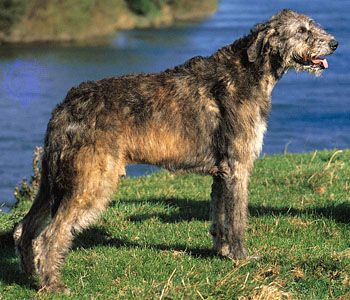
- Irish wolfhound: An ancient, powerful hound breed historically used to hunt wolves and other game. It is recognized as the tallest of all dog breeds and is known for its speed and gentle temperament.8
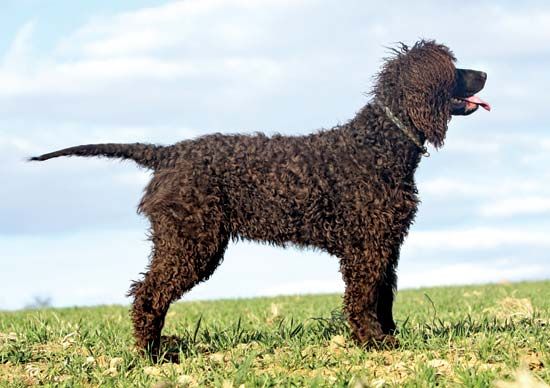
- Irish water spaniel: Developed in the 1830s as a sporting dog, this breed is an expert retriever. It is easily identified by its liver-coloured curly coat and a unique “rat” tail, which are adaptations for swimming in cold, marshy environments.9
- Soft-coated wheaten terrier: Originally kept as a versatile farm dog, this breed is known for its lively, playful nature and distinctive soft, wavy, golden-tan coat.10
- Irish terrier: Often called the “daredevil,” this is one of the oldest terrier breeds. It is a sturdy, courageous dog that served as a messenger and sentinel during World War I.11
- Kerry blue terrier: Originating in County Kerry, this versatile working dog has served as a hunter, retriever, and herder. It is famous for its coat, which transitions from black at birth to a slate blue or blue-gray as the dog matures.1
Sources
- Kerry blue terrier — Encyclopædia Britannica
- dog - Terriers — Encyclopædia Britannica
- terrier — Encyclopædia Britannica
- American Kennel Club — Encyclopædia Britannica
- working dog — Encyclopædia Britannica
- dog - Working dogs — Encyclopædia Britannica
- fox terrier — Encyclopædia Britannica
- soft-coated wheaten terrier — Encyclopædia Britannica
- Irish wolfhound — Encyclopædia Britannica
- Irish terrier — Encyclopædia Britannica
- Kerry blue terrier — Merriam-Webster
- Irish water spaniel — Encyclopædia Britannica
Published on · 4 min read