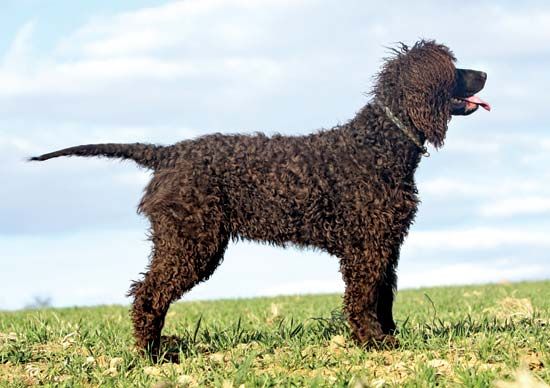
Chesapeake Bay Retriever
The Chesapeake Bay retriever is a breed of sporting dog developed in the United States during the 19th century. Specifically bred to retrieve downed fowl…
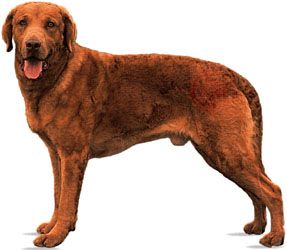
What is Chesapeake Bay retriever?
The Chesapeake Bay retriever is a breed of sporting dog developed in the United States during the 19th century. Specifically bred to retrieve downed fowl from icy coastal waters, this powerful and assertive dog is known for its dense, water-repellent coat, which can be brown, sedge, or dead grass in color.12
Physically, the breed stands between 21 and 26 inches (53 to 66 cm) tall and weighs between 55 and 80 pounds (25 to 36 kg). It is characterized by its yellow or amber eyes and a coat that is typically wavy on the shoulders, back, and loins. First registered by the American Kennel Club in 1878, the Chesapeake Bay retriever is noted for being more independent and reserved than many other retriever breeds, while remaining a highly capable and protective companion.1
How do sporting dogs differ from other dog groups?
Sporting dogs are distinguished from other dog groups primarily by their specialized function and temperament, which have been refined through generations of selective breeding.2
Functional Differences
The primary role of a sporting dog is to scent, point, flush, or retrieve birds and other game, both on land and in water. This contrasts with other groups, such as:3
- Hounds: While also scent-oriented, hounds are generally more aloof and independent, often preferring to scout territory on their own rather than engage with humans.2
- Working and Herding Dogs: These breeds possess more business-like dispositions, instinctively evaluating situations to perform tasks like guarding flocks or herding, rather than focusing on game retrieval.2
- Terriers: Bred to chase and catch rodents, these dogs are characterized by a feisty, extremely active nature that differs from the adventurous yet human-responsive temperament of sporting breeds.2
Temperament and Classification
Sporting dogs are known for being intelligent, active, and highly social, often responding enthusiastically to human commands. While the American Kennel Club classifies them as “Sporting dogs,” they are referred to as “Gundogs” in England. This classification system, which groups dogs by their historical work, helps owners anticipate a breed’s innate personality and behavior.324
What specific adaptations help retrievers work in cold water?
Retrievers, such as the Chesapeake Bay retriever, possess specific physical adaptations that allow them to function effectively in cold, icy water.
The most critical adaptation is a specialized coat that is both short and thick. This dense fur is water-repellent, which helps the dog maintain body heat and prevents the skin from becoming saturated while swimming in freezing conditions. Additionally, the coat is often wavy across the shoulders, back, and loins, a texture that further aids in shedding water and providing insulation against the elements.1
These physical traits, combined with the breed’s powerful build, enable them to endure the harsh environments associated with retrieving downed fowl in coastal waters.1
How does the temperament of a Chesapeake Bay retriever compare to a Golden Retriever?
The temperaments of the Golden Retriever and the Chesapeake Bay retriever differ significantly in their social and behavioral tendencies:
- Golden Retriever: This breed is widely recognized for being outgoing, gentle, and eager to please. They are highly affectionate with their families and generally friendly toward strangers and other dogs. While they are enthusiastic workers, their friendly nature makes them poor protection dogs. They are known for being highly obedient, though they can be easily distracted during early training.5
- Chesapeake Bay Retriever: In contrast, the Chesapeake Bay retriever is described as more assertive, independent, and protective. They are notably more reserved than the easygoing Golden Retriever, reflecting their development as a specialized worker in harsh, icy conditions.1
While both breeds share the high energy and retrieving drive common to the sporting dog group, the Golden Retriever is typically characterized by a more social and “soft” temperament, whereas the Chesapeake Bay retriever is defined by a more serious and independent disposition.51
Sources
- Chesapeake Bay retriever — Encyclopædia Britannica
- sporting dog — Encyclopædia Britannica
- dog - The breeds — Encyclopædia Britannica
- dog - Breed-specific behaviour — Encyclopædia Britannica
- Golden Retriever dog — Encyclopædia Britannica
- retriever — Encyclopædia Britannica
- Labrador Retriever — Encyclopædia Britannica
Published on · 3 min read