Ithaca
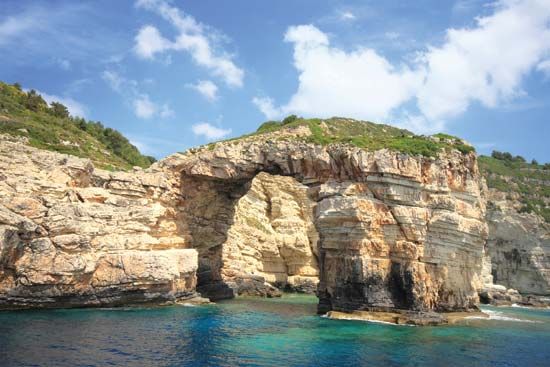
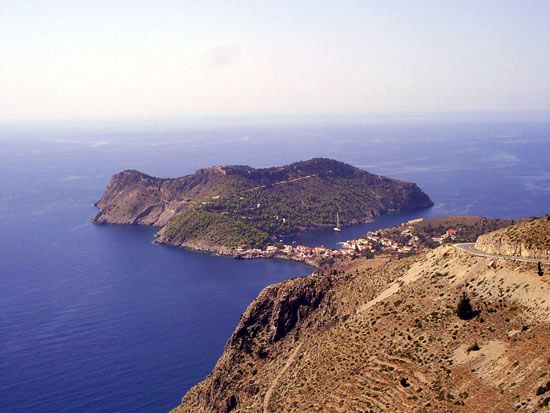
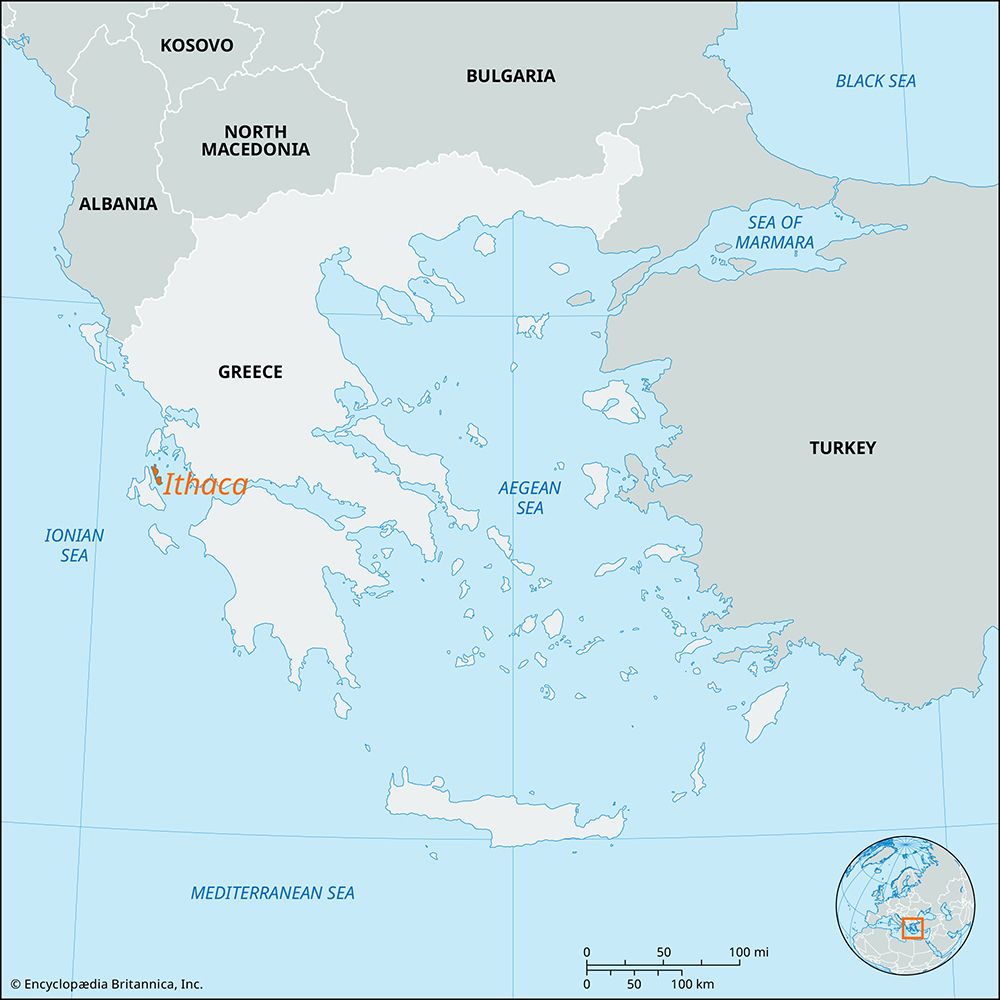
Ithaca (or Itháki) is the second smallest of the seven main Ionian Islands in western Greece. Geographically, it consists of two limestone masses joined by a…
What is the geographical location and significance of Ithaca in Greece?
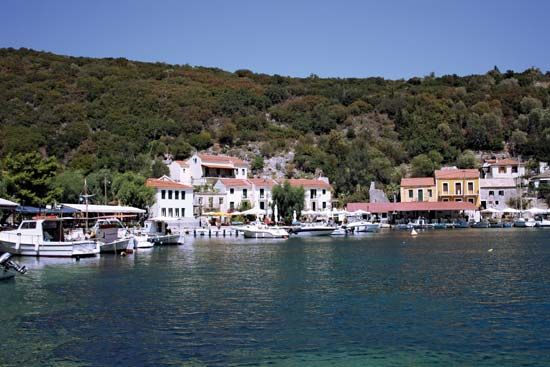
Ithaca (or Itháki) is the second smallest of the seven main Ionian Islands in western Greece. Geographically, it consists of two limestone masses joined by a narrow isthmus, situated east of the island of Cephallenia and separated by the Ithákis Channel.12
The island’s primary significance lies in its classical associations as the legendary home of Odysseus. It is famously featured in Homer’s epic, the Odyssey, which describes various topographical landmarks such as the “Fountain of Arethusa” and Mount Neritos. While scholars have long debated whether the modern island perfectly matches the Homeric descriptions—with some suggesting the name may have been transferred from Leucas—archaeological excavations have confirmed Mycenaean occupation during the period associated with the legend. Despite its historical fame, the island was nearly abandoned by the early 16th century before being repopulated under Venetian incentives.1
How is Ithaca connected to Homer’s epic poem ‘The Odyssey’?
In Homer’s epic poem, the Odyssey, Ithaca serves as the ultimate destination and the “north star” for the hero Odysseus following the Trojan War. The narrative chronicles his arduous 10-year struggle to return home, where he must eventually reclaim his throne and family from the suitors of his wife, Penelope.13
The poem describes the island with specific topographical details, such as the “Fountain of Arethusa,” Mount Neritos, and the harbour of Phorcys. While these descriptions have led many to identify the modern island of Ithaca as the Homeric home of Odysseus, scholars note that the geography does not perfectly align with the text, leading some to suggest the name may have originally referred to Leucas.4
Regardless of the precise geographical identification, the island remains central to the poem’s climax. Upon his return, the goddess Athena plays a pivotal role by disguising Odysseus as a beggar and guiding him through the final conflict to restore his rule.3
What is the population of Ithaca, and how has it changed over the centuries?
The population of the Greek island of Ithaca has fluctuated significantly over the centuries due to historical instability. By the early 16th century, the island was nearly abandoned following frequent raids by corsairs. To address this, the Venetians provided incentives to settlers from the Greek mainland and neighboring islands to repopulate the area.1
In more recent history, the population has remained relatively stable. According to census data, the population was 3,212 in 2001 and 3,231 in 2011.1
It is important to note that this data refers specifically to the Greek island of Ithaca. If you were inquiring about the city of Ithaca in New York, U.S., that location has a significantly larger population, recorded at 29,287 in 2000 and 30,014 in 2010.5
Are there any famous Ithacans, either historical or contemporary, who have made significant contributions to Greek culture or society?
One of the most notable historical figures born on the island of Ithaca is Ioannis Metaxas (1871–1941). A prominent general and statesman, Metaxas served as the premier of Greece and later established a dictatorship known as the Fourth of August Regime, which governed the country from 1936 until his death in 1941. His career was marked by significant military involvement, including service in the Balkan Wars and leadership during the early stages of the Italian invasion of Greece in 1940.6
Beyond historical figures, the island is most famously associated with the legendary king Odysseus, the central character of Homer’s epic poem, the Odyssey. While Odysseus is a figure of mythology rather than recorded history, his identity as the king of Ithaca remains the primary reason for the island’s enduring cultural significance in Greek society and literature.12
Sources
- Ithaca — Encyclopædia Britannica
- Ithaca — Merriam-Webster
- Geography of Homer’s Odyssey: Mapping Odysseus’s Epic Voyage — Encyclopædia Britannica
- Athena - Role in the Odyssey — Encyclopædia Britannica
- Ithaca — Encyclopædia Britannica
- Ioannis Metaxas — Encyclopædia Britannica
- Trojan War - The Greek heroes — Encyclopædia Britannica
Published on · 3 min read