Ionian Islands
It is important to clarify that the term "Ionian" in ancient Greek history refers to a major cultural and linguistic division of the Greek people and the…
What is the historical significance of the Ionian Islands in ancient Greek culture?
It is important to clarify that the term “Ionian” in ancient Greek history refers to a major cultural and linguistic division of the Greek people and the region of Ionia on the western coast of Anatolia, rather than the modern geographical grouping known as the Ionian Islands.
The Ionians were central to the development of ancient Greek civilization. Following the collapse of Achaean kingdoms, many Ionians migrated from Attica to Anatolia, where they established influential cities such as Miletus, Ephesus, and Samos.12
Their historical significance includes:
- Intellectual Foundations: In the 6th century BCE, Ionia was the birthplace of natural philosophy. Thinkers like Thales and Anaximander pioneered rational inquiry into nature, laying the groundwork for Greek philosophy and geography.12
- Literature and Language: The Ionian dialect served as the basis for the Homeric epics and early poetry. It later evolved into Koine, the common language of the Hellenistic world and the New Testament.12
- Colonization and Trade: Ionian cities were prolific colonizers, establishing numerous settlements across the Black Sea and the Mediterranean, which facilitated widespread economic prosperity.12
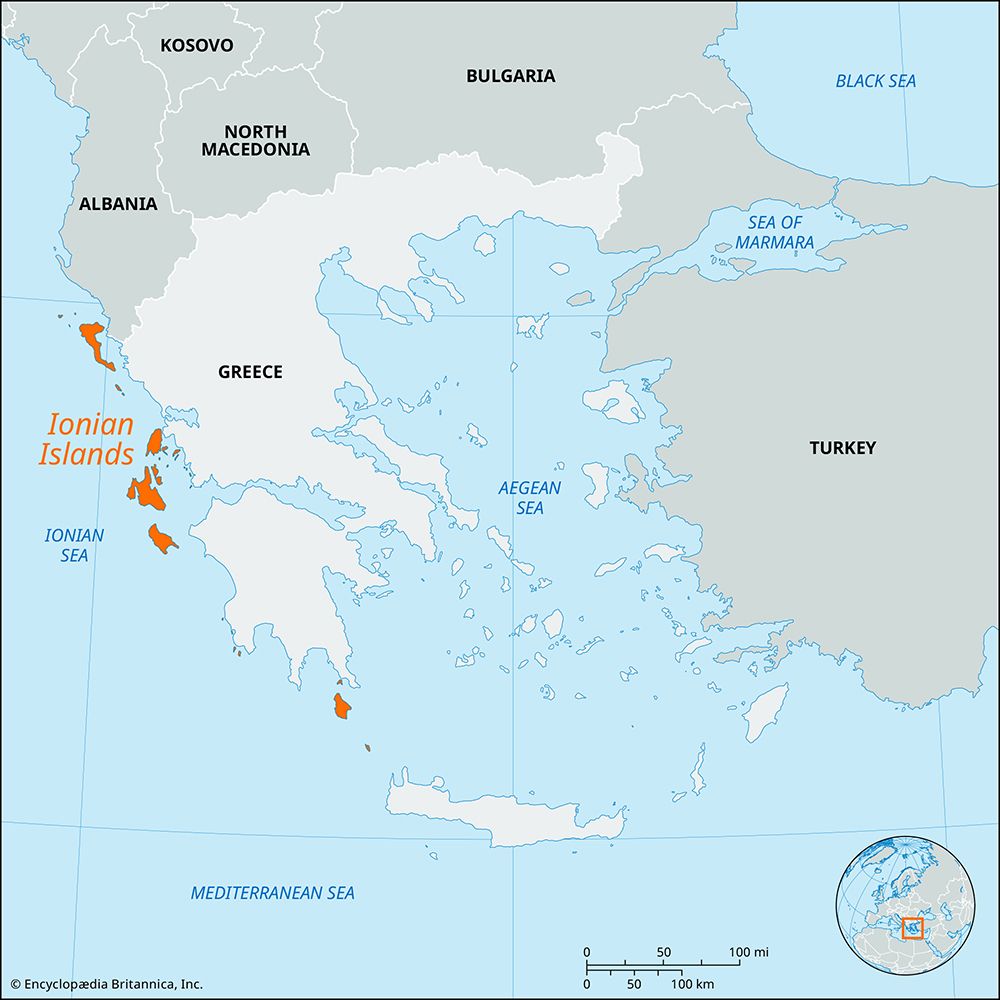
How does the climate and geography of the Ionian Islands differ from other Greek island groups?
The Ionian Islands are distinguished from other Greek island groups, such as the Cyclades and the Dodecanese, by their unique geography and significantly wetter climate.45
Geography and Relief
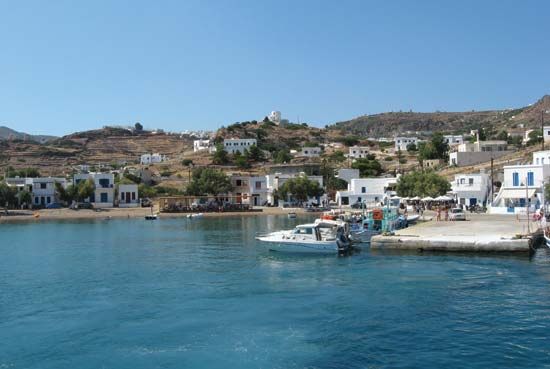
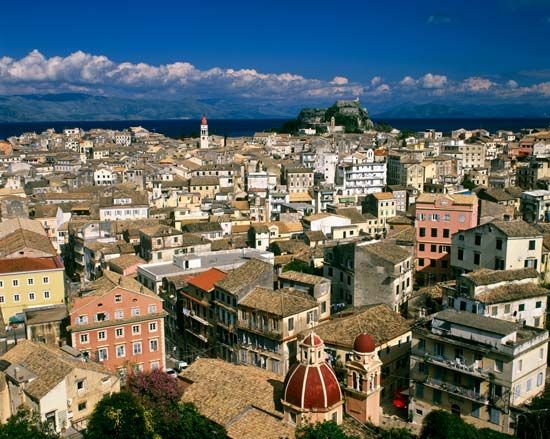
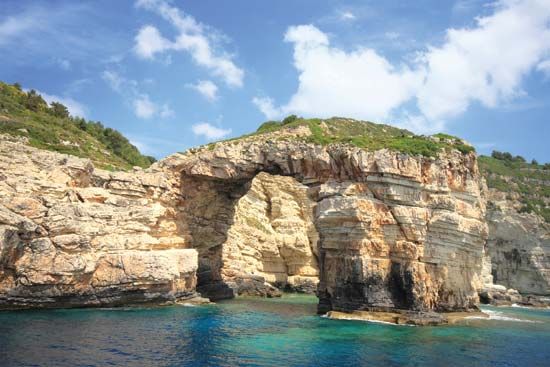
Structurally, the Ionian Islands resemble the folded mountains of Epirus on the Greek mainland. While many Aegean islands are the peaks of a submerged landmass known as Aegeis and often feature rocky, barren terrain with volcanic origins, the Ionian Islands are characterized by a gaunt, broken limestone relief. Corfu is a notable exception, as it is fertile and possesses well-watered lowlands, whereas islands like Ithaca and Cephallenia are defined by their rugged, limestone-heavy landscapes.567
Climate
The Ionian Islands experience a distinct climatic profile due to their location off the western coast of Greece:
- Precipitation: The islands receive significantly more rainfall than their Aegean counterparts because they are exposed to western climatic influences. For instance, Corfu’s average annual precipitation is approximately 52 inches (1,320 mm), which is more than double that of Crete and over three times that of Athens.4
- Seasonal Patterns: Winter rain begins earlier in the Ionian region, and snow is common on the highest peaks, lingering into the spring. In contrast, the Aegean islands are often subject to the hot, dry meltemi (etesian) winds during the summer, which accentuate the arid conditions of that region.4
What role did the Ionian Islands play during World War II and the Greek resistance?
Sorry, the Britannica knowledge base does not contain specific information regarding the role of the Ionian Islands during the Greek resistance in World War II.
The available records confirm that the Ionian Islands were occupied by Italy and later by Germany during World War II, and they were liberated alongside the rest of Greece in 1944, but further details on their specific involvement in resistance activities are not provided in the current search results.10
How did the Venetian rule influence the culture and architecture of the Ionian Islands?
Venetian rule significantly shaped the social and cultural landscape of the Ionian Islands over several centuries. By securing the adherence of prominent local families through the granting of titles and official appointments, the Venetians integrated the islands into their administrative and social framework.11
This period of influence included several key developments:
- Social and Religious Integration: The Roman Catholic church was established on the islands, and there was notable intermarriage between the Italian ruling class and the local Greek population.11
- Linguistic Shift: Venetian influence was so pervasive that the Greek language ceased to be spoken by the upper classes, remaining in use primarily among the peasantry.11
- Cultural Preservation: Despite the influence of the ruling power, the peasantry remained steadfast in their adherence to the Greek Orthodox faith, which served as a vital link to their cultural identity throughout the period of foreign governance.11
While the provided records highlight these social and political shifts, they do not offer specific details regarding the architectural legacy left by the Venetians.
Sources
- Ionian — Encyclopædia Britannica
- Ionia — Encyclopædia Britannica
- ancient Greek civilization - The post-Mycenaean period and Lefkandi — Encyclopædia Britannica
- Greece - Climate of Greece — Encyclopædia Britannica
- Cyclades — Encyclopædia Britannica
- Aegean Sea — Encyclopædia Britannica
- Ionian Sea — Encyclopædia Britannica
- Greece - The islands of Greece — Encyclopædia Britannica
- Greece - Relief — Encyclopædia Britannica
- Greco-Persian Wars - The Ionian Revolt (499–493 bce ) — Encyclopædia Britannica
- Ionian Islands — Encyclopædia Britannica
- Venice - Europeans and Turks against Venice — Encyclopædia Britannica
- Venice - Trade conflicts — Encyclopædia Britannica
- Veneti — Encyclopædia Britannica
Published on · 3 min read