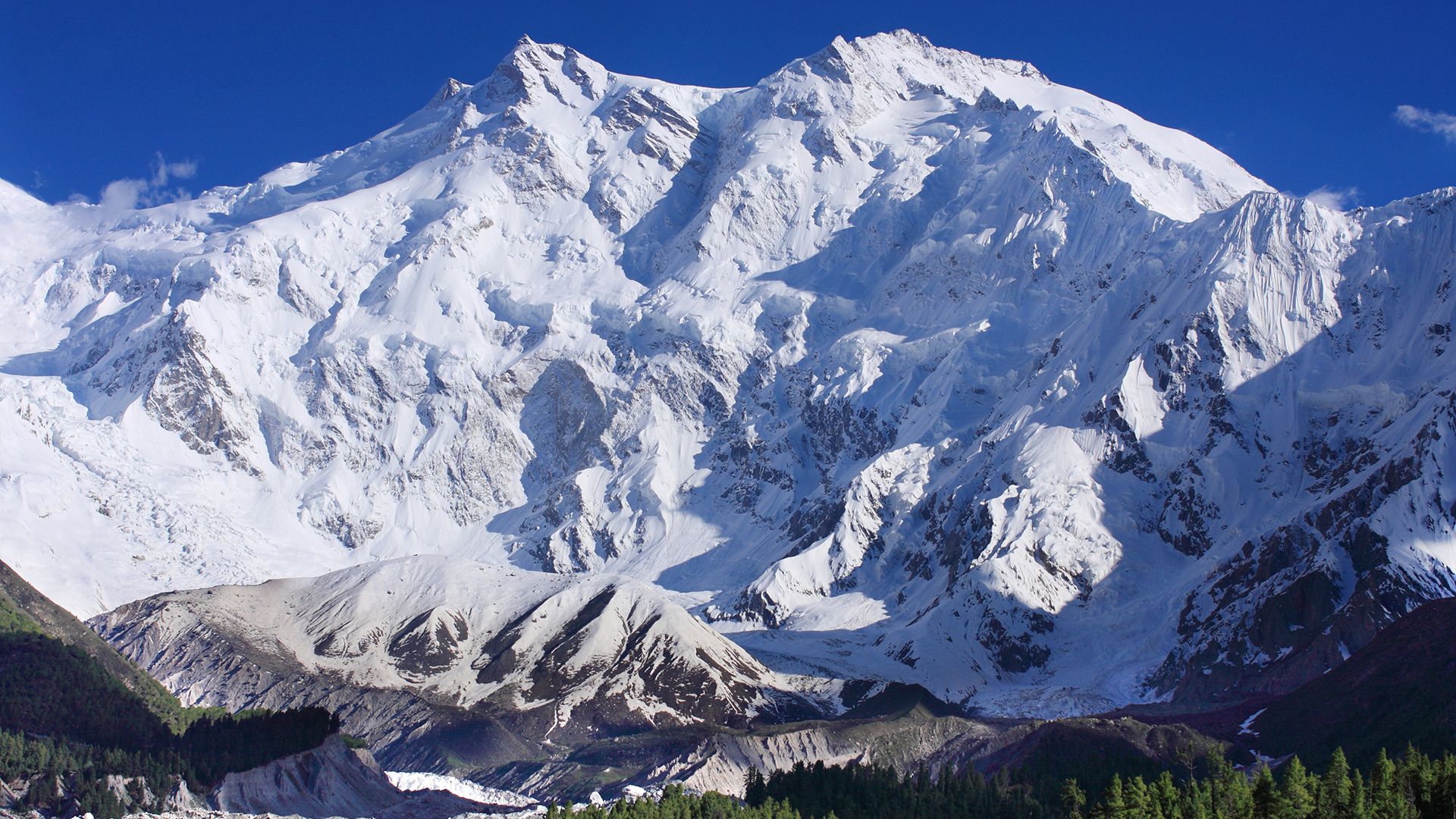
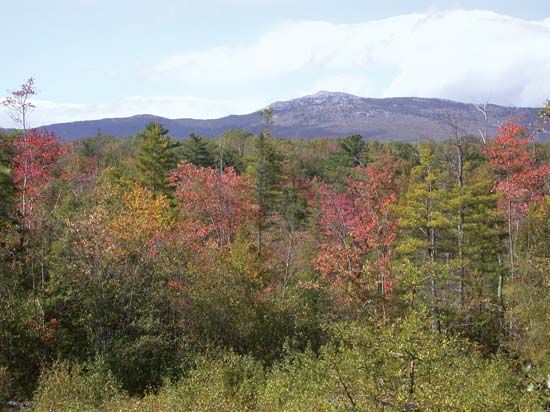
Mount Monadnock
Mount Monadnock is a solitary mass of rock reaching 3,165 feet (965 metres) in elevation, located within Monadnock State Park in southwestern New Hampshire…
What is Mount Monadnock?
Mount Monadnock is a solitary mass of rock reaching 3,165 feet (965 metres) in elevation, located within Monadnock State Park in southwestern New Hampshire, U.S.12
The mountain is a classic example of a geologic feature known as a monadnock, a term derived from the mountain itself. A monadnock is an isolated hill of bedrock that stands conspicuously above the surrounding landscape, having been left behind as an erosional remnant due to its more resistant rock composition. Unlike inselbergs, which are found in tropical regions, monadnocks are typically formed in humid, temperate climates.12
Beyond its geological significance, the mountain has a rich cultural history. It was celebrated by Ralph Waldo Emerson in his 1846 poem Monadnoc and was a frequent hiking destination for Henry David Thoreau.1
How does erosion create a monadnock?
A monadnock is created through the process of differential erosion, where the varying resistance of different rock types to erosional forces leads to an uneven landscape.23
The formation process involves these key factors:
- Compositional Resistance: Monadnocks are composed of highly resistant rock, such as quartzite or massive, less-jointed volcanic rocks. These materials are significantly more durable than the surrounding rock, which is more susceptible to weathering and removal by agents like wind and water.23
- Erosional Remnants: As erosion acts upon a region over long periods, it strips away the weaker, less resistant surrounding material. Because the monadnock’s core is composed of tougher, more resilient rock, it remains behind as an isolated, conspicuous hill standing above the general level of the landscape.23
- Environmental Context: Unlike similar landforms found in tropical regions, such as inselbergs, monadnocks are specifically formed in humid, temperate climates.2
Essentially, the monadnock is a geological “survivor,” left standing because its structural integrity allowed it to withstand the denudational processes that wore down the surrounding terrain.24
What is the difference between a monadnock and an inselberg?
While the terms monadnock and inselberg are often used as synonyms to describe isolated hills of resistant bedrock that remain after surrounding land has eroded, they are distinguished primarily by their geographic and climatic contexts.26
- Climatic Setting: A monadnock is specifically associated with humid, temperate regions. In contrast, an inselberg—a term derived from the German words for “island” and “mountain”—is typically used to describe similar landforms found in tropical or arid environments.26
- Etymology and Usage: The term “monadnock” is named after Mount Monadnock in New Hampshire, U.S., and is frequently used in North American geological contexts. “Inselberg” originated from German explorers observing isolated mountains rising from the plains of southern Africa, which they felt resembled islands in an ocean.26
Despite these distinctions in terminology and climate, both features are formed by the same process of differential erosion, where harder, more resistant rock survives while the surrounding, weaker material is worn away.26
Why did Ralph Waldo Emerson and Henry David Thoreau write about this mountain?
Ralph Waldo Emerson and Henry David Thoreau were drawn to Mount Monadnock due to its status as a prominent and solitary natural landmark in New Hampshire.
Emerson celebrated the mountain’s significance in his 1846 poem titled Monadnoc, which captured the essence of the landscape. Meanwhile, the mountain served as a favorite hiking destination for Thoreau, who frequently visited the site to engage with the wilderness. As a classic example of the geologic feature that bears its name, the mountain provided both men with a profound subject for their literary and personal explorations of the natural world.1
Sources
- Mount Monadnock — Encyclopædia Britannica
- monadnock — Encyclopædia Britannica
- continental landform — Encyclopædia Britannica
- weathering — Encyclopædia Britannica
- river - Falls attributable to differential erosion — Encyclopædia Britannica
- Did you know? — Merriam-Webster
Published on · 3 min read