Nanga Parbat
The first person to successfully reach the summit of Nanga Parbat was the Austrian climber Hermann Buhl. He achieved this feat in 1953, following many failed…
Who was the first person to successfully climb Nanga Parbat, and when did this happen?
The first person to successfully reach the summit of Nanga Parbat was the Austrian climber Hermann Buhl. He achieved this feat in 1953, following many failed and often fatal attempts by other expeditions that began as early as 1895.1
What is the significance of Nanga Parbat in the history of mountaineering?
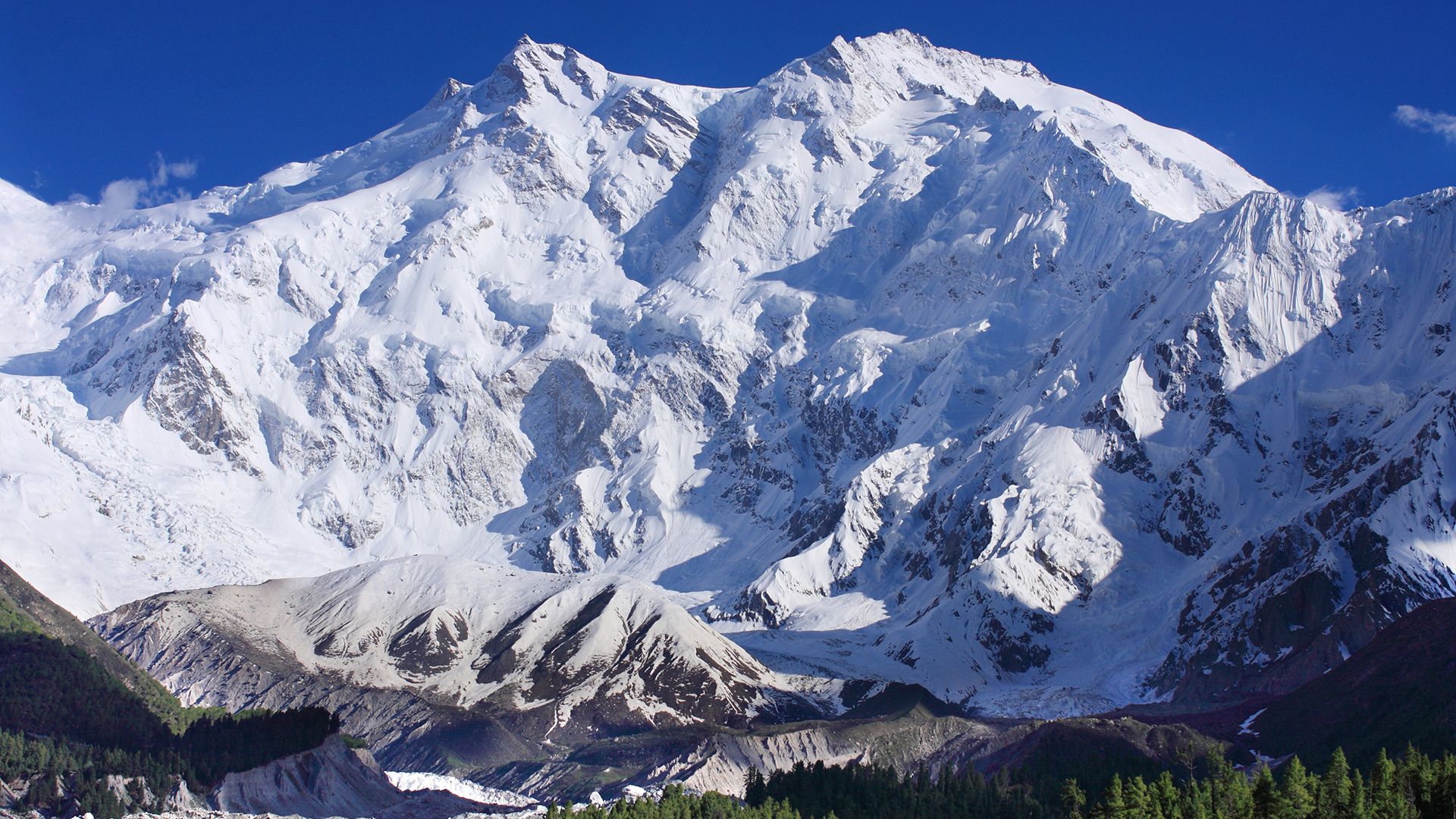
Nanga Parbat, known as the “naked mountain,” holds a somber and significant place in the history of mountaineering. Standing at 26,660 feet (8,126 metres), its extreme vertical relief—including a south wall rising nearly 15,000 feet—makes it one of the most formidable peaks in the Himalayas.1
The mountain’s history is defined by its reputation as a “killer mountain.” The first recorded attempt to ascend the peak was led by British climber Albert F. Mummery in 1895, which ended in his death. In the decades that followed, the mountain claimed the lives of at least 30 additional climbers, primarily during German-led expeditions, due to its treacherous combination of severe weather and frequent avalanches.1
This cycle of tragedy was finally broken in 1953 when Austrian climber Hermann Buhl successfully reached the summit. The mountain remains a symbol of the immense physical and psychological challenges inherent in high-altitude climbing.1
What are some of the most famous expeditions or attempts to climb Nanga Parbat?
Nanga Parbat has a long and often tragic history of mountaineering attempts, earning it the nickname “the killer mountain” due to the severe weather and frequent avalanches that claimed at least 30 lives before its first successful ascent.1
Key historical efforts include:
- 1895 Attempt: The first recorded attempt to climb the mountain was led by the British Alpine climber Albert F. Mummery. The expedition ended in tragedy when Mummery died during the attempt.1
- Interwar Period: Between World War I and World War II, German climbers focused their efforts on Nanga Parbat, leading to numerous expeditions that struggled against the mountain’s formidable conditions.2
- 1953 Success: The cycle of failed and fatal attempts was finally broken in 1953. An Austro-German team, led by Karl Maria Herrligkoffer, successfully reached the summit. It was during this expedition that the Austrian climber Hermann Buhl made his historic first ascent to the top.12
What is the geographical location and height of Nanga Parbat?
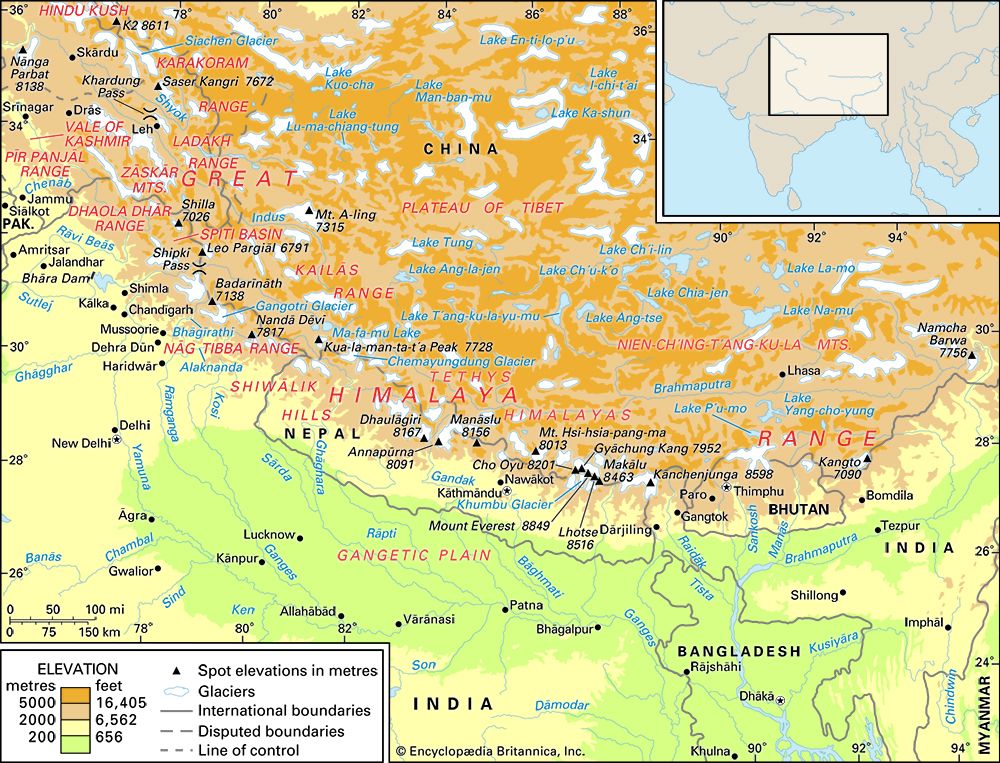
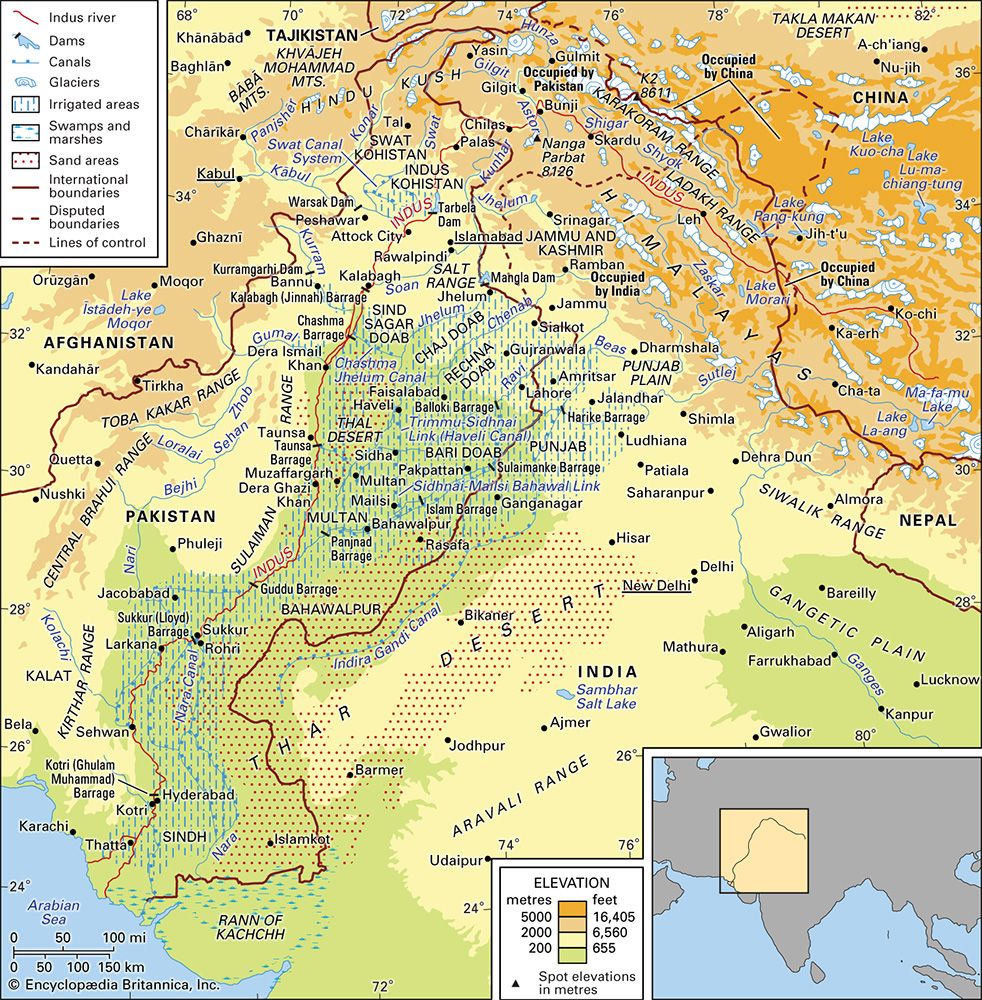
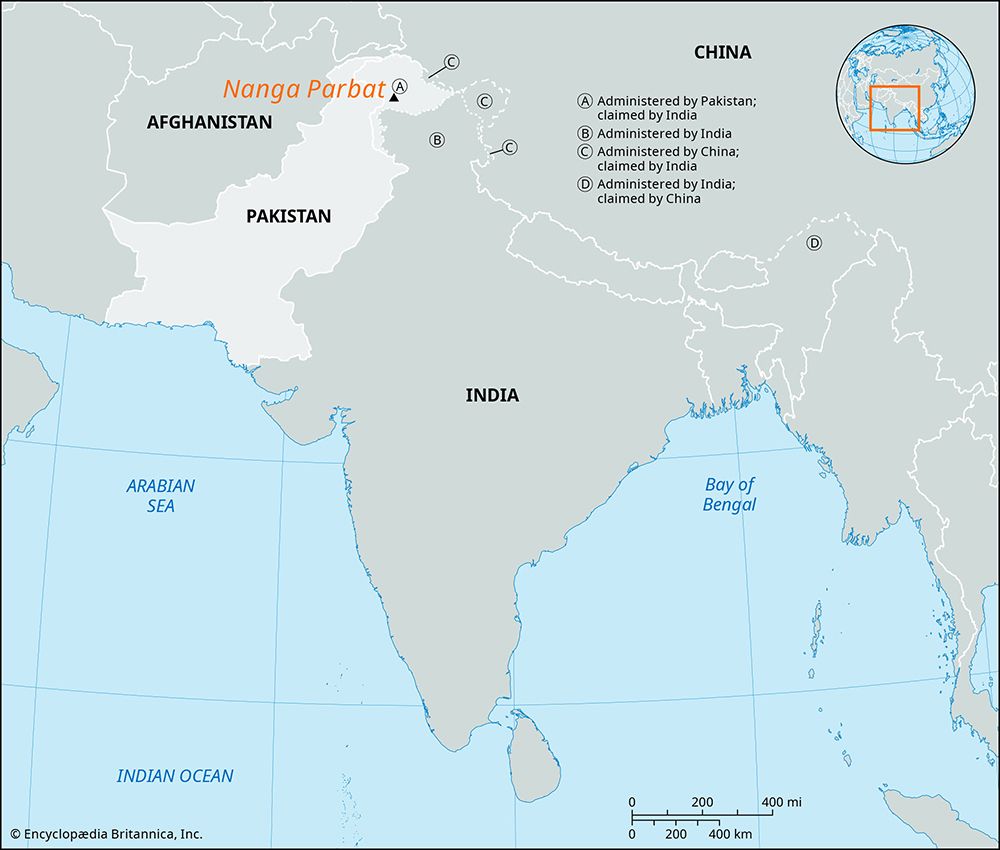
Nanga Parbat is located in the western Himalayas, specifically within the Pakistani-administered sector of the Kashmir region. It is situated approximately 17 miles (27 km) west-southwest of Astor.1
The mountain reaches an elevation of 26,660 feet (8,126 metres) above sea level. Its topography is characterized by extreme vertical relief, with its south wall rising nearly 15,000 feet (4,600 metres) above the adjacent valley, while its north side drops roughly 23,000 feet (7,000 metres) toward the Indus River.13
Sources
- Nanga Parbat — Encyclopædia Britannica
- Himalayas - Study and exploration — Encyclopædia Britannica
- Himalayas — Encyclopædia Britannica
Published on · 2 min read