Naga Hills
The Naga Hills are a complex mountain range forming a natural barrier along the border between India and Myanmar. As a northern extension of the Arakan Yoma…
What is Naga Hills?
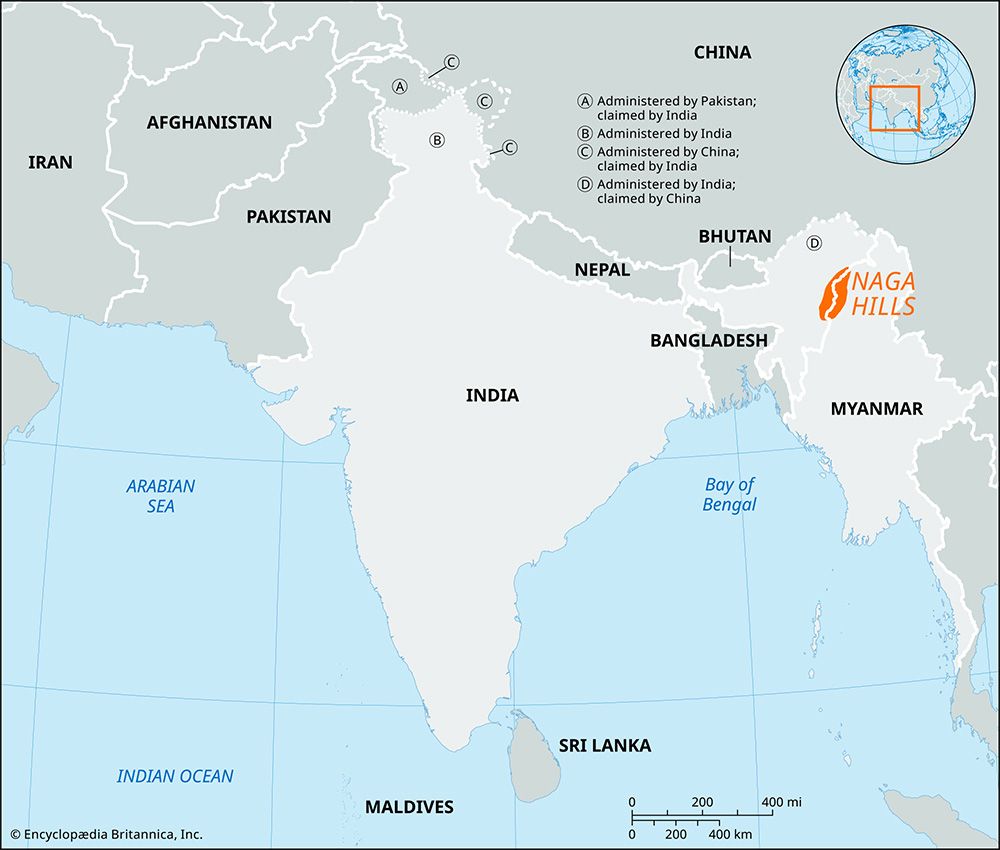
The Naga Hills are a complex mountain range forming a natural barrier along the border between India and Myanmar. As a northern extension of the Arakan Yoma system, the range reaches its highest point at Mount Saramati, which stands at 12,552 feet (3,826 meters).12
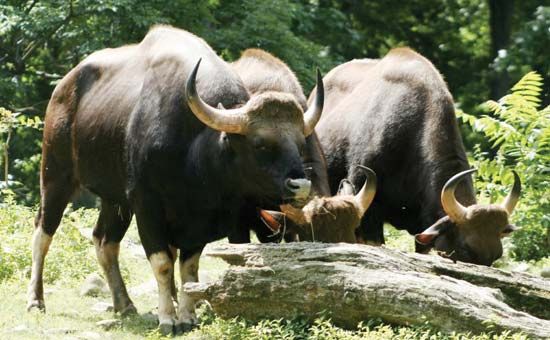
The region is characterized by heavy monsoon rainfall and dense forest cover. Within India, the area was formerly a district of Assam until 1961 and has been part of the state of Nagaland since 1963. The landscape is home to various Naga tribes, whose villages are scattered throughout the hills. The diverse ecosystem supports a wide range of wildlife, including elephants, tigers, leopards, and various species of monkeys and deer.13
Who are the Naga people?
The Naga are a group of more than 20 tribes inhabiting the Naga Hills of Nagaland state in northeastern India. They are an Indo-Asiatic people of mixed origin, characterized by diverse cultures and physical appearances.456
Language and Social Structure
The Naga tribes speak about 60 dialects belonging to the Sino-Tibetan language family, with significant variation even between neighboring villages. Intertribal communication often relies on broken Assamese, English, or Hindi. Social organization varies from autocratic chieftainships to democratic councils, with descent traced through the paternal line.461
Culture and Religion
While traditional Naga religion was animistic, Christianity—particularly Baptist traditions—became widespread following 19th-century missionary efforts. Cultural life is marked by:46
- Communal Institutions: The morung, a dormitory for unmarried men, serves as a central village institution.1
- Artistry: Tribes are known for weaving and intricate wood carving.41
- Traditions: The Feast of Merit, involving the sacrifice of a mithan, is a significant ceremonial event.1
What is jhum or shifting cultivation?
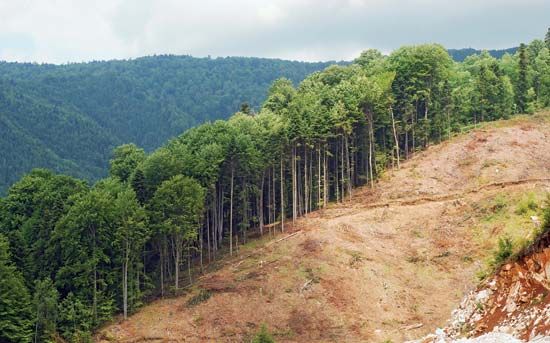
Jhum, also known as shifting cultivation, is an agricultural system that preserves soil fertility through the rotation of plots rather than crops. In this method, a patch of land is cleared—often using the slash-and-burn technique—and cultivated for a short period until the soil shows signs of exhaustion or becomes overrun by weeds.78
Once the plot is abandoned, it is left fallow to revert to natural vegetation, allowing the land to regenerate while the cultivator moves to a new site. This practice is an adaptation to tropical soil conditions where continuous cultivation without synthetic fertilizers would be detrimental to the land’s fertility.87
In regions like Nagaland, jhum is commonly practiced by Naga tribes, who often grow staples such as rice and millet. Areas cleared for this purpose typically develop a secondary growth of high grass, reeds, and scrub jungle. While traditionally sustainable, modern applications of slash-and-burn techniques are increasingly associated with deforestation and biodiversity loss when land is maintained in a cleared state permanently.498
What is the significance of the great Indian hornbill in Naga culture?
The great Indian hornbill holds a place of symbolic importance in Naga culture, frequently appearing as a prominent motif in traditional art and architecture. Within the morung—the communal house that serves as a central institution for young men in many Naga villages—the pillars are often intricately carved with representations of the hornbill, alongside other significant figures such as tigers and human forms.6
These carvings reflect the deep connection between the Naga people and their natural environment, as well as the integration of local wildlife into their folklore and social identity. While the morung historically served as a repository for war trophies, the presence of these carvings today highlights the enduring cultural significance of the hornbill as a symbol within the artistic traditions of the various Naga tribes.6
Sources
- Naga Hills — Encyclopædia Britannica
- Naga Hills — Merriam-Webster
- Nagaland - Plant and animal life — Encyclopædia Britannica
- Nāga — Encyclopædia Britannica
- Nagaland - Population composition — Encyclopædia Britannica
- Nagaland - Cultural life — Encyclopædia Britannica
- Slash-and-burn agriculture — Encyclopædia Britannica
- Jaintia Hills — Encyclopædia Britannica
- Shifting agriculture — Encyclopædia Britannica
Published on · 3 min read