Ore Mountains
The Ore Mountains, a range extending along the German-Czech border, were historically characterized by a largely German population and tradition due to…
What role did the Ore Mountains play during World War II?
The Ore Mountains, a range extending along the German-Czech border, were historically characterized by a largely German population and tradition due to centuries of mining activity.1
During the period of World War II, the region served as a home to these German mining communities. However, the war acted as a major turning point for the area’s demographics and industry. Following the conclusion of the conflict in 1945, the almost entirely German population was expelled and replaced by a predominantly Czech population.1
While the mountains were known for their historical wealth in gold, silver, lead, copper, and tungsten, the strategic significance of the region shifted significantly in the post-war era. It was only after World War II that the uranium deposits located at Jáchymov and Aue were developed for large-scale extraction.1
What traditional crafts or industries are associated with the Ore Mountains?
The Ore Mountains have a long-standing tradition of industry and craftsmanship, primarily rooted in the region’s rich mineral deposits. Historically, generations of small groups of craftsmen worked to extract resources such as gold, silver, lead, copper, tungsten, and pitchblende.1
Beyond the foundational mining economy, the German communities that inhabited the region until 1945 developed several other key industries:
- Forestry: Utilizing the natural resources of the mountain range.1
- Furniture making: A craft tradition established alongside the mining sector.1
- Textile industries: A significant component of the local economy.1
- Agriculture: Small-scale farming practices.1
- Tourism: The region has leveraged its numerous mineral springs and winter sports resorts to develop a modern tourist industry.1
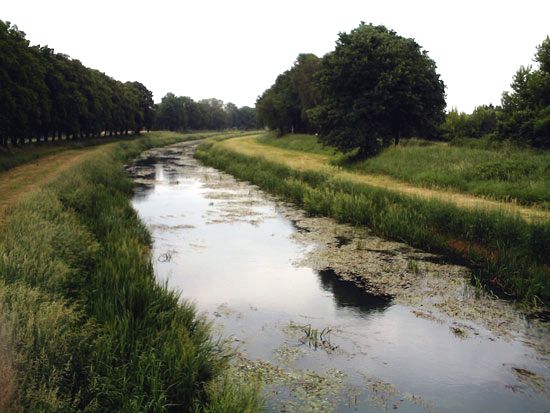
In the post-World War II era, the industrial focus shifted toward the large-scale extraction of uranium at Jáchymov and Aue, as well as the mining of brown coal in the Bílina River valley.1
What are some popular tourist attractions and outdoor activities in the Ore Mountains?
The Ore Mountains offer a variety of attractions and activities, largely centered around the region’s natural geography and historical development.
Outdoor Activities and Attractions
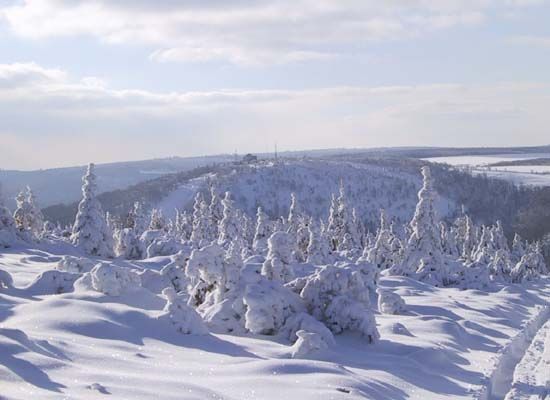
- Winter Sports: The region is well-known for its numerous winter sports resorts, which take advantage of the mountainous terrain and snowfall.1
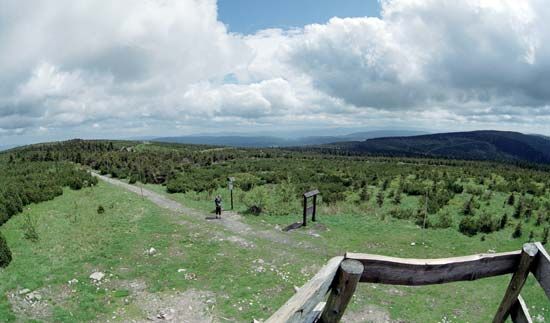
- Hiking and Exploration: The range features significant peaks, including Klínovec (the highest point at 4,081 feet) and Fichtel Mountain, which provide opportunities for exploring the landscape.1
- Mineral Springs: The area is home to numerous mineral springs, which have long served as a draw for visitors and have been central to the development of the local tourist industry.1
- Scenic Travel: Visitors can navigate the region via well-maintained road communications. Additionally, there are railway routes available, though the steep scarp face on the Bohemian side creates a challenging and unique landscape for transit.1
How have the Ore Mountains influenced the cultural and economic development of the region?
The Ore Mountains have fundamentally shaped their region through a long history of mineral extraction and subsequent industrial evolution. The range’s name reflects its rich deposits of silver, gold, lead, copper, tungsten, and pitchblende, which historically drew medieval German immigrants to the area. These settlers established a distinct cultural character and a diverse economy that included mining, forestry, furniture making, and textile production.1
The economic landscape underwent a dramatic shift following World War II. The expulsion of the German population and their replacement by Czechs transformed the region’s demographics. Economically, the focus moved toward large-scale uranium mining in areas like Jáchymov and Aue, alongside significant brown coal extraction in the Bílina River valley. Today, the region also leverages its natural geography for a robust tourist industry, supported by numerous mineral springs and winter sports resorts.1
We could dive deeper into the specific historical impact of the post-1945 population shift on the region’s cultural heritage.
Sources
- Ore Mountains — Encyclopædia Britannica
- Czech Republic - Resources and power — Encyclopædia Britannica
Published on · 3 min read