Schwarze Elster River
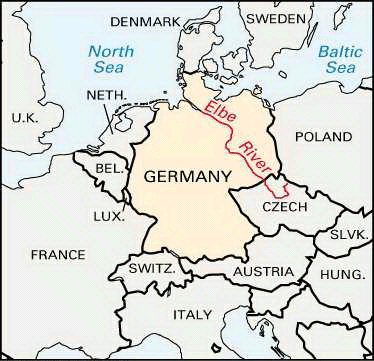
The Schwarze Elster River is a right-bank tributary of the Elbe River located in Germany. It originates in the Lusatian Mountains, approximately 4 miles (7…
What is Schwarze Elster River?
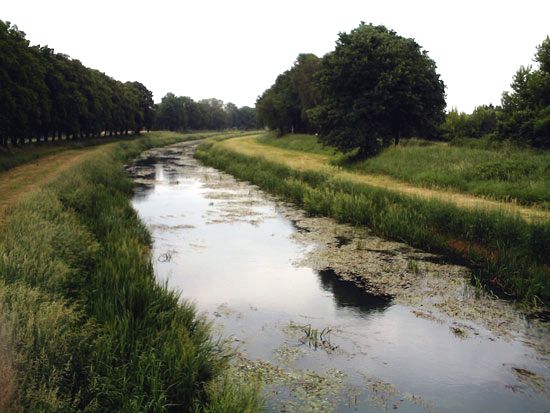
The Schwarze Elster River is a right-bank tributary of the Elbe River located in Germany. It originates in the Lusatian Mountains, approximately 4 miles (7 km) northwest of Bischofswerda, and flows for 112 miles (180 km) before joining the Elbe 9 miles (14 km) southeast of Wittenberg.1
Throughout its course, the river traverses diverse landscapes:
- Upper Lusatia: After leaving the mountains near Kamenz, it flows northeast into the Upper Lusatia region.1
- Mining and Agriculture: Between Hoyerswerda and Senftenberg, the river passes through a lignite (brown coal) mining district. West of Senftenberg, it continues through forests into Lower Lusatia, an agricultural plain.1
- Drainage: The river drains a basin covering 2,123 square miles (5,498 square km).1
While the Elbe receives many tributaries, the Schwarze Elster is notable as one of the right-bank streams that join the river in its middle course.2
What is the significance of the Elbe River in European history?
The Elbe River has served as a vital artery for trade, cultural exchange, and political demarcation throughout European history. Its significance is defined by several key historical roles:
- Cultural and Political Boundary: Until the Middle Ages, the river functioned as the western frontier for northern Slavic peoples. In the 12th century, it became a focal point for German eastward colonization, which expanded influence toward the Baltic Sea.2
- Commercial Hub: The river facilitated the growth of powerful trading centers. Cities like Hamburg and Magdeburg became prominent members of the Hanseatic League in the 13th century, cementing the Elbe as a primary route for European commerce.2
- Symbol of Division and Unity: During World War II, the river gained symbolic importance when U.S. and Soviet forces met near Torgau. Following the war, the Elbe served as a physical demarcation line between East and West Germany until 1990.2
- Center of Arts and Religion: The river basin fostered significant cultural developments, including Wittenberg, the birthplace of the Protestant Reformation, and Dresden, which became a renowned center for fine arts.2
How does lignite mining impact the environment of river regions?
Surface mining, including the extraction of lignite (brown coal), significantly impacts the environment of river regions through habitat destruction and water contamination.78
When mining operations occur near watercourses, they often lead to the following environmental consequences:
- Sedimentation: Exposed surface areas and discarded rock waste weather rapidly, producing abundant sediment that can clog nearby streams.7
- Acid Mine Drainage: Materials overlying coal deposits often contain iron sulfides. When these are exposed to air and water, they oxidize to form sulfuric acid and iron sulfates. This “acid mine drainage” leaches into the environment, causing marked reductions in local plant and animal populations.79
- Contamination: Potentially toxic elements leached from exposed coal and adjacent rocks can enter the environment, posing a risk to groundwater supplies.7
- Topographic Alteration: Mining creates “spoil banks”—loose, infertile mounds of overburden—which are often barren of plant life and difficult to revegetate, leaving behind landscapes that are frequently unsuitable for development without extensive land reclamation.91
We could dive deeper into the specific reclamation techniques used to restore landscapes after mining operations conclude.
What are the main differences between the Schwarze Elster and the Weisse Elster?
The Schwarze Elster and the Weisse Elster are both tributaries of the Elbe River, but they differ significantly in their geography and drainage characteristics:
- Bank Orientation: The Schwarze Elster (Black Elster) is a right-bank tributary of the Elbe. In contrast, the Weisse Elster (White Elster) is a tributary of the Saale River, which itself is a left-bank tributary of the Elbe.1210
- Course and Origin: The Schwarze Elster rises in the Lusatian Mountains and flows north and west through a lignite mining district and agricultural plains before joining the Elbe near Wittenberg. The Weisse Elster rises in the uplands and flows into the Saale, with its geographic focus centered around the cities of Leipzig and Halle.1210
- Hydrological Context: The Schwarze Elster is one of the few right-bank tributaries of the middle Elbe, whereas the Weisse Elster is part of the drainage basin formed by left-bank streams rising in the Ore Mountains or the Thuringian Forest.2
Sources
- Schwarze Elster River — Encyclopædia Britannica
- Elbe River — Encyclopædia Britannica
- Havel River — Encyclopædia Britannica
- Germany - Seaports — Encyclopædia Britannica
- Elbe — Merriam-Webster
- World War II - German strategy, from 1943 — Encyclopædia Britannica
- coal - Hazards of mining and preparation — Encyclopædia Britannica
- land reclamation - Reclamation of mine spoils — Encyclopædia Britannica
- land reclamation — Encyclopædia Britannica
- Saale River — Encyclopædia Britannica
Published on · 3 min read