Ohře River
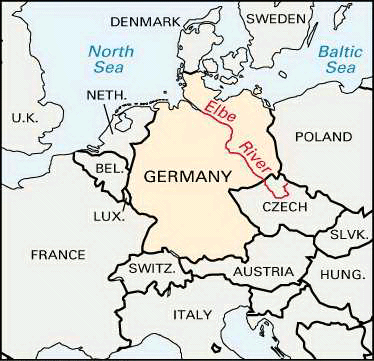
The Ohře River (also known as the Eger) is a 196-mile (316 km) long tributary of the Elbe River. It originates in the Fichtel Mountains of Germany and flows…
What is Ohře River?
The Ohře River (also known as the Eger) is a 196-mile (316 km) long tributary of the Elbe River1. It originates in the Fichtel Mountains of Germany and flows in an easterly and northeasterly direction through the Czech Republic.12
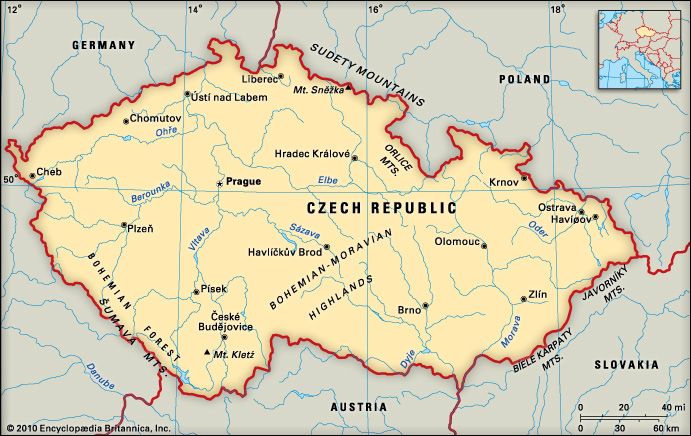
As it traverses the northwestern part of the country, the river passes through several notable cities, including Cheb, Karlovy Vary, Žatec, and Louny, before joining the Elbe opposite Litoměřice. Along its course, the Ohře receives water from several smaller rivers, such as the Teplá, Blšanka, and Chomutovka. It serves as a significant part of the Bohemian drainage system, contributing to the central European watershed.23
What is the significance of the Elbe River?
The Elbe River is a vital waterway in central Europe, stretching 724 miles (1,165 km) from the Czech Republic through Germany to the North Sea. Its significance is defined by its roles in commerce, history, and geography:
- Economic Hub: The river serves as a major transportation artery. Through a network of canals—including the Mittelland Canal, the Elbe-Havel Canal, and the Kiel Canal—it connects industrial centers in Germany and the Czech Republic to the Baltic and North Seas. Hamburg, located on the Elbe, remains one of Europe’s largest seaports.
- Historical Landmark: The Elbe basin has been a site of human settlement since prehistoric times. It served as a medieval boundary between northern Slavs and Germans, and later became a focal point during World War II when U.S. and Soviet forces met at Torgau. For decades, it functioned as a demarcation line between East and West Germany.
- Cultural Significance: The river flows through cities of immense historical importance, such as Dresden, known as “Florence on the Elbe,” and Wittenberg, the birthplace of the Protestant Reformation.
What are the major mountain ranges in the Czech Republic?
The Czech Republic is largely defined by the Bohemian Massif, an elevated basin encircled by several major mountain groups. These ranges form the country’s natural borders and internal highlands.6
The primary mountain systems include:
- Šumava Mountains: Located in the southwest, this range includes the Bohemian Forest along the border with Germany and Austria.67
- Ore Mountains: Situated in the northwest, these mountains (also known as the Erzgebirge) form the frontier with Germany.6
- Sudeten System: This northeastern range borders Poland and includes the Giant Mountains (Krkonoše), home to the country’s highest peak, Mount Sněžka (5,256 feet/1,602 meters). The system is further divided into the West, Middle, and East Sudeten, encompassing ranges like the Jizera, Orlice, and Jeseník Mountains.68
- Bohemian-Moravian Highlands: Located southeast of the Bohemian Plateau, this region features the Moravian Karst.6
- Carpathian Mountains: In the east, the Moravian-Silesian Beskids and the Little Carpathian and Javorníky ranges mark the border with Slovakia.6
How do rivers contribute to hydroelectric power?
Rivers contribute to hydroelectric power by providing the moving water necessary to convert potential energy into mechanical energy and, ultimately, electricity.910
The process typically involves the following steps:
- Collection and Head: Dams are constructed to impound rivers, creating a reservoir that stores water at a higher elevation. The vertical distance between this stored water and the lower elevation where the powerhouse is located is known as the head.910
- Energy Conversion: Water is directed through large pipes or tunnels called penstocks. As it flows downward, the force of the water spins turbines. The design of these turbines—such as the Pelton, Francis, or Kaplan varieties—is tailored to specific flow rates and head heights to maximize efficiency.91110
- Generation: The rotating turbines drive generators, which convert the mechanical energy into electricity. Transformers then increase the voltage for efficient long-distance transmission.910
While hydropower is a clean, renewable energy source, the use of dams can disrupt riverine ecosystems, impede fish migration, and displace human communities.12913
Sources
- Ohře River — Encyclopædia Britannica
- Czech Republic - Drainage and soils — Encyclopædia Britannica
- Eger — Merriam-Webster
- Elbe River — Encyclopædia Britannica
- Elbe-Havel Canal — Encyclopædia Britannica
- Czech Republic - Relief — Encyclopædia Britannica
- Bohemian Forest — Merriam-Webster
- Sudeten — Encyclopædia Britannica
- Did you know? — Merriam-Webster
- hydroelectric power — Encyclopædia Britannica
- turbine - Water turbines — Encyclopædia Britannica
- electric generator - Waterwheel generators — Encyclopædia Britannica
- river - Environmental problems attendant on river use — Encyclopædia Britannica
- Yangtze River - Human impact on the environment — Encyclopædia Britannica
- Alternative energy - Hydroelectric — Encyclopædia Britannica
Published on · 3 min read