Penang
Penang serves as one of Malaysia’s premier tourist destinations, a sector that has been a major component of the island's economy since its development began…
What role does Penang play in Malaysia’s tourism industry?
Penang serves as one of Malaysia’s premier tourist destinations, a sector that has been a major component of the island’s economy since its development began around 1990.1
The island attracts visitors through a combination of natural beauty and historical significance:
- Resort Tourism: The north coast, particularly Batu Feringgi, is well-known for its luxury hotels and beach resorts.1
- Cultural Heritage: George Town, the island’s chief port, offers a rich architectural and cultural experience. Its historical importance was formally recognized in 2008 when UNESCO designated the city a World Heritage site.2
- Landmarks: Tourists frequently visit sites that reflect the region’s colonial past and diverse heritage, such as the restored Fort Cornwallis, St. George’s Church, and the Kek Lok Si Temple, a prominent religious complex.2
How has Penang’s economy evolved from its trading port roots to modern industries?
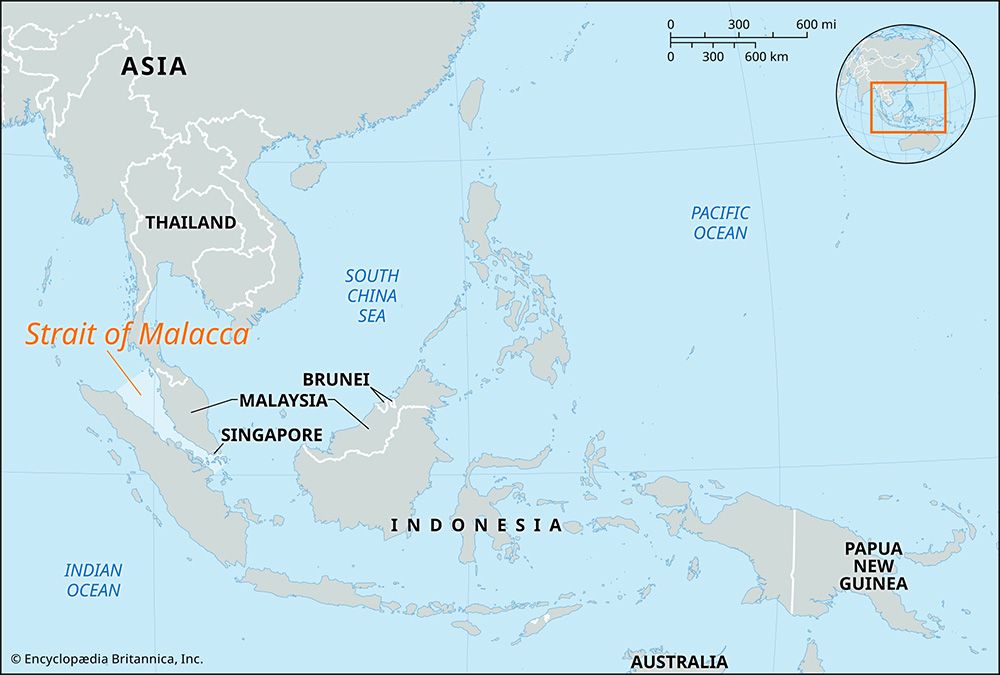
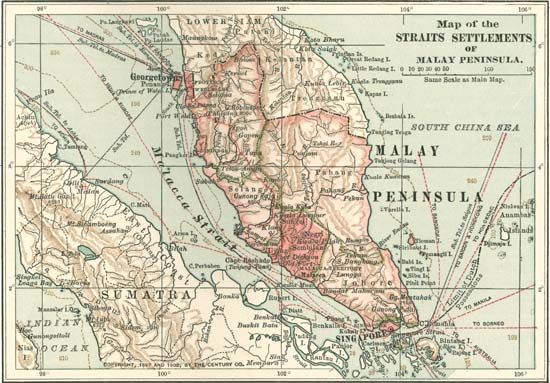
Penang’s economy has undergone a significant transformation since its founding as a British colony in 1786 by Francis Light of the East India Company. Initially, the island served as a vital trading post due to its strategic location in the Strait of Malacca, providing essential shelter and water for vessels on the India-China route.1
By the mid-19th century, Penang evolved into a key market and transit hub for tin and rubber sourced from the mainland. This era established the island as a cosmopolitan commercial center.1
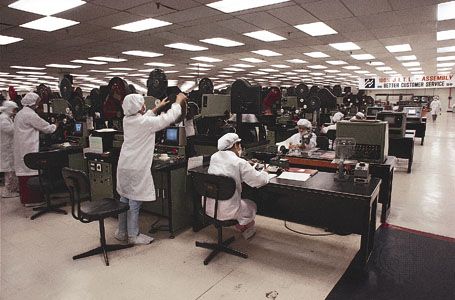
The modern economic structure began to take shape in the late 1970s, when the island shifted its focus toward industrial growth, particularly in manufacturing. Today, electronics production is a major component of this sector. Furthermore, beginning around 1990, tourism emerged as a pillar of the economy, complementing the industrial base. While rural areas continue to support agriculture, the urban and port regions have successfully transitioned from their historical roles as transit points into centers of modern manufacturing and international travel.1
What is the geographical location and size of Penang Island?
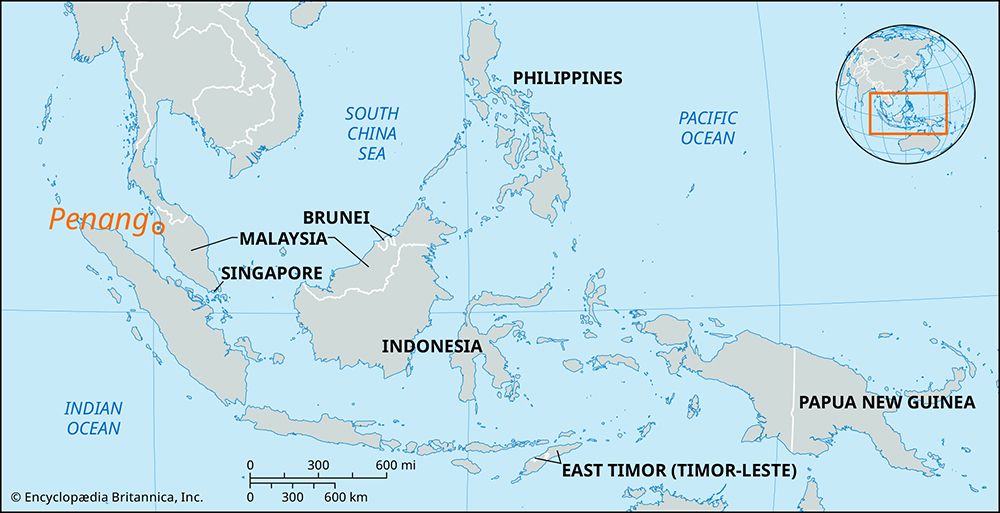
Penang is an island of Malaysia situated in the Strait of Malacca, located off the northwest coast of peninsular Malaya. It is separated from the mainland by a narrow strait that measures approximately 2.5 miles (4 km) at its narrowest point.1
The island is roughly oval in shape and covers an area of 113 square miles (293 square km). Its topography is characterized by a granitic, mountainous interior that reaches an elevation of 2,428 feet (740 meters), surrounded by narrow coastal plains. These plains are most extensive in the northeast, where the city of George Town is located.1
What is the significance of George Town as Penang’s capital city?
George Town serves as the capital of the Malaysian state of Penang and stands as a leading port for the nation. Founded in 1786 by Francis Light of the British East India Company, the city historically flourished as a vital entrepôt and served as the capital of the Straits Settlements.24
The city’s significance is rooted in its strategic sheltered harbour, which facilitates international shipping and handles the bulk of the Malay Peninsula’s cargo, including exports like tin and rubber. Beyond its commercial role, George Town is a cultural and architectural landmark; its rich heritage, reflected in sites like St. George’s Church and the Kek Lok Si Temple, led UNESCO to designate it a World Heritage site in 2008. Today, it remains a cosmopolitan hub that integrates colonial history with modern industrial activity, including electronics manufacturing in nearby estates.2
Sources
- Penang — Encyclopædia Britannica
- George Town — Encyclopædia Britannica
- Malaysia - Manufacturing — Encyclopædia Britannica
- George Town — Merriam-Webster
Published on · 3 min read