Malay Peninsula
During World War II, the Malay Peninsula served as a critical theater of conflict following a rapid Japanese invasion that began in early December 1941.…
What role did the Malay Peninsula play during World War II?
During World War II, the Malay Peninsula served as a critical theater of conflict following a rapid Japanese invasion that began in early December 1941. Within ten weeks, Japanese forces secured air and naval superiority, effectively overrunning the peninsula and positioning themselves to capture Singapore by February 1942.123
The occupation prompted the formation of the Malayan People’s Anti-Japanese Army (MPAJA), a guerrilla movement primarily composed of Chinese Communists. Supported by the British with officers and supplies, the MPAJA operated from the jungle as the primary local resistance force against the Japanese occupation. While the group was advised to avoid large-scale engagements, its members gained significant influence and political momentum during the war. Following the Japanese surrender in September 1945, the MPAJA disbanded, though its organizational structure and arms remained largely intact, eventually contributing to the Malayan Communist Party uprising in 1948.1
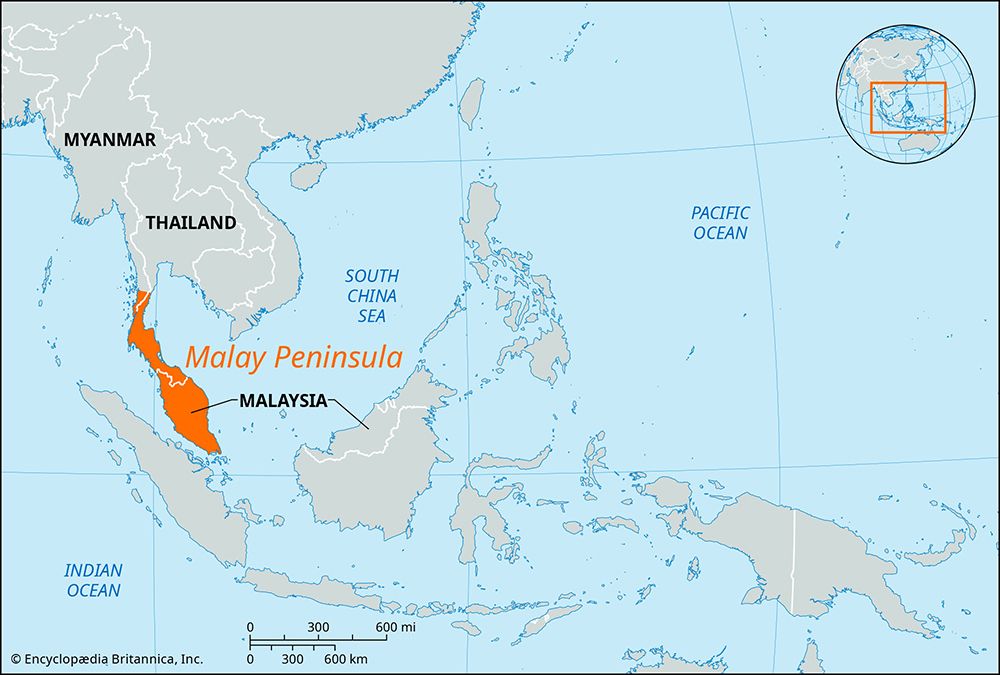
How has the Malay Peninsula’s strategic position influenced its history and trade?
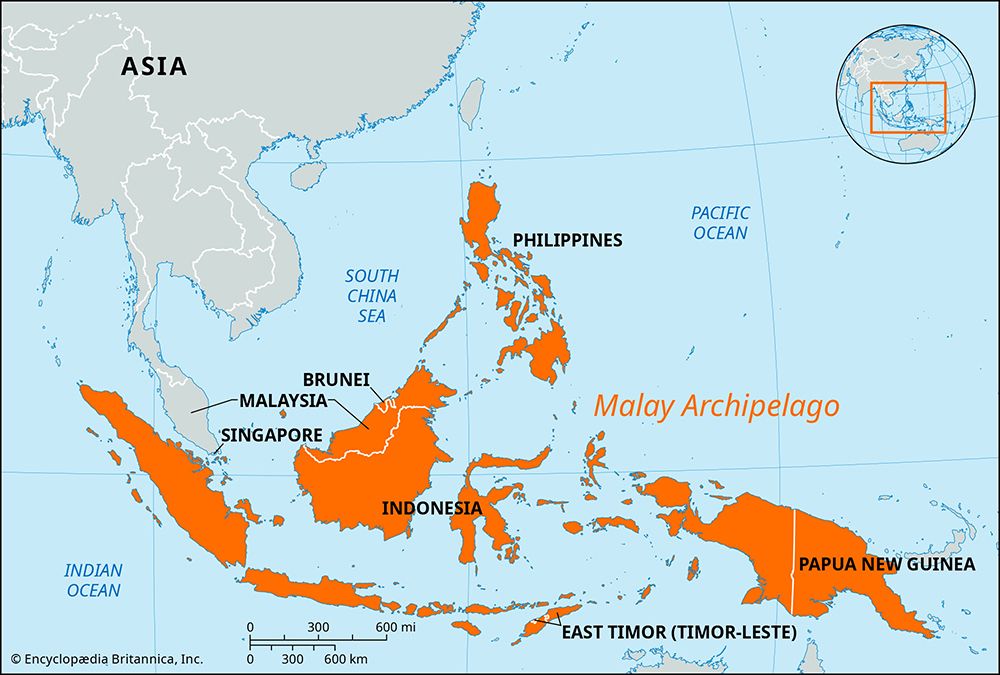
The Malay Peninsula has historically served as a vital geographic and cultural bridge between the Asian mainland and the Malay Archipelago. Its strategic position, particularly along the Strait of Malacca, has made it a central crossroads for international maritime trade for centuries.67
Influence on Trade
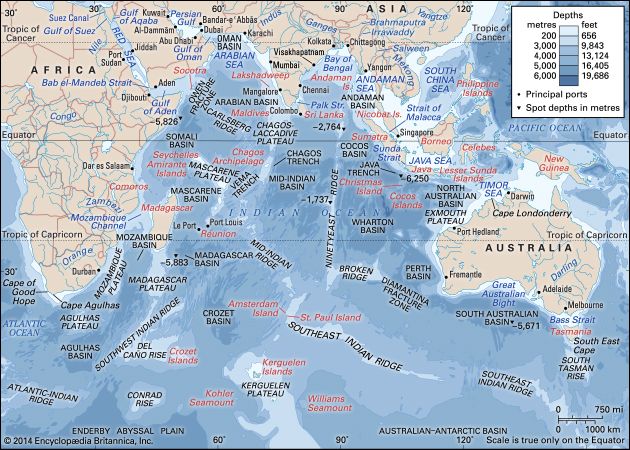
The peninsula’s location allowed it to function as a primary link in the great Indian Ocean trading routes, connecting China to India, the Middle East, and eventually Europe. By the 15th century, the port of Malacca emerged as a premier entrepôt, facilitating the exchange of Indonesian spices, Malayan gold, and Chinese silks and tea. This environment of free trade attracted thousands of merchants from diverse backgrounds, establishing the region as a hub of global commerce.897
Cultural and Historical Impact
This constant flow of trade brought profound cultural, religious, and political influences to the region:
- Indianization: Beginning in the 1st millennium CE, Indian traders and priests introduced concepts of government, arts, and religions such as Hinduism and Buddhism, which shaped early local states.10
- Spread of Islam: From the 13th to the 17th century, Arab and Indian merchants were instrumental in the dissemination of Islam. The conversion of Malacca’s rulers helped establish it as a regional center for the faith, which became deeply integrated into the identity of the Malay people.89
What are the primary economic activities and natural resources found in the Malay Peninsula?
The economy of the Malay Peninsula has evolved from a reliance on raw material exports to a diversified model emphasizing manufacturing and services.13
Primary Economic Activities
- Manufacturing: This sector has become the primary driver of economic growth, with electrical and electronic products constituting the largest share of exports.1314
- Agriculture: While its contribution to the GDP has declined, agriculture remains significant. Palm oil and rubber are the dominant cash crops. Other products include cocoa, pepper, coffee, and various fruits.15
- Mining: The extraction of petroleum and natural gas is a major economic pillar, with most fields located offshore.16
- Forestry and Fishing: The region is a major source of commercial hardwoods, though sustainable management is a focus due to past deforestation. The fishing industry has expanded through the development of deep-sea fishing and aquaculture13.15
Natural Resources
- Minerals: The peninsula is rich in metallic ores, including tin—historically central to the economy—as well as bauxite, copper, and iron.16
- Energy: Beyond oil and gas, the region utilizes hydroelectric power, with significant potential for further development in its interior highlands.16
What are the main mountain ranges and river systems of the Malay Peninsula?
The Malay Peninsula is characterized by a mountainous core and an intricate network of rivers that have historically shaped settlement and communication patterns.
Mountain Ranges
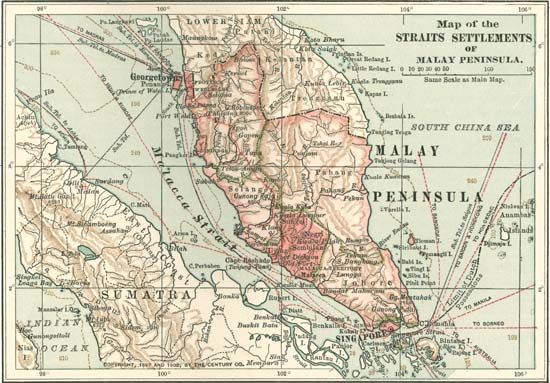
The peninsula is dominated by a series of roughly parallel, north-south mountain ranges. The most prominent of these is the Main Range, which extends 300 miles (480 km) southward from the Thai border. This range features elevations that frequently exceed 3,000 feet (900 m), with several peaks surpassing 7,000 feet (2,100 m), including Mount Korbu. In central areas, the range includes eastward extensions that culminate in Mount Tahan, the highest peak on the peninsula at 7,175 feet (2,187 m).
River Systems
The peninsula is drained by numerous perennial rivers and streams, which are fed by constant rainfall. These systems have historically served as the primary means of communication between the coast and the interior.
- Pahang River: As the longest river on the peninsula, the Pahang flows for approximately 271 miles (436 km). It rises in the interior and eventually empties into the South China Sea.
- Other Systems: The mountainous core gives rise to several other significant river systems, such as the Perak, which drain the surrounding valleys and plains.
Sources
- Malayan People’s Anti-Japanese Army — Encyclopædia Britannica
- history of Singapore - World War II and the end of colonialism — Encyclopædia Britannica
- World War II - Pearl Harbor and the Japanese expansion, to July 1942 — Encyclopædia Britannica
- Singapore - World War II and the end of colonialism — Encyclopædia Britannica
- Malaysia - Demographic trends — Encyclopædia Britannica
- Malay Peninsula — Encyclopædia Britannica
- history of Malaysia - The advent of Islam — Encyclopædia Britannica
- Malaysia - The advent of Islam — Encyclopædia Britannica
- Malaysia - History of Malaysia — Encyclopædia Britannica
- Malaysia - Prehistory and the rise of Indianized states — Encyclopædia Britannica
- spice trade — Encyclopædia Britannica
- history of Sri Lanka - Foreign trade — Encyclopædia Britannica
- Malaysia - Agriculture, forestry, and fishing — Encyclopædia Britannica
- Malaysia - Resources and power — Encyclopædia Britannica
- Malaysia - Economy of Malaysia — Encyclopædia Britannica
- Malaysia - Trade — Encyclopædia Britannica
- Brunei - Resources and power — Encyclopædia Britannica
- Malaysia - Drainage — Encyclopædia Britannica
- Main Range — Encyclopædia Britannica
- Malaysia - Relief — Encyclopædia Britannica
- Malaysia - Rural settlement — Encyclopædia Britannica
- Pahang River — Encyclopædia Britannica
Published on · 4 min read