Strait of Malacca
The Strait of Malacca has served as a vital maritime artery for over a millennium, fundamentally shaping the economic and cultural landscape of Southeast…
How has the Strait of Malacca influenced the cultural and economic development of the surrounding regions?
The Strait of Malacca has served as a vital maritime artery for over a millennium, fundamentally shaping the economic and cultural landscape of Southeast Asia. As the shortest sea route between India and China, it became a global crossroads for trade, facilitating the exchange of spices, gold, silk, and tea.123
Economic Impact
The strait’s strategic importance fostered the rise of powerful trading entrepôts, most notably the Sultanate of Malacca. By the 15th century, Malacca’s commitment to stable government and free trade attracted thousands of merchants from across the globe. Today, the region remains one of the world’s most heavily traveled shipping channels, supporting major modern ports like Singapore and Port Kelang, and serving as a critical corridor for global energy supplies.2314
Cultural Development
The strait acted as a conduit for the spread of major world religions and cultural traditions. Islam arrived via Arab and Indian merchants, profoundly influencing the social and political structures of the Malay world. This maritime connectivity also integrated diverse influences—including Indian, Chinese, and Western traditions—into the multifaceted Malay culture seen today.235
What are the historical significance and major events associated with the Strait of Malacca?
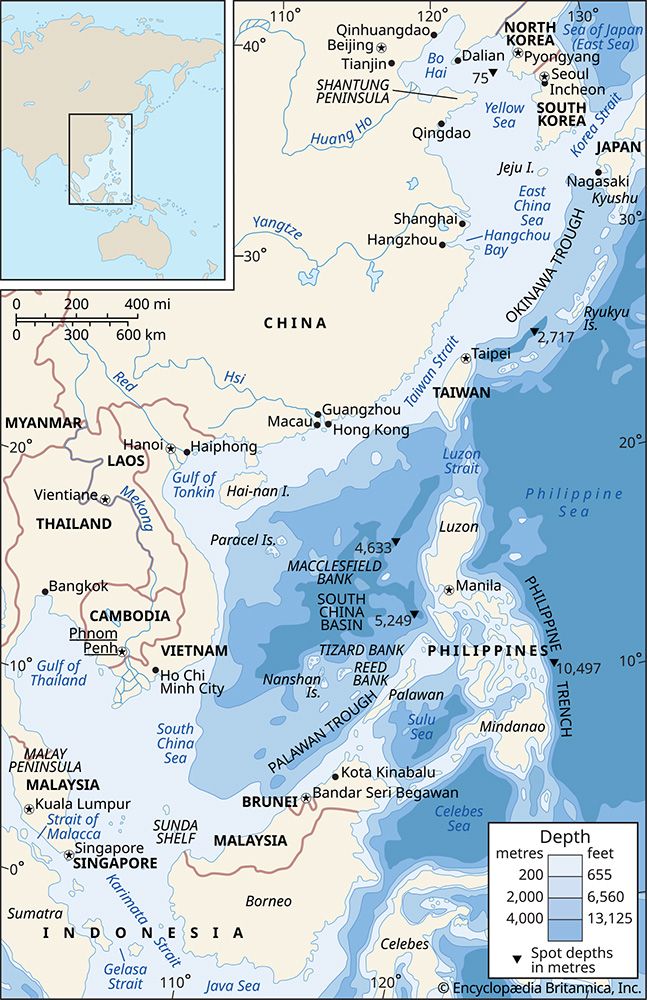
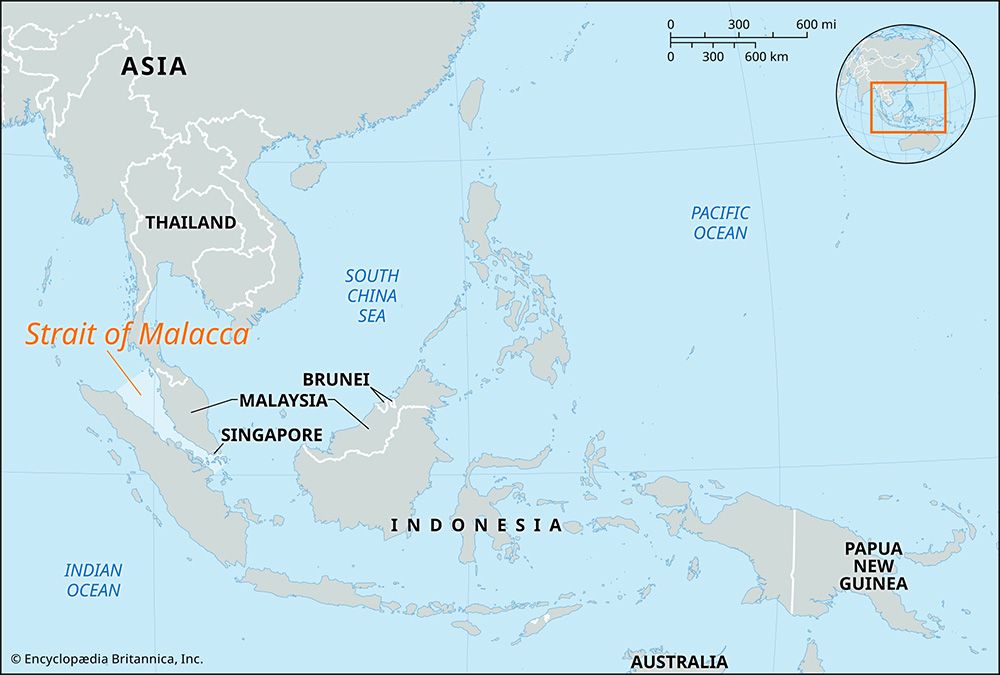
The Strait of Malacca is a vital 500-mile-long waterway connecting the Andaman Sea and the South China Sea. As the shortest sea route between India and China, it has served as a critical global shipping channel for centuries, currently facilitating approximately 30 percent of all global trade.12
Historical Significance and Major Events
- Rise of the Sultanate of Malacca (c. 1403–1511): Established by the Sumatran prince Paramesvara, the port of Malacca became Southeast Asia’s preeminent commercial entrepôt. It served as a hub for the exchange of spices, gold, silk, and tea, and acted as a center for the propagation of Islam in the region.785
- European Intrusion: The strategic value of the strait attracted colonial powers. In 1511, a Portuguese fleet led by Afonso de Albuquerque captured Malacca. Later, the Dutch seized the city in 1641, though it never fully regained its former commercial glory.39
- Modern Era: The strait remains a critical maritime choke point, essential for the transport of energy supplies from the Middle East to East Asia.12
How does the Strait of Malacca impact global trade and shipping?
The Strait of Malacca is a critical maritime choke point that serves as the shortest sea route between India and China, making it one of the most heavily traveled shipping channels in the world.18
Its impact on global trade and shipping is profound:
- Volume of Trade: The strait facilitates approximately 30 percent of all global trade, serving as a vital gateway for international commerce.8
- Energy Corridor: It is a primary transit route for giant oil tankers transporting energy supplies from the Middle East to major economies in Japan and other parts of East Asia.1
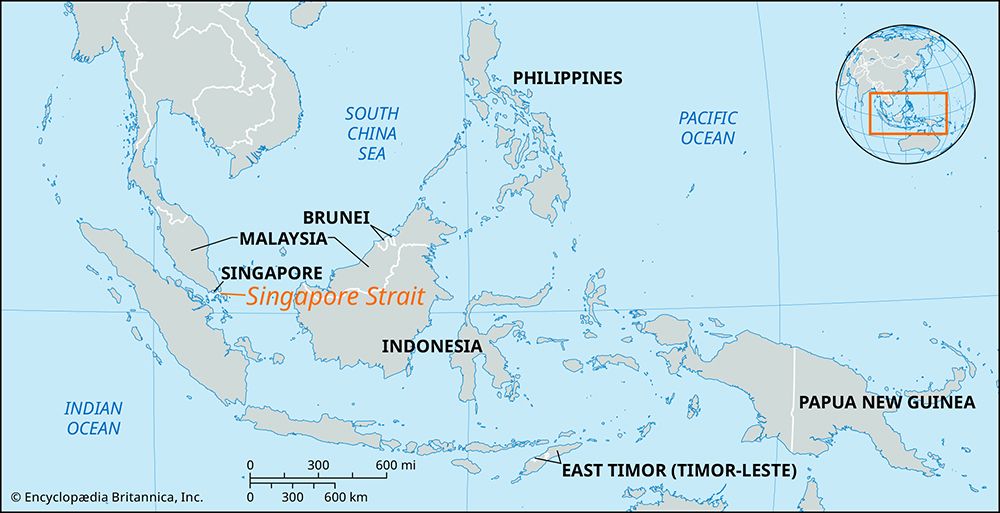
- Strategic Ports: The waterway supports the operations of some of the world’s most important commercial hubs, most notably the port of Singapore, which sits at the strait’s southern end and relies on the adjacent Singapore Strait as a deepwater approach.110
By connecting the Indian Ocean and the Pacific Ocean, the strait remains an indispensable link in the global supply chain.18
How has the importance of the Strait of Malacca changed throughout history?
The Strait of Malacca has served as a pivotal maritime corridor for centuries, evolving from a regional migration path into one of the world’s most critical economic arteries.
Early Significance and the Sultanate Era
In early history, the strait influenced major Asian migrations through the Malay Archipelago. By the 15th century, it became the center of the Sultanate of Malacca, which functioned as Southeast Asia’s primary trading entrepôt. This port facilitated the exchange of spices, gold, silk, and tea, while also serving as a vital hub for the spread of Islam across the region.111
Colonial Control and Strategic Shifts
The strait’s strategic value drew successive waves of European powers, including the Portuguese, Dutch, and British. The British, in particular, consolidated control over key ports—Penang, Malacca, and Singapore—to secure their economic interests. The 1869 opening of the Suez Canal further amplified the strait’s importance by shortening the maritime route between Europe and Asia.1312
Modern Global Importance
Today, the strait remains the shortest sea route between India and China, accounting for approximately 30 percent of all global trade. It serves as an essential energy corridor, allowing giant oil tankers to transport supplies from the Middle East to major economies in East Asia.110
Sources
- Strait of Malacca — Encyclopædia Britannica
- history of Malaysia - The advent of Islam — Encyclopædia Britannica
- Malaysia - The advent of Islam — Encyclopædia Britannica
- Malaysia - Cultural milieu — Encyclopædia Britannica
- history of Malaysia - Early European intrusions and emerging sultanates in Malaysia — Encyclopædia Britannica
- Malaysia - Transportation — Encyclopædia Britannica
- sultanate of Malacca — Encyclopædia Britannica
- List of Important Straits — Encyclopædia Britannica
- Malaysia - Early European intrusions and emerging sultanates — Encyclopædia Britannica
- Singapore Strait — Encyclopædia Britannica
- history of Malaysia - Malaya — Encyclopædia Britannica
- history of Singapore - Development of the port of Singapore — Encyclopædia Britannica
Published on · 3 min read