Russell Cave National Monument
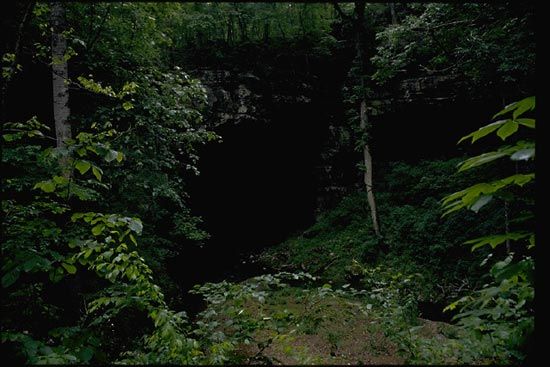
Russell Cave National Monument is distinguished by its remarkably long, nearly continuous record of human habitation, dating back to at least 7000 BCE. This…
How does Russell Cave compare to other important archaeological sites in Alabama?
Russell Cave National Monument is distinguished by its remarkably long, nearly continuous record of human habitation, dating back to at least 7000 BCE. This site provides a deep chronological window into the Archaic, Woodland, and Mississippian cultures, offering a unique stratigraphic history of early pre-Columbian life in the region.12
In contrast, other major archaeological sites in Alabama, such as Moundville Archaeological Park, focus on different aspects of indigenous history. While Russell Cave serves as a record of long-term occupation within a limestone cavern, Moundville represents a specific, highly developed Mississippian habitation site active from approximately 1000 to 1450 CE. Moundville is characterized by its large-scale earthworks, including two dozen flat-topped mounds that served as foundations for temples and dwellings, reflecting a complex social and political center rather than the long-term shelter usage seen at Russell Cave.34
How does Russell Cave National Monument help us understand the lives of prehistoric Native Americans?
Russell Cave National Monument provides a vital window into the lives of prehistoric Native Americans by preserving an almost continuous record of human habitation dating back to at least 7000 BCE.1
By studying the layers of this limestone cavern, archaeologists have uncovered a wealth of artifacts that document the evolution of various groups over thousands of years, specifically those associated with the Archaic, Woodland, and Mississippian cultures. These findings allow researchers to track changes in technology, daily survival, and cultural development within the region. Because the site was occupied for such an extensive period, it serves as a chronological timeline, helping us understand how these early societies adapted to their environment and transitioned through different cultural stages.1
What types of artifacts have archaeologists discovered in Russell Cave?
Archaeologists have recovered a significant collection of artifacts from Russell Cave National Monument, which provide a nearly continuous record of human habitation dating back to at least 7000 BCE. These findings represent the Archaic, Woodland, and Mississippian cultures.
While specific itemized lists of every recovered object are maintained at the monument’s visitor center, excavations at the site and similar regional shelters have revealed a variety of tools and implements characteristic of these periods, including:
- Stone Tools: Archaeologists have identified chipped-flint projectiles, knives, scrapers, perforators, drills, and adzes.
- Ground-Stone Implements: The site contains evidence of woodworking tools, milling stones used for processing plant foods, and various ground-stone items such as bowls, knives, and net sinkers.
- Hunting Gear: Artifacts include stemmed or notched projectile points used for hunting, as well as weights designed for spear throwers.
These artifacts illustrate the transition from earlier traditions to more specialized toolkits as indigenous groups adapted to the forest environment and diversified their resource gathering.
What is the geological history of Russell Cave?
Russell Cave National Monument is situated within a limestone cavern in the Appalachian Plateau of northeastern Alabama. While the provided search results do not detail the specific geological timeline of the cave’s formation, it is identified as a single chamber belonging to a much larger, extensive cave system with approximately 7 miles of mapped passages.1
Generally, caves of this type are formed through solutional processes, where water dissolves the surrounding bedrock, creating chambers and passages over vast periods. These environments often feature secondary sculpturings, such as scallops and pockets, which provide evidence of ancient water flow patterns and velocities. The site’s location in the Appalachian Plateau places it in a region characterized by nearly horizontal rock layers, including significant deposits of limestone, which are essential for the development of such karst landscapes.72
Sources
- Russell Cave National Monument — Encyclopædia Britannica
- Russell Cave National Monument — Merriam-Webster
- Alabama - Cultural institutions — Encyclopædia Britannica
- Moundville Archaeological Park — Encyclopædia Britannica
- Native American - Eastern Archaic cultures — Encyclopædia Britannica
- Stone Age - Archaic tradition — Encyclopædia Britannica
- Appalachian Plateau — Encyclopædia Britannica
- cave - Solutional sculpturings — Encyclopædia Britannica
Published on · 3 min read