Saint Abb’s Head
Saint Abb’s Head is a prominent headland located on the North Sea in the Scottish Borders council area of southeastern Scotland, within the historic county…
What is the geographical location and significance of Saint Abb’s Head?
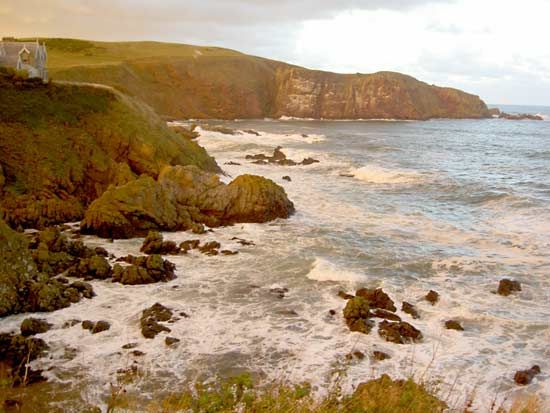
Saint Abb’s Head is a prominent headland located on the North Sea in the Scottish Borders council area of southeastern Scotland, within the historic county of Berwickshire. Situated approximately 12 miles northwest of Berwick-upon-Tweed, England, the site is characterized by sheer cliffs reaching heights of about 300 feet.1
The area holds significant ecological and historical value:
- Nature Conservation: It is a national nature reserve managed by the National Trust for Scotland and the Scottish Wildlife Trust, serving as a vital sanctuary for nesting and migrating seabirds.1
- Historical Heritage: The site was the location of a 7th-century convent established by the Northumbrian princess Ebba, which was later destroyed by Norsemen in the 9th century. Additionally, the nearby village of St. Abb’s features the remains of a priory founded by King Edgar around 1098.1
Today, the location is recognized as a popular summer resort area alongside the neighboring village of Coldingham and West Loch.1
What types of seabirds can be found nesting at Saint Abb’s Head?
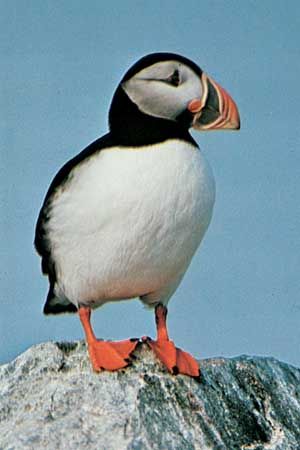
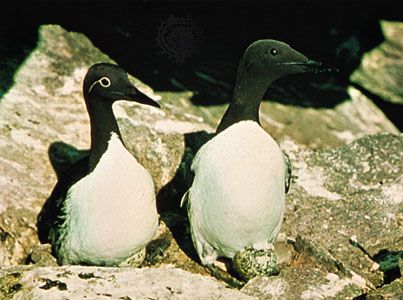
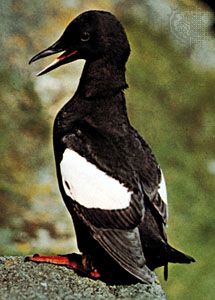
Saint Abb’s Head serves as a vital national nature reserve for a variety of nesting and migrating seabirds. While the specific species list is broad, the site is well-suited for members of the family Alcidae, commonly known as auks or alcids.13
These birds are characteristic of such coastal environments, where they typically nest on cliff ledges, in rock crevices, or within burrows. Common types of seabirds within this group that utilize similar habitats include:3
These birds are highly adapted to the marine environment, relying on the sea for food such as small fish and invertebrates. Because Saint Abb’s Head features sheer cliffs reaching approximately 300 feet in height, it provides the necessary vertical terrain required by these species for successful colonial nesting.341
What recreational activities are popular at Saint Abb’s Head?
Saint Abb’s Head is a popular destination for visitors seeking to enjoy its scenic coastal environment and historical significance. As part of a summer resort area alongside the neighboring village of Coldingham and West Loch, the location offers several recreational opportunities:
- Birdwatching: As a national nature reserve managed by the National Trust for Scotland and the Scottish Wildlife Trust, the headland is a premier site for observing nesting and migrating seabirds along its 300-foot-high cliffs.1
- Sightseeing and Heritage Exploration: Visitors can explore the historical remains of a priory established by King Edgar around 1098 in the village of St. Abb’s, as well as learn about the site’s 7th-century origins as a convent founded by the Northumbrian princess Ebba.1
- Coastal Recreation: The area serves as a summer resort, providing opportunities for walking and enjoying the coastal landscape of the Scottish Borders.1
Are there any notable shipwrecks or maritime incidents associated with Saint Abb’s Head?
Saint Abb’s Head is historically linked to a significant maritime incident involving the 7th-century Northumbrian princess Ebba. According to historical accounts, Ebba escaped a shipwreck at the promontory, an event that led her to establish a convent at the site.1
While this event is the most notable maritime association recorded in the area’s history, the treacherous nature of the coastline—characterized by its sheer 300-foot cliffs—has long made the waters surrounding the headland a challenging environment for navigation.1
Sources
- Saint Abb’s Head — Encyclopædia Britannica
- St. Kilda — Encyclopædia Britannica
- Charadriiform - Auks (suborder Alcae) — Encyclopædia Britannica
- Shorebird — Encyclopædia Britannica
- Auk — Encyclopædia Britannica
- Charadriiform - Locomotion and feeding behaviour — Encyclopædia Britannica
Published on · 3 min read