10 Deadliest Typhoons in History
Typhoons are tropical cyclones that occur in the western North Pacific region. While the term is specific to that area, these storms are part of a broader…
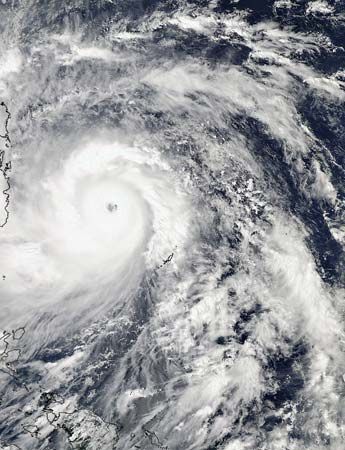
What are 10 Deadliest Typhoons in History?
Typhoons are tropical cyclones that occur in the western North Pacific region. While the term is specific to that area, these storms are part of a broader category of destructive weather systems that include hurricanes and cyclones.12
Below are 10 of the deadliest typhoons on record, ranked by their approximate human impact:
Name of Typhoon
Date of Impact
Primary Region Affected
Approximate Fatalities
Haiphong typhoon
October 8, 1881
Vietnam
300,000
Typhoon Nina
August 1975
Taiwan, China
171,000–220,000
China typhoon of 1912
August 29, 1912
China
50,000–220,000
Swatow typhoon
August 2–3, 1922
China
More than 70,000
Great Hong Kong Typhoon
September 2, 1937
Hong Kong
More than 11,000
Hong Kong typhoon of 1906
September 18, 1906
Hong Kong
About 10,000
Super Typhoon Haiyan
November 8, 2013
Philippines, Vietnam, China
More than 6,300
Super Typhoon Vera
September 26, 1959
Japan
More than 5,000
Muroto typhoon
September 20–21, 1934
Japan
More than 3,000
Typhoon Ida
September 17, 1945
Japan
More than 2,400
These storms often cause catastrophic loss of life not only through high winds but also through secondary disasters such as storm surges, flooding, and dam failures.2
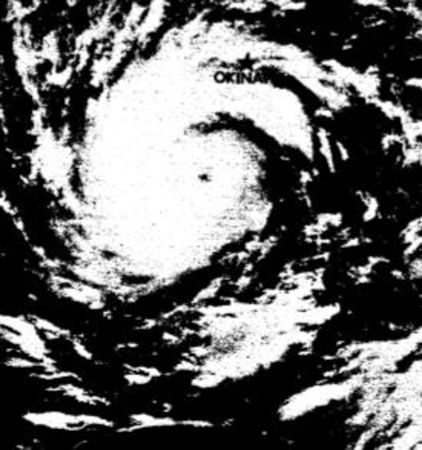
What is the difference between a typhoon, a hurricane, and a cyclone?
The terms typhoon, hurricane, and cyclone all refer to the same weather phenomenon: a tropical cyclone. These are intense, circular storm systems characterized by low atmospheric pressure, heavy rain, and sustained winds exceeding 119 km (74 miles) per hour.45
The distinction between these names is based entirely on the geographical region where the storm occurs:67
- Hurricane: Used for tropical cyclones in the North Atlantic and the eastern North Pacific.6
- Typhoon: Used for tropical cyclones in the western North Pacific and the South China Sea.67
- Cyclone: Used for tropical cyclones in the western South Pacific and the Indian Ocean.6
Regardless of the name, these storms are powered by energy from warm ocean surfaces and can cause significant destruction through high winds, storm surges, and flooding.45
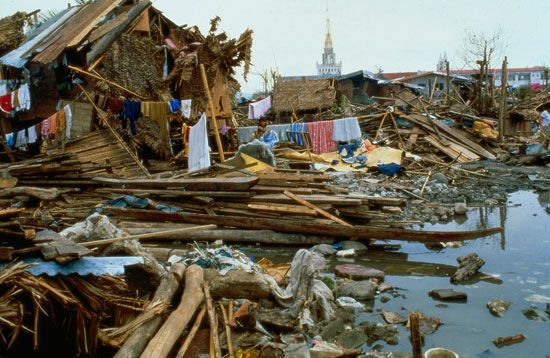
How do meteorologists measure the strength of a typhoon?
Meteorologists measure the strength of a typhoon—a type of tropical cyclone—primarily by analyzing its maximum sustained surface-wind speeds. These are defined as the highest average wind speeds measured over a one-minute interval at an elevation of 10 meters (32.8 feet) above the water.810
To gather this data, meteorologists utilize several methods:
- Satellite Imagery: Geostationary satellites provide continuous infrared and visible light data. By observing specific cloud patterns, meteorologists can estimate a storm’s intensity and wind speed.11
- Aircraft Reconnaissance: For the most accurate data, aircraft fly directly into storms to deploy instruments called dropsondes. These devices measure atmospheric pressure, temperature, humidity, and wind speed as they descend through the storm.11
- Classification Systems: While numerical ranking scales like the Saffir-Simpson hurricane scale are officially used in the Atlantic and eastern Pacific, the intensity of typhoons in the western North Pacific is often categorized by specific regional bureaus, such as the Hong Kong Observatory or the Japanese Meteorological Agency, which use varying wind-speed thresholds to define super typhoons.81012
What is a storm surge and why is it so dangerous?
A storm surge is an abnormal rise in sea level that occurs when high-velocity winds from a tropical cyclone or tropical storm push water toward the shore. While changes in atmospheric pressure contribute slightly to this effect, the primary cause is the friction between the storm’s intense winds and the ocean surface, which piles water up in the direction the wind is blowing.141516
Why It Is So Dangerous
Storm surges are often the deadliest phenomenon associated with tropical cyclones, responsible for the majority of deaths during landfalls. Their danger stems from several factors:1417
- Inundation: Surges can raise water levels by several meters, pushing water far inland and causing catastrophic flooding that overwhelms coastal communities.1417
- Structural Destruction: The force of the water is powerful enough to push buildings off their foundations, destroy infrastructure, and scatter debris, which can cause further injury or damage.17
- Exacerbation: Surges often occur alongside heavy rainfall, compounding the flooding and making evacuation or rescue efforts significantly more difficult.1517
- Environmental Vulnerability: The loss of natural buffers, such as wetlands and mangroves, can allow water to advance more rapidly and penetrate deeper inland.17
Sources
- 20 Deadliest Storms in History — Encyclopædia Britannica
- 10 Deadliest Typhoons in History — Encyclopædia Britannica
- Super Typhoon Haiyan — Encyclopædia Britannica
- 20 Deadliest Storms in History: Top Questions — Encyclopædia Britannica
- What's the Difference Between… | A typhoon, a hurricane, and a cyclone — Merriam-Webster
- tropical cyclone - Anatomy of a cyclone — Encyclopædia Britannica
- tropical cyclone - Naming systems — Encyclopædia Britannica
- What Is the Difference Between a Typhoon and a Super Typhoon? — Encyclopædia Britannica
- tropical storm — Encyclopædia Britannica
- Climate - Conditions associated with cyclone formation — Encyclopædia Britannica
- Saffir-Simpson hurricane scale — Encyclopædia Britannica
- tropical cyclone - Intensity scales — Encyclopædia Britannica
- tropical cyclone - Use of satellites and aircraft — Encyclopædia Britannica
- tropical cyclone - The storm surge — Encyclopædia Britannica
- surge — Encyclopædia Britannica
- Weather forecasting - Predictive skills and procedures — Encyclopædia Britannica
- Hurricane Ian — Encyclopædia Britannica
- What Is the Difference Between a Meteotsunami, a Seiche, and a Storm Surge? — Encyclopædia Britannica
- What Causes Tsunamis? — Encyclopædia Britannica
Published on · 3 min read