38th Parallel
The 38th parallel is the circle of latitude at 38° N that serves as the approximate boundary between North Korea and South Korea.
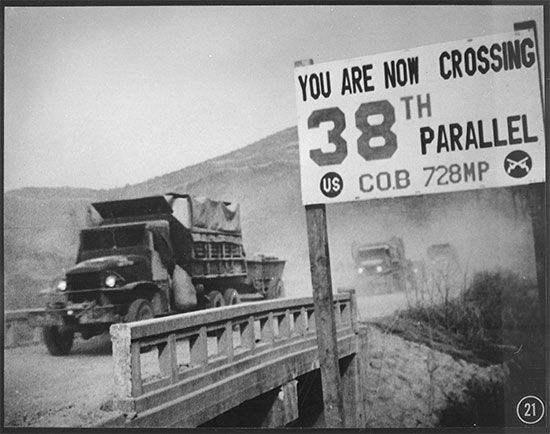
What is the 38th parallel and why is it significant in geopolitics?
The 38th parallel is the circle of latitude at 38° N that serves as the approximate boundary between North Korea and South Korea.1
Geopolitically, it originated as a temporary administrative line established by U.S. military planners in 1945 to accept the surrender of Japanese forces following World War II. However, the onset of the Cold War solidified this division into two distinct, ideologically opposed regimes.1
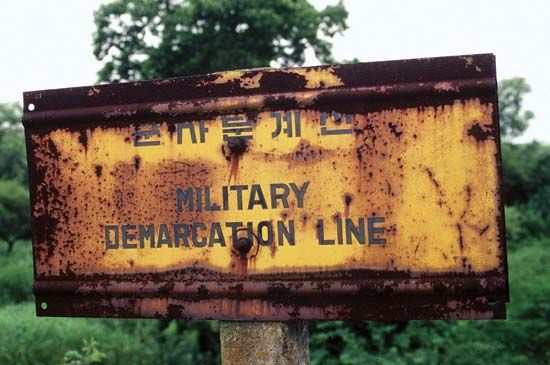
During the Korean War, the line became a major flashpoint. Following the conflict, a demilitarized zone (DMZ) was established, creating a heavily fortified buffer that remains one of the world’s most significant symbols of geopolitical tension. The area around the “truce village” of P’anmunjŏm continues to serve as a critical site for diplomatic dialogue between the two nations and their international allies.1
Are there any other countries or regions where the 38th parallel holds geopolitical significance?
The 38th parallel holds no specific geopolitical significance in other regions of the world. While the 38th parallel exists as a line of latitude at 38° N and 38° S globally, its status as a major geopolitical boundary is unique to the Korean Peninsula, where it serves as the approximate demarcation between North Korea and South Korea.123
The significance of this line is rooted in the specific historical context of the post-World War II era, when it was chosen by U.S. military planners as a temporary administrative boundary for accepting the surrender of Japanese forces. This division subsequently hardened into a permanent ideological and military frontier due to the Cold War and the Korean War.1
What role did the 38th parallel play in the Korean War?
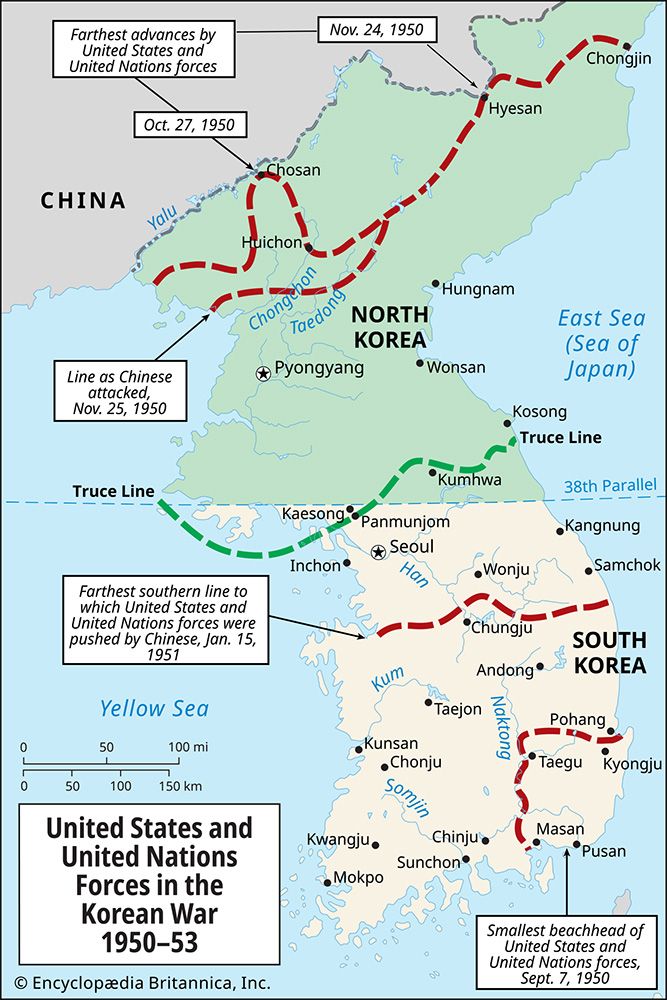
The 38th parallel served as the central geographic and political reference point throughout the Korean War. Originally established in 1945 as a temporary administrative boundary for accepting the surrender of Japanese forces, it became the flashpoint for the conflict that erupted in June 1950.14
During the war, the parallel functioned as a shifting front line:
- UN Advance: Following the outbreak of hostilities, United Nations forces, led by Gen. Douglas MacArthur, moved north of the 38th parallel in an effort to occupy North Korea.1
- Stalemate: After the intervention of Chinese troops, the front lines stabilized, and the war eventually reached a stalemate roughly along the 38th parallel.1
- Armistice Demarcation: When the armistice was signed, the final ceasefire line deviated from the exact latitude of the 38th parallel. South Korea gained territory north of the parallel in the east, while North Korea retained a portion south of the parallel in the west, including the city of Kaesŏng.1
This line was ultimately replaced by the demilitarized zone (DMZ), a 150-mile-long buffer zone that remains one of the world’s most heavily fortified borders.14
How does the Demilitarized Zone (DMZ) along the 38th parallel function today?
The Demilitarized Zone (DMZ) functions today as a 150-mile-long (240-km) buffer zone that separates North Korea and South Korea. Created by the 1953 armistice, it was established by pulling forces back 1.2 miles (2 km) on each side of the ceasefire line.14
Key aspects of the DMZ’s current function include:
- Military Fortification: The areas immediately north and south of the zone remain among the most heavily fortified borders in the world, with both sides maintaining large troop contingents.14
- Diplomatic Venue: The “truce village” of P’anmunjŏm, located within the DMZ, continues to serve as a site for conferences and discussions involving the two Koreas, their allies, and the United Nations.14
- Ecological Sanctuary: Because the zone has remained largely untouched since the end of the Korean War, it has reverted to nature. It now serves as a pristine habitat for various species, including endangered cranes, Asiatic black bears, and lynxes.4
- Persistent Danger: Despite its ecological value, the zone is hazardous due to the presence of over one million land mines and other unexploded ordnance.4
Sources
- 38th parallel — Encyclopædia Britannica
- North Korea — Encyclopædia Britannica
- parallel — Encyclopædia Britannica
- demilitarized zone — Encyclopædia Britannica
- Why are North and South Korea divided? — Encyclopædia Britannica
Published on · 3 min read