Adam’s Bridge
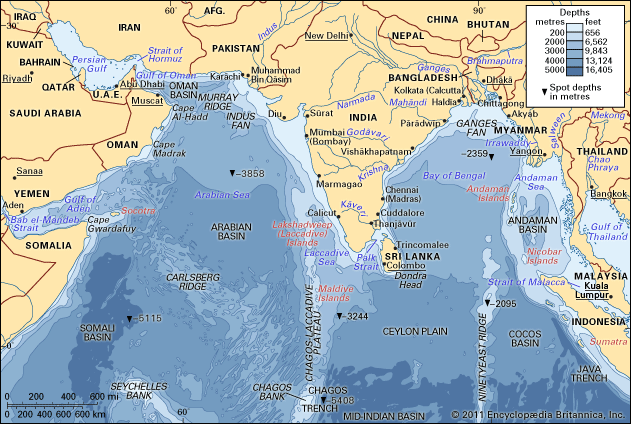
Adam’s Bridge is a 30-mile-long chain of shoals connecting Mannar Island in Sri Lanka to Rameswaram Island in India.
How was Adam’s Bridge formed and what is its geological significance?
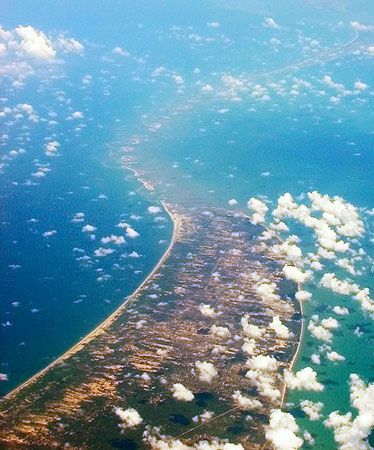
Adam’s Bridge is a 30-mile-long chain of shoals connecting Mannar Island in Sri Lanka to Rameswaram Island in India.
Geologically, the bridge represents a former land connection between the two countries. Theories regarding its formation include:
- Tectonic and Coral Growth: Tectonic movements may have shaped the region, creating conditions that supported coral growth. This coral trapped sand, forming a discontinuous shoreline.
- Longshore Currents: Sand may have been deposited in a line by currents, with subsequent coral accumulation.
- Sea Level Fluctuations: The bridge may have been exposed during periods of low sea level, with estimates of its age ranging from 3,500 to 125,000 years old.
While the bridge is a natural formation, it holds significant cultural and religious importance, often associated with the Ramayana and the deity Rama. Historically, it may have been traversable on foot until a major storm in 1480.
How has Adam’s Bridge affected maritime navigation and trade in the region?
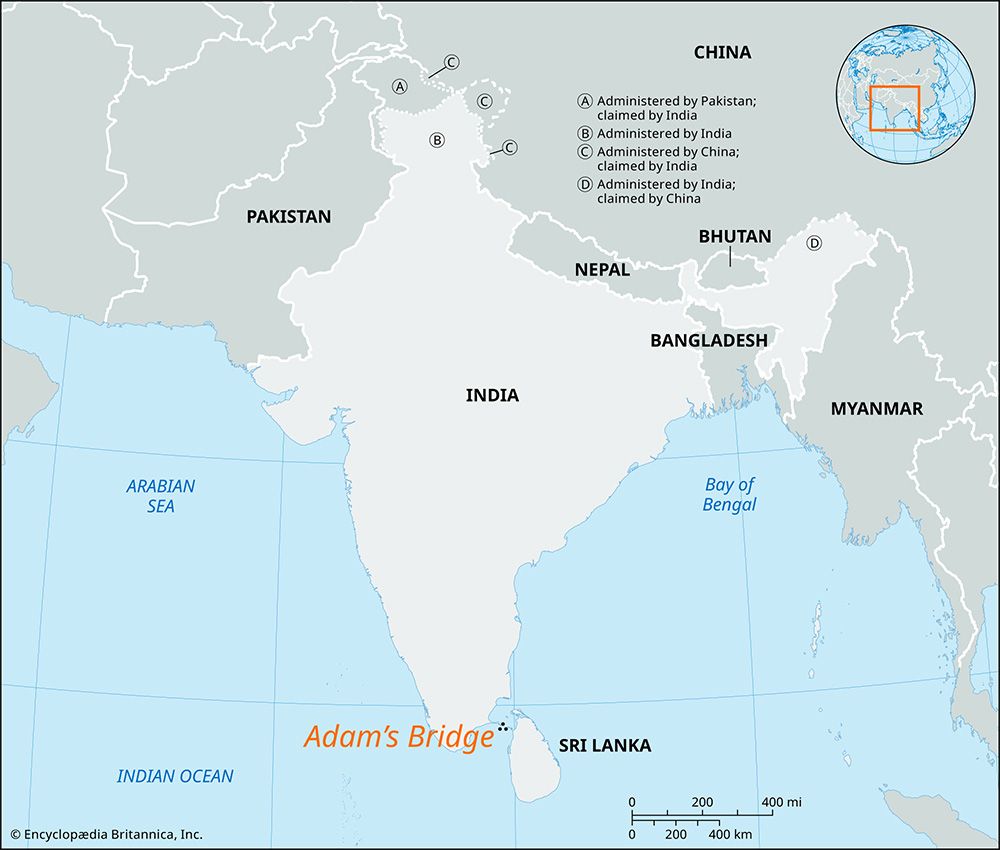
Adam’s Bridge significantly hinders maritime navigation because its chain of shoals is extremely shallow, with many areas less than 4 feet (1 meter) deep. These physical barriers restrict transit through the Palk Strait to smaller vessels, preventing larger ships from passing directly between the Gulf of Mannar and the Bay of Bengal.13
Because of these navigational constraints, vessels are often forced to take a long route around Sri Lanka. Efforts to improve trade efficiency through dredging operations began as early as 1838, but these attempts failed to maintain a channel suitable for anything other than light-draft vessels. More recently, the Sethusamudram Shipping Canal Project, approved in 2005, sought to dredge a shipping channel to bypass the bridge; however, the project has faced significant opposition due to environmental concerns, potential loss of coastal thorium deposits, and the site’s profound religious significance.1
What is the cultural and religious importance of Adam’s Bridge in Indian mythology?
In Indian mythology, Adam’s Bridge is deeply revered as the remnants of a massive causeway constructed by the deity Rama, the hero of the Hindu epic Ramayana.1
According to the epic, Rama sought to rescue his wife, Sita, who had been abducted by the demon king Ravana and taken to Sri Lanka. To facilitate the passage of his army across the sea, Rama was assisted by a vanara (monkey) army, working under the supervision of the engineer Nala, to build the bridge.1
The site holds such profound religious significance that some observers interpret the appearance of the shoals near the Pamban end as evidence of an artificial construction, viewing it as physical proof of the Ramayana narrative. This belief has led to significant opposition against modern infrastructure projects, such as the Sethusamudram Shipping Canal Project, which critics argue would desecrate a sacred landmark.1
What are the environmental concerns surrounding Adam’s Bridge?
The environmental concerns surrounding Adam’s Bridge are primarily linked to the Sethusamudram Shipping Canal Project, which proposed dredging the shallow ocean floor to create a navigable shipping channel.
The primary environmental and safety concerns raised by this project include:
- Loss of Natural Resources: There is significant concern that dredging operations could lead to the loss of thorium deposits located along the coast.
- Increased Vulnerability to Natural Disasters: Critics have argued that altering the seabed could increase the region’s risk and vulnerability to tsunamis.
- Ecological Impact: The region is characterized by unique coral formations that have developed over thousands of years. Large-scale human intervention, such as dredging, threatens to disrupt these delicate marine ecosystems that have shaped the area’s geography.
These environmental risks, combined with the site’s profound religious significance, have fueled substantial opposition to infrastructure projects that would alter the existing landforms.1
Sources
- Adam’s Bridge — Encyclopædia Britannica
- Adam's Bridge — Merriam-Webster
- Palk Strait — Encyclopædia Britannica
- Palk Strait — Merriam-Webster
Published on · 3 min read