Coral
Corals are diverse marine invertebrates belonging to the class Anthozoa within the phylum Cnidaria. They are defined by their hollow, cylindrical body…
What are coral invertebrates and how are they classified?
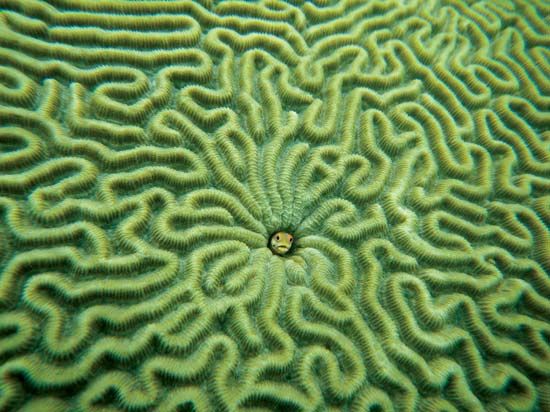
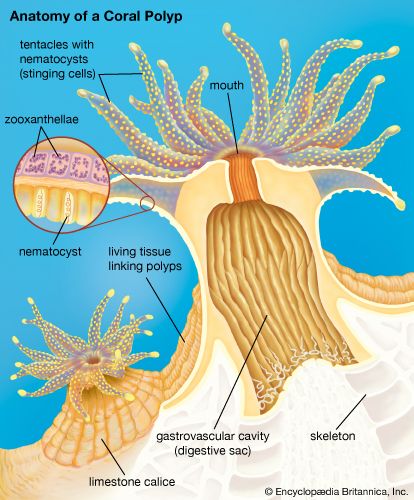
Corals are diverse marine invertebrates belonging to the class Anthozoa within the phylum Cnidaria. They are defined by their hollow, cylindrical body structure known as a polyp, which features a mouth surrounded by stinging tentacles used to capture prey. Corals are characterized by their internal or external skeletons, which can be stonelike, horny, or leathery in consistency.1
Classification
Corals are classified based on their skeletal structure and physical characteristics:
- Stony Corals (Order Madreporaria or Scleractinia): The most familiar group, these possess an external calcium carbonate skeleton and more than eight septa.1
- Horny Corals (Order Gorgonacea): Also known as gorgonians, these colonial organisms have internal skeletons and include sea fans and precious coral.1
- Black and Thorny Corals (Order Antipatharia): These possess external skeletons and are typically whiplike, featherlike, or treelike in form.1
- Blue Corals (Order Coenothecalia): Represented by a single living species, these form large, solid structures.1
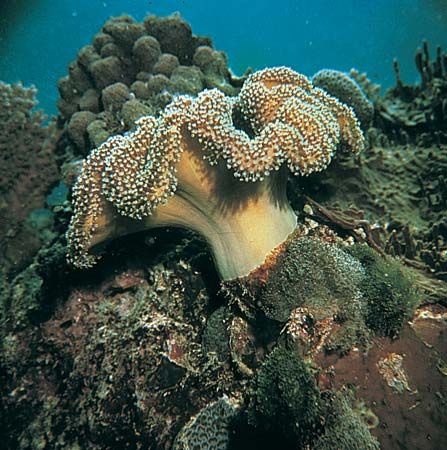
- Soft Corals (Order Alcyonacea): These are colonial organisms with internal skeletons composed of calcareous spicules.12
What are the different types of coral formations, such as fringing reefs and atolls?
Coral reefs are categorized into four primary structural forms based on their relationship to landmasses and their physical development:
- Fringing reefs: These reefs grow directly along the coastline of a mainland or an island, often forming a flat reef area that skirts the shore.2
- Barrier reefs: Located several kilometers offshore, these reefs are separated from the adjacent landmass by a deep lagoon or channel. They can appear as circular structures or complex linear chains, such as the Great Barrier Reef2.
- Atolls: These are circular or annular reefs that enclose a central lagoon but lack a central landmass. According to Charles Darwin’s theory, these often form as the volcanic islands they once fringed subside or become submerged.24
- Platform, or patch, reefs: These feature irregular, tablelike, or pinnacle shapes. They may exist as isolated formations or occur within the lagoons of larger reef systems.2
How do coral polyps form and maintain coral reefs?
Coral reefs are built by colonies of tiny marine invertebrates called coral polyps. These polyps, which are closely related to sea anemones, reproduce through budding to form large, interconnected colonies. Each polyp secretes a rigid, cup-shaped skeleton made of calcium carbonate, which serves as the foundational structure of the reef.671
The growth and maintenance of these reefs rely heavily on a mutualistic symbiosis with zooxanthellae, a type of photosynthetic algae living within the polyp tissues. Through photosynthesis, these algae provide the coral with essential nutrients and oxygen while accelerating the rate at which the coral deposits its calcium carbonate skeleton.8910
As polyps grow and divide, they build upon the skeletons of previous generations. Other organisms, such as calcareous algae, mollusks, and protozoans, further contribute to the reef by filling gaps and cementing the skeletal framework together, creating the complex, biodiverse ecosystems we see today.769
What are some of the threats facing coral reefs globally?
Coral reefs face a multitude of global threats, primarily driven by human activity and environmental changes. These threats jeopardize the biodiversity of these ecosystems, which serve as essential habitats for approximately 25 percent of all marine species.11
Climate Change and Environmental Stress
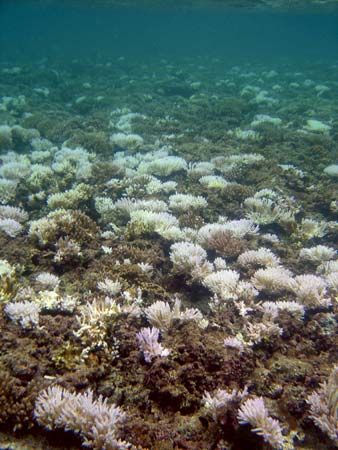
- Coral bleaching: Rising seawater temperatures, often linked to global warming, cause corals to expel their symbiotic zooxanthellae. Without these algae, corals lose their primary food source and may die if not recolonized.1112
- Ocean acidification: Increased absorption of atmospheric carbon dioxide lowers the pH of seawater. This reduces the availability of carbonate ions, making it difficult for corals to build and maintain their calcium carbonate skeletons.13
- Extreme Weather: Events such as tropical cyclones can cause significant physical damage to reef structures.14
Human-Induced Damage
- Destructive Fishing: Practices such as the use of explosives and poisons, as well as bottom trawling, physically scour and break apart reef frameworks.151617
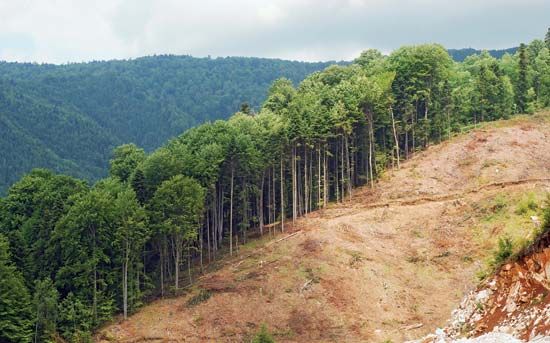
- Pollution and Sedimentation: Runoff from deforestation and agriculture smothers reefs with sediment, blocking necessary sunlight. Additionally, chemicals from sunscreens and other pollutants can promote viral infections in corals.111516
- Tourism and Overharvesting: High levels of marine tourism can lead to physical damage from contact, while commercial fishing can deplete the fish populations necessary for a healthy reef ecosystem.1517
Sources
- coral — Encyclopædia Britannica
- coral reef - Types of coral reefs — Encyclopædia Britannica
- soft coral — Merriam-Webster
- coral reef - Tropical water conditions — Encyclopædia Britannica
- coral reef - Origin and development of reefs — Encyclopædia Britannica
- coral reef - Corals and other reef-building organisms — Encyclopædia Britannica
- cnidarian - Support mechanisms and skeletons — Encyclopædia Britannica
- Coral Bleaching: A Threat to Our Reefs — Encyclopædia Britannica
- How and Where Coral Bleaching Is Affecting the Great Barrier Reef — Encyclopædia Britannica
- coral reef - Biological factors — Encyclopædia Britannica
- Coral bleaching — Encyclopædia Britannica
- coral reef - Coral bleaching — Encyclopædia Britannica
- coral reef - Other threats — Encyclopædia Britannica
- ocean acidification — Encyclopædia Britannica
- conservation - In the oceans — Encyclopædia Britannica
- Coral Triangle — Encyclopædia Britannica
- Great Barrier Reef — Encyclopædia Britannica
Published on · 3 min read