Admiralty Islands
The Admiralty Islands are a group of about 40 islands located in the southwestern Pacific Ocean as an extension of the Bismarck Archipelago. The group covers…
What is the geography and climate like in the Admiralty Islands?
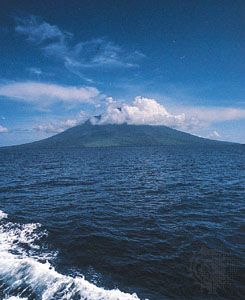
The Admiralty Islands are a group of about 40 islands located in the southwestern Pacific Ocean as an extension of the Bismarck Archipelago. The group covers a total area of approximately 800 square miles (2,080 square km).12
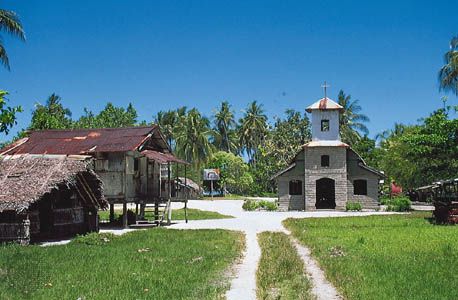
The largest island, Manus Island, is volcanic and accounts for the majority of the land area. Its geography is characterized by a ridged, hilly interior that reaches an elevation of 2,356 feet (718 meters) at Mount Dremsel. The coastline alternates between steep slopes and bays fringed with mangrove swamps, while the interior is heavily forested and well-watered by numerous short, swift streams. Aside from a narrow, densely populated plain on the east coast, the island’s valleys provide the only significant lowlands.13
While the provided search results do not explicitly detail the specific climate patterns of the Admiralty Islands, the description of the region as being heavily forested and well-watered is consistent with a tropical environment.3
Who are the indigenous people of the Admiralty Islands, and what is their cultural heritage?
The indigenous population of the Admiralty Islands is primarily Melanesian. Historically, these people were divided into three distinct groups based on their geographic location and artistic styles: the Usiai, who inhabited the interior of Manus Island; the Matankor, who lived on the smaller surrounding islands; and the Manus, who resided on the southern coast of Manus and various offshore islands.14
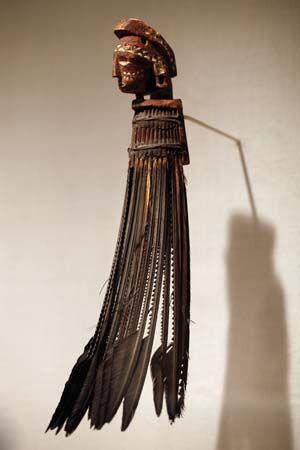
These groups maintained an active trading relationship, relying on one another for food and manufactured goods. While the traditional culture is now considered practically extinct, the Matankor were particularly noted for their craftsmanship, including wood carvings, obsidian bowls, and unique items like slit gongs and beds. Their artistic motifs often featured human or crocodile figures, with characteristic geometric patterns in black, white, and red.4
In the modern era, many indigenous residents are adherents of the Paliau movement, an indigenous social and religious movement that emerged following World War II. Today, the population continues to engage in traditional practices such as fishing and local trading.1
Are there any significant natural resources or industries in the Admiralty Islands?
The economy of the Admiralty Islands is primarily driven by agriculture and the exploitation of natural resources. Key economic activities include:
- Agriculture: The production of copra is a central agricultural activity, supplemented by the cultivation of coffee.1
- Forestry: Because Manus Island is heavily forested, logging serves as an important industry for the region.1
- Mineral Resources: Geological surveys have identified deposits of copper on Manus Island.1
- Subsistence: The indigenous population continues to rely on fishing and local trading to support their livelihoods.1
Please note that information regarding the Andaman and Nicobar Islands or the Cook Islands is not applicable to the Admiralty Islands, as their economic structures differ significantly from those of the Admiralty group.78
What languages are spoken in the Admiralty Islands, and how do they relate to other languages in the region?
The languages spoken in the Admiralty Islands are primarily classified as Austronesian languages. These languages are part of a vast family that extends across the Pacific, including the Bismarck Archipelago, Melanesia, Micronesia, and Polynesia6.
In the broader context of Papua New Guinea, the indigenous languages are divided into two distinct groups: Austronesian and non-Austronesian, or Papuan. While Austronesian speakers, such as those in the Admiralty Islands, typically inhabit coastal areas and offshore islands, Papuan speakers are generally concentrated in the interior regions.1
Across the country, Tok Pisin serves as the most widely spoken lingua franca, functioning as a creole that incorporates elements of indigenous languages, German, and English to facilitate communication among the diverse linguistic groups.1
Sources
- Admiralty Islands — Encyclopædia Britannica
- Admiralty Islands — Merriam-Webster
- Manus Island — Encyclopædia Britannica
- Oceanic art and architecture - The Admiralty Islands — Encyclopædia Britannica
- Bismarck Archipelago — Encyclopædia Britannica
- Austronesian languages - Size and geographic scope — Encyclopædia Britannica
- Andaman and Nicobar Islands - Agriculture, forestry, and fishing — Encyclopædia Britannica
- Cook Islands - Agriculture and fishing — Encyclopædia Britannica
- Austronesian languages - Aberrant languages — Encyclopædia Britannica
- Papua New Guinea - Languages of Papua New Guinea — Encyclopædia Britannica
- Austronesian languages - Size of phoneme inventory — Encyclopædia Britannica
Published on · 3 min read