Alexander Archipelago
The provided search results do not contain information regarding the specific biodiversity of the Alexander Archipelago. While the archipelago is recognized…
What is the significance of the Alexander Archipelago in terms of biodiversity?
The provided search results do not contain information regarding the specific biodiversity of the Alexander Archipelago. While the archipelago is recognized as a significant geographic feature located within the Tongass National Forest and includes protected areas like Glacier Bay National Park and Preserve, the available data focuses on its history, administration, and role as a World Heritage site rather than its biological composition or unique species.
Information regarding adaptive radiation and endemic biodiversity in the provided text pertains specifically to the Galapagos Islands and the Hawaiian archipelago, not the Alexander Archipelago.
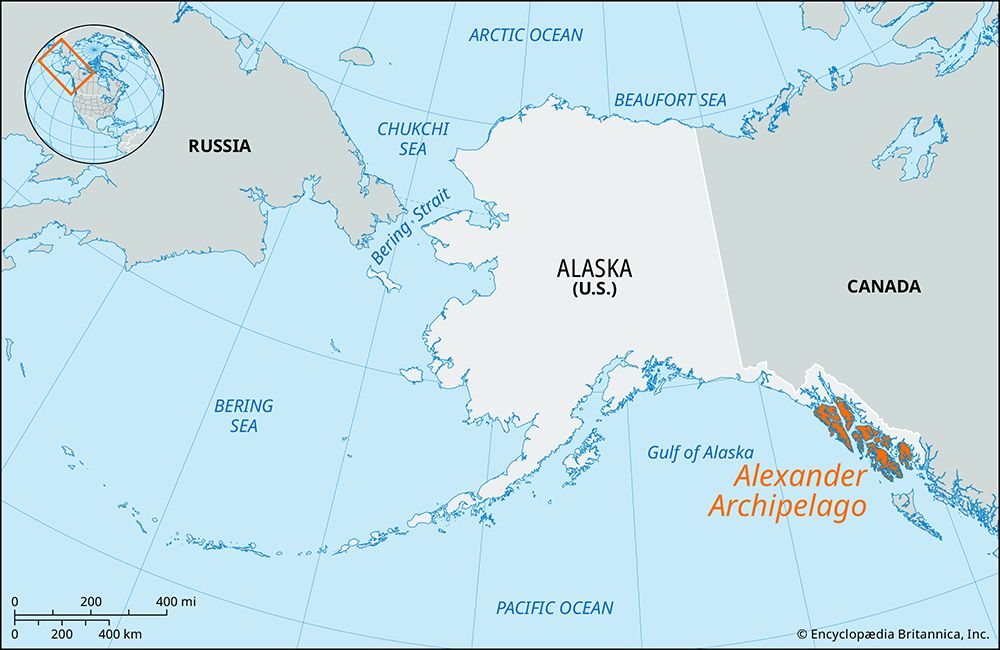
How many islands make up the Alexander Archipelago and what are some of the major ones?
The Alexander Archipelago consists of approximately 1,100 islands, which are the exposed peaks of a submerged section of the Coast Ranges located off the coast of southeastern Alaska1.
These islands extend from Glacier Bay and Cross Sound in the north to the Dixon Entrance in the south. Some of the major islands within the group include:1
- Chichagof
- Admiralty
- Baranof
- Kupreanof
- Kuiu
- Mitkof
- Wrangell
- Prince of Wales
- Revillagigedo
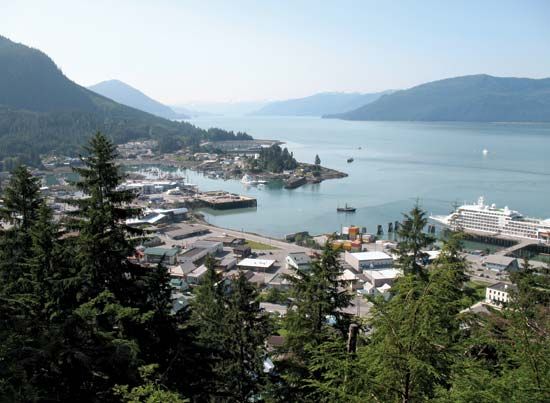
The archipelago is largely encompassed by the Tongass National Forest and features a complex network of deep, narrow channels known as the Inside Passage.1
What is the Alexander Archipelago and where is it located in Alaska?
The Alexander Archipelago is a group of approximately 1,100 islands located off the coast of southeastern Alaska, United States. These islands are geologically defined as the exposed peaks of a submerged section of the Coast Ranges.14
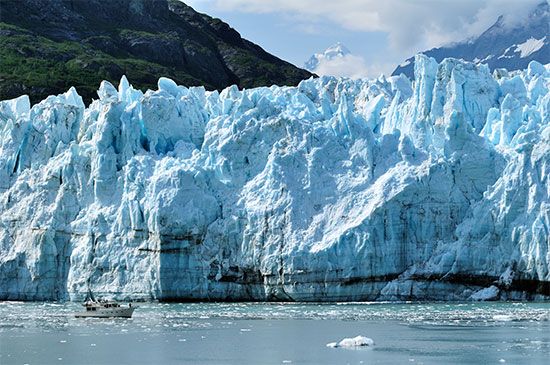
The archipelago extends southward from Glacier Bay and Cross Sound to the Dixon Entrance. The islands are separated from the mainland by deep, narrow channels that form the Inside Passage, a sheltered sea route used for coastal shipping and travel. Most of the archipelago is included within the Tongass National Forest, and the region contains several protected areas, including Glacier Bay National Park and Preserve, which is part of a World Heritage site.15
Named in 1867 to honor Alexander II, the tsar of Russia, the islands have a rich history as the ancestral home of the Tlingit and Haida peoples.1
What is the geological history of the Alexander Archipelago?
The Alexander Archipelago is geologically defined as the exposed, mountainous peaks of a submerged section of the Coast Ranges. These islands represent a complex structural landscape composed of southeast–northwest-trending belts of Paleozoic and Mesozoic sedimentary, metasedimentary, and volcanic rocks.16
Key aspects of the archipelago’s geological composition include:
- Rock Types: The islands contain metamorphic facies rocks, particularly in their eastern sectors, which have been intruded by various igneous stocks.6
- Structural Features: The region is characterized by rugged coastlines indented by fjords and is cut by numerous high-angled normal and reversed faults.6
- Tectonic Context: The archipelago is situated near a major fault system, specifically the Lynn Canal–Chatham Strait trough, which continues southeastward through the islands. This area is part of a broader, active tectonic region that includes the Fairweather Fault, a northward extension of the San Andreas Fault.6
- Topography: Elevations across the island group vary significantly, ranging from 2,000 to 3,500 feet in the southern Prince of Wales Mountains to over 7,500 feet in the Chilkat Range and on islands such as Admiralty and Baranof.6
Sources
- Alexander Archipelago — Encyclopædia Britannica
- Hawaii - Plant and animal life — Encyclopædia Britannica
- evolution - Adaptive radiation — Encyclopædia Britannica
- Inside Passage — Encyclopædia Britannica
- Alexander Archipelago — Merriam-Webster
- Alaskan mountains - Physiography of the southern ranges — Encyclopædia Britannica
Published on · 3 min read