Åland Islands
The demilitarized status of the Åland Islands is maintained through a combination of historical international treaties and specific legal frameworks…
How do the Åland Islands maintain their demilitarized status?
The demilitarized status of the Åland Islands is maintained through a combination of historical international treaties and specific legal frameworks established under Finnish sovereignty.
Following the Crimean War, the 1856 Åland Convention between Britain, France, and Russia formally stipulated that the islands were never to be fortified again. This international obligation persisted even as the islands transitioned from Russian rule to becoming an autonomous territory of Finland.1
In 1921, the League of Nations mediated the Åland question, confirming Finnish sovereignty over the archipelago while mandating that the islands remain demilitarized. This status is reinforced by the Act on the Autonomy of Åland (1920), which balances the islands’ unique self-governing powers—including their own parliament, the Lagtinget—with their status as a neutral, non-military zone within the Finnish state.12
What is the unique autonomous status of the Åland Islands, and how does it work?
The Åland Islands possess a unique autonomous status within Finland, established to preserve the archipelago’s distinct cultural and linguistic identity. While the islands remain under Finnish sovereignty, their self-governance is defined by the following key features:
- Legislative Autonomy: The islands are governed by a single-chamber parliament known as the Lagtinget, which holds legislative power over most local administrative matters. An Executive Council, appointed by the Lagtinget, manages the territory’s daily administration.1
- Linguistic Rights: Swedish is the sole official language of the territory and the language of instruction in schools, reflecting the islands’ historical and cultural ties to Sweden1.
- Legal Framework: The Act on the Autonomy of Åland (1920), confirmed by the League of Nations in 1921, provides the legal basis for this power-sharing arrangement.2
- Demilitarized Status: The territory is a permanently demilitarized and neutral zone, a status originating from the 1856 Åland Convention and upheld by international agreement.12
What are the main economic activities and industries in the Åland Islands?
The economy of the Åland Islands is diverse, balancing traditional agricultural practices with modern service-oriented industries.
Agriculture and Primary Production
Despite the archipelago’s rugged terrain, the islands benefit from a mild climate and fertile soil, allowing them to achieve the highest crop yields per unit area in Finland. Key agricultural activities include:
- Crop Farming: Highly mechanized farms produce wheat, oats, barley, rye, onions, potatoes, sugar beets, and cucumbers.
- Orchards: The climate is particularly well-suited for growing apples, plums, and pears.
- Livestock: Dairy farming is dominated by Ayrshire cattle, alongside sheep rearing.
- Fishing: While historically the foundation of coastal settlement, fishing has become a declining source of income.1
Services and Industry
Non-agricultural employment is primarily driven by the following sectors:
- Tourism: This industry has expanded significantly in recent decades, with most visitors arriving via ferry from Finland or Sweden.
- Shipping and Commerce: The islands maintain a strong maritime tradition, supported by extensive ferry, steamship, and air connections to the mainland and Sweden.
- Banking: Commerce and financial services account for a substantial portion of the local economy.1
What are some notable tourist attractions and natural features of the Åland Islands?
The Åland Islands offer a variety of natural landscapes and historical sites that draw visitors to the archipelago.
Natural Features
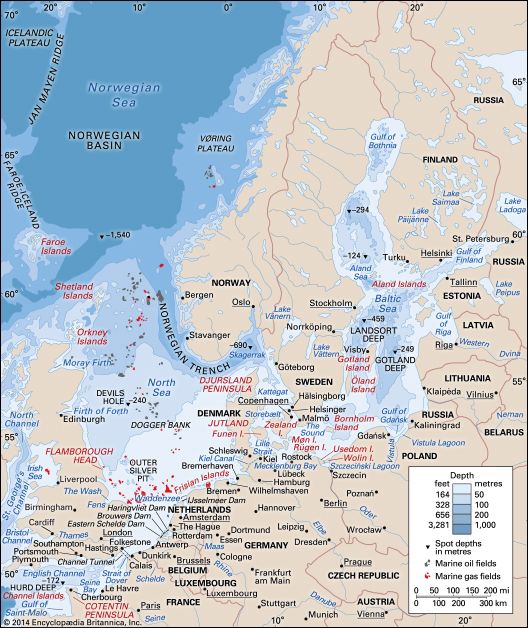
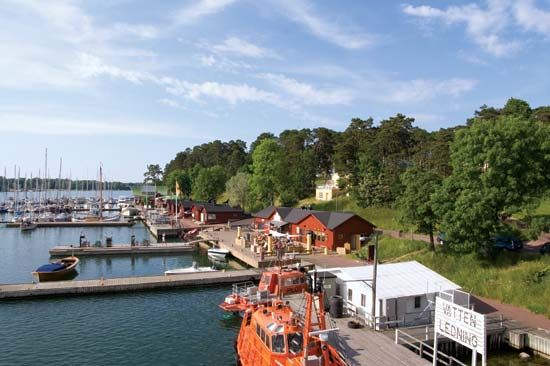
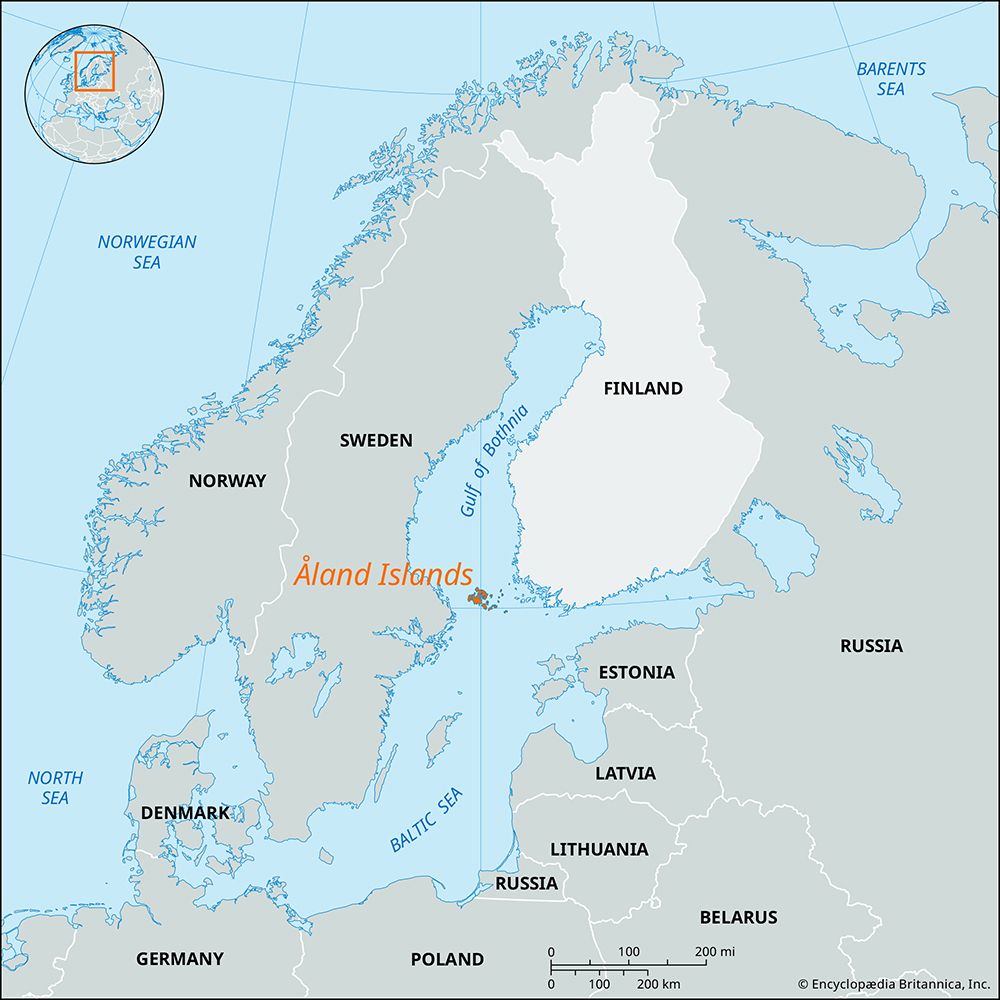
- Archipelago Landscape: The territory consists of approximately 35 inhabited islands, 6,500 uninhabited islands, and numerous rocky reefs, creating a unique maritime environment at the entrance to the Gulf of Bothnia.1
- Orrdals Hill: Located on the main island of Åland (Fasta Åland), this is the highest point in the archipelago, reaching an elevation of 423 feet (129 meters).1
- Diverse Terrain: The main island features a contrast between rugged granite formations in the north and rich, fertile agricultural soil in the southeast.1
Notable Attractions
- Maritime Museum: Located in the capital, Mariehamn, this museum chronicles the islands’ history as a center for the grain-trading sailing fleet that operated until World War II.1
- Historical Sites: The islands contain significant archaeological and historical landmarks, including Bronze Age and Iron Age settlements, distinctive Viking graveyards, and numerous medieval granite churches.1
- Bomarsund Fortress: Visitors can explore the ruins of this 19th-century Russian garrison, which was destroyed by Anglo-French forces during the Crimean War in 1854.1
Sources
- Åland Islands — Encyclopædia Britannica
- Finland - Local government — Encyclopædia Britannica
- Cabo Verde - Services — Encyclopædia Britannica
Published on · 3 min read