Awaji Island
The provided information does not contain data regarding the historical changes in the population of Awaji Island. The available records focus on the…
How has the population of Awaji Island changed over the years?
The provided information does not contain data regarding the historical changes in the population of Awaji Island. The available records focus on the island’s geography, economic activities, and infrastructure, such as the Akashi Kaikyō Bridge, rather than demographic trends over time.1
What is the geographical location and size of Awaji Island?
Awaji Island is located in southern Hyōgo prefecture, Japan. It sits at the eastern end of the Inland Sea, positioned between west-central Honshu and eastern Shikoku.12
The island is separated from the city of Kōbe and the Kii Peninsula by the narrow straits of Akashi and Tomogashima, respectively. To the southwest, the Naruto Strait separates the island from Shikoku.1
Regarding its size, Awaji Island covers an area of 229 square miles (593 square km). The majority of this terrain consists of low mountains, with a single major plain that bisects the island from east to west, housing the primary population centers and agricultural land.1
Are there any famous foods or culinary specialties associated with Awaji Island?
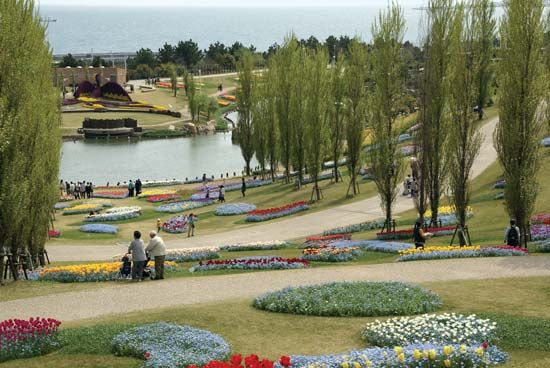
Awaji Island is known for its agricultural production, which serves the markets of the Osaka-Kobe region. The island specializes in the production of dairy products, vegetables, fruits, and flowers.1
While the island previously supported a robust fishing industry along its coasts, overfishing led to a decline in that sector. Consequently, the local industry has shifted toward the cultivation of freshwater fish.1
What natural attractions and landmarks can be found on Awaji Island?
Awaji Island features several notable landmarks and natural attractions, primarily defined by its unique geography and engineering feats:
- Naruto Strait: Located to the southwest, this strait is famous for its powerful whirlpools that occur during the ebb and flow of the tide. It is often referred to as the “Roaring Gateway of Awa.”14
- Akashi Kaikyō Bridge: This massive suspension bridge connects the island to the city of Kōbe. Upon its opening in 1998, it held the record as the world’s longest suspension bridge.12
- Ōnaruto Bridge: This bridge spans the Naruto Strait, linking the southern end of the island to Shikoku and completing the road connection between the islands.14
- Historical and Cultural Sites: The island is considered the birthplace of bunraku, the traditional Japanese puppet theater, and is noted for being rich in historical monuments and myths.1
Sources
- Awaji Island — Encyclopædia Britannica
- Awaji — Merriam-Webster
- Inland Sea — Encyclopædia Britannica
- Naruto — Encyclopædia Britannica
Published on · 2 min read