Alcatraz Island
The closure of Alcatraz on March 21, 1963, was primarily driven by the high costs of maintaining the facility. Operating a prison on an island more than a…
What led to the closure of Alcatraz as a federal prison in 1963?
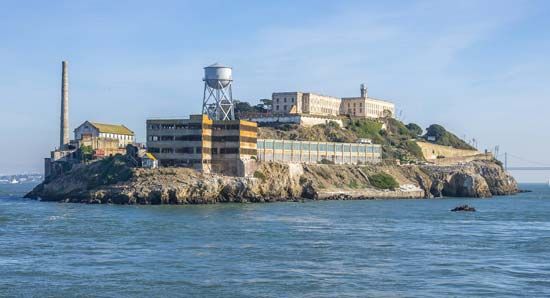
The closure of Alcatraz on March 21, 1963, was primarily driven by the high costs of maintaining the facility. Operating a prison on an island more than a mile offshore created a logistical nightmare, as the government had to transport fresh water to the island and waste away from it on a weekly basis.123
Additionally, the physical structure of the prison faced significant deterioration. Because much of the concrete used during construction had been mixed with saltwater, the buildings suffered from severe erosion. While the daring escape in 1962 is often associated with the prison’s end, the facility’s closure was fundamentally a matter of economic and logistical sustainability rather than a direct response to escape attempts. Ultimately, the same isolation that made Alcatraz a formidable prison made it too expensive to operate compared to other facilities in the federal system.32
What natural features make Alcatraz Island unique in San Francisco Bay?
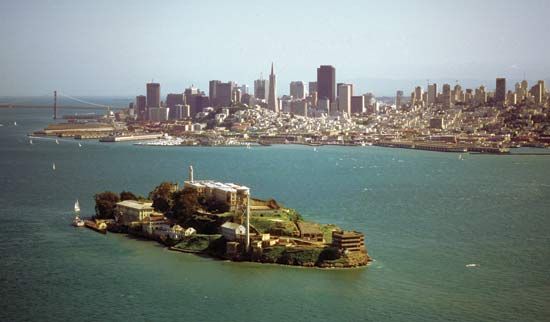
Alcatraz Island is a rocky island situated approximately 1.5 miles (2 km) offshore within San Francisco Bay. Spanning an area of 22 acres (9 hectares), the island is characterized by its rugged, rocky terrain, which historically supported very little vegetation and served as a natural habitat for seabirds.4
The island’s name, Isla de los Alcatraces, translates to “Isle of the Pelicans,” reflecting its early status as a significant seabird sanctuary. Its unique position within the bay—surrounded by the challenging currents of the water—contributed to its reputation for isolation, a feature that influenced its long history as a military fortification and, eventually, a federal penitentiary. Today, the island remains a prominent natural landmark within the Golden Gate National Recreation Area.451
How has Alcatraz Island been portrayed in popular culture, such as movies and books?
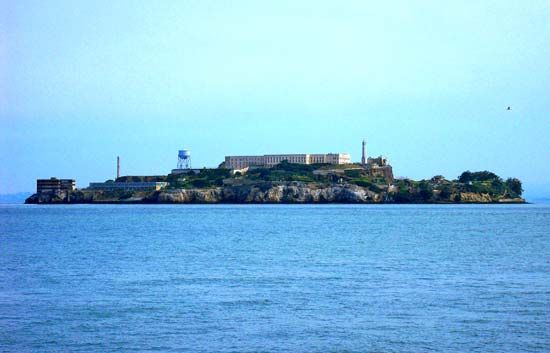
Alcatraz Island has long captured the public imagination, serving as a frequent setting for films and documentaries that emphasize its reputation for isolation and high-stakes drama.
Notable Film Portrayals
- Escape from Alcatraz (1979): Starring Clint Eastwood, this film dramatizes the daring and mysterious 1962 escape attempt by three inmates, which remains one of the most famous events in the prison’s history.314
- Birdman of Alcatraz (1962): This biopic features Burt Lancaster as Robert Stroud, a notorious inmate who gained fame for his extensive studies of birds while incarcerated.34
- The Rock (1996): An action-thriller starring Nicolas Cage and Sean Connery, this film uses the island as a backdrop for a high-stakes plot involving a potential gas attack.3
Beyond these feature films, the island has been the subject of numerous documentaries, many of which explore the prison’s history, the harsh conditions of its cells, and the various escape attempts that occurred during its operation as a federal penitentiary.3
How did the Native American occupation of Alcatraz Island in 1969-1971 impact its history?
The 1969–1971 occupation of Alcatraz Island by Native American activists, including members of the American Indian Movement, was a pivotal event that transformed the island’s public identity from a former federal penitentiary into a symbol of Indigenous resistance and advocacy.46
The occupation, which lasted from November 1969 until June 1971, was driven by a group calling themselves “Indians of All Tribes.” Their primary goals were to publicize the ongoing economic, social, and political neglect of Native Americans by the U.S. government and to demand the legal title to the island for the purpose of establishing a cultural center, museum, and university. By citing an 1868 treaty that allowed for the claiming of “unoccupied government land,” the activists challenged federal authority and asserted their right to self-determination.164
While federal marshals eventually forced the occupiers off the island in 1971, the protest left a lasting legacy. Shortly thereafter, in 1972, the island was incorporated into the Golden Gate National Recreation Area, shifting its status toward public preservation and education.46
Sources
- Alcatraz — Encyclopædia Britannica
- Today in History—March 21: Alcatraz Is Shut Down — Encyclopædia Britannica
- Alcatraz: Top Questions — Encyclopædia Britannica
- Alcatraz Island — Encyclopædia Britannica
- San Francisco - City site — Encyclopædia Britannica
- Indigenous peoples of California - Cultural continuity and change — Encyclopædia Britannica
Published on · 3 min read