Baffin Island
Baffin Island and its surrounding waters support a diverse array of Arctic wildlife, adapted to the region's severe climate and marine-focused ecosystem.
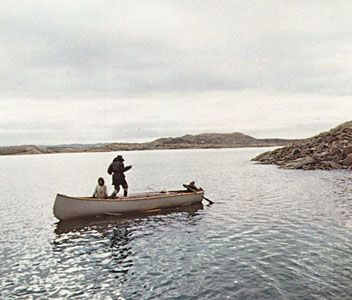
What are some of the major wildlife species found on Baffin Island?
Baffin Island and its surrounding waters support a diverse array of Arctic wildlife, adapted to the region’s severe climate and marine-focused ecosystem.
Marine and Coastal Wildlife
The waters surrounding the island are rich in life, providing a habitat for various marine mammals and fish. Notable species include:
- Marine Mammals: Ringed, bearded, and harp seals are common, while walruses, dolphins, and various species of whales, including killer whales, are found in northern areas.1
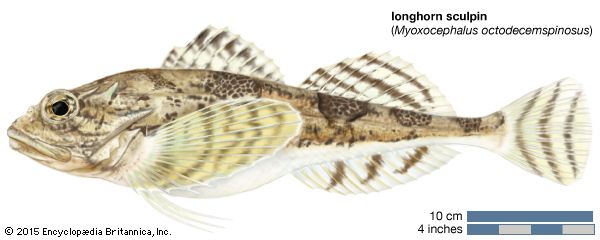
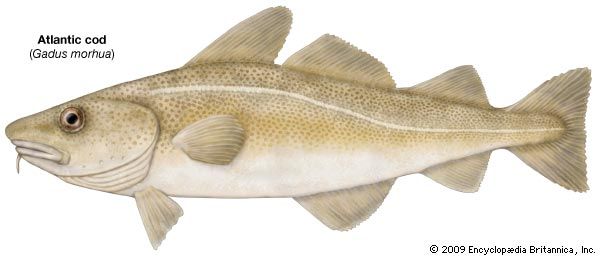
- Fish: The region hosts species such as Arctic flounder, four-horned sculpin, polar cod, and capelin.1
- Birds: Coastal areas are home to gulls, ducks, geese, eiders, snowy owls, snow buntings, ravens, gyrfalcons, and sea eagles.1
Terrestrial Wildlife
The island’s landmass supports species capable of surviving in the Arctic tundra:
- Mammals: Caribou are prominent, feeding on the island’s varied plant life, which includes shrubs, mosses, and lichens. Polar bears and Arctic foxes also abound in the region.1
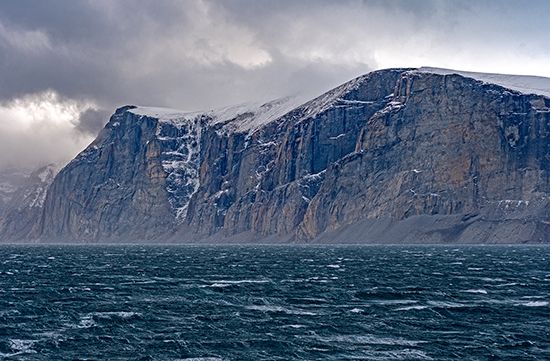
What languages are spoken on Baffin Island, and how has language use changed over time?
On Baffin Island, the primary Indigenous language is Inuktitut, a member of the Eskimo-Aleut language family. As part of the territory of Nunavut, the government officially recognizes four main languages: Inuktitut, Inuinnaqtun, English, and French.45
Language Use and Evolution
Historically, Inuktitut was an oral language. In the 19th century, European missionaries introduced a syllabic writing system, which exists alongside a system using roman letters.5
Language use has undergone significant shifts due to historical and social changes:
- Governmental Influence: Until the 1950s, missionaries provided most education and health services. Following this, the Canadian government assumed these roles, which influenced the integration of English into daily life and formal schooling.6
- Modern Revitalization: Today, the territorial government actively promotes the use of Inuktitut in schools. The creation of the Nunavut territory in 1999 served as a catalyst for the revitalization of traditional Indigenous culture and language.67
- Ongoing Challenges: Despite these efforts, the Inuit face ongoing challenges regarding language erosion, which is often linked to urbanization, political marginalization, and the broader impacts of colonialism.7
Who are the indigenous people of Baffin Island, and what is their cultural history?
The Indigenous people of Baffin Island are the Inuit, who have inhabited the Canadian Arctic Archipelago for more than 4,000 years. Their cultural history is deeply rooted in the Thule culture, a prehistoric maritime society that arrived in the region approximately 1,000 years ago.6
Cultural Evolution and History
- Predecessors: Before the Thule, the Dorset culture occupied the region from roughly 800 BCE to 1300 CE. The Thule people eventually displaced or absorbed these groups as they expanded across the Arctic.121314
- Traditional Life: Traditionally, the Inuit were seminomadic, relying on hunting, trapping, and fishing for survival. They utilized igloos, semisubterranean houses, and animal-skin tents, while employing tools like kayaks, umiaks, and dogsleds for transportation and subsistence.6132
- Modern Transitions: During the 19th and 20th centuries, contact with explorers, whalers, and the fur trade introduced significant changes, including new diseases and a shift toward dependency on outside goods. By the mid-20th century, government policies encouraged the Inuit to move from their traditional nomadic existence into permanent settlements.62
Today, the creation of the Nunavut territory in 1999 has been instrumental in supporting the revitalization of traditional Indigenous culture, arts, and the Inuktitut language.62
What economic activities and industries are important on Baffin Island?
The economy of Baffin Island is characterized by a mix of traditional practices, resource extraction, and government-led services.
Key Economic Sectors
- Mining: Mineral wealth is a significant asset, with deposits of iron ore, silver, lead, and zinc found on the island. While mining is a major industry, its development is often challenged by high production costs and logistical difficulties related to transportation.1617
- Government and Services: Government agencies are a primary source of employment and income for the region. Public administration and service industries play a vital role in the local economy, supporting the population in settlements like Iqaluit.162
- Fishing and Hunting: Commercial fishing for species such as turbot, shrimp, and Arctic char provides exports for southern markets. Additionally, many Inuit continue traditional trapping and hunting to supplement their food supply, while also selling items like sealskins to commercial garment makers.182
- Arts and Crafts: The production of traditional Inuit art—including stone carvings, prints, and weavings—serves as an important supplementary income source for many communities.7
- Tourism: The island’s unique Arctic wilderness, including Auyuittuq National Park Reserve, attracts visitors for sport fishing, hunting, and adventure tourism.1817
Sources
- Baffin Bay — Encyclopædia Britannica
- Baffin Island — Encyclopædia Britannica
- Polar ecosystem - Biota of the Arctic — Encyclopædia Britannica
- Inuit language — Encyclopædia Britannica
- Nunavut - Health and education — Encyclopædia Britannica
- Nunavut - Population composition — Encyclopædia Britannica
- Baffin — Encyclopædia Britannica
- Iqaluit — Encyclopædia Britannica
- Inuit — Encyclopædia Britannica
- Arctic - Linguistic composition — Encyclopædia Britannica
- Eskimo-Aleut languages - Inuit — Encyclopædia Britannica
- Dorset culture — Encyclopædia Britannica
- Thule culture — Encyclopædia Britannica
- Inuit: Top Questions — Encyclopædia Britannica
- Arctic - History of settlement — Encyclopædia Britannica
- Nunavut - Economy — Encyclopædia Britannica
- Nunavut - Fishing and hunting — Encyclopædia Britannica
- Nunavut - Cultural life — Encyclopædia Britannica
- Maldives - Agriculture, forestry, and fishing — Encyclopædia Britannica
- Northwest Territories - Services and labour — Encyclopædia Britannica
Published on · 4 min read