Alexander Bay
Alexander Bay is an inlet of the Atlantic Ocean situated at the mouth of the Orange River on the northwestern coast of the Northern Cape province in South…
What is Alexander Bay?
Alexander Bay is an inlet of the Atlantic Ocean situated at the mouth of the Orange River on the northwestern coast of the Northern Cape province in South Africa.1
The inlet is less than 3 miles (5 km) wide and is largely obstructed by sandbars, which are only breached during periods of high flooding. The opening at the southern end of these bars is kept clear by the constant interaction between the river’s outflow during low tides and the ocean’s tidal inflow at high tides. The town of Alexander Bay, which serves as a center for diamond mining, is located directly on the inlet.1
What is the significance of the Orange River in South Africa?
The Orange River is of vital economic and historical significance to South Africa. As one of the continent’s longest rivers, it serves as a critical water source for irrigation, urbanization, and industrial development in an otherwise arid region.2
Economic and Agricultural Impact
The river supports extensive agricultural production, particularly in the Northern Cape, where water is diverted to grow crops such as cotton, alfalfa, grapes, and citrus fruits. Large-scale infrastructure, including the Orange River Project and the Lesotho Highlands Water Project, manages the river’s flow to supply water to major cities like Bloemfontein, Kimberley, and Gqeberha. Additionally, the dams associated with these projects, such as the Gariep Dam, provide essential hydroelectric power.3425
Historical Significance
Historically, the river acted as the northern boundary of British influence in southern Africa during the 19th century. It became a focal point for the Boers, who crossed it in search of autonomy and named their first republic, the Orange Free State, after the river.6
How are diamonds extracted from coastal areas?
Diamonds are extracted from coastal and marine environments using a variety of specialized techniques depending on the location of the deposits relative to the sea level.
Land-Based Coastal Mining
In arid coastal regions, such as the Sperrgebiet in Namibia, diamonds are often found in alluvially deposited gravels buried beneath thick layers of sand. Mining companies utilize giant earthmoving equipment to remove this overlying sand, sometimes reaching depths of up to 50 feet (15 meters) to uncover the diamond-bearing gravels.7
Marine and Offshore Mining
For deposits located in the surf zone or on the seafloor, different mechanical methods are employed:
- Surface and Surf Zone Techniques: Conventional surface mining equipment, such as draglines, is used for beach deposits above sea level and can also operate within the surf zone.1
- Dredging: Dredges are used for continuous extraction. While bucket-ladder dredges are effective for various placer deposits, hydraulic suction dredges are often used to move unconsolidated sediments. For more challenging, semiconsolidated sediments, bucket-wheel or cutter suction dredges are preferred.1
- Seafloor Extraction: In deeper offshore waters, mining operations have successfully employed remotely operated vehicles (ROVs) and vertical tunnel cutters to recover diamonds from the seafloor.8
What kind of wildlife lives in the Northern Cape province?
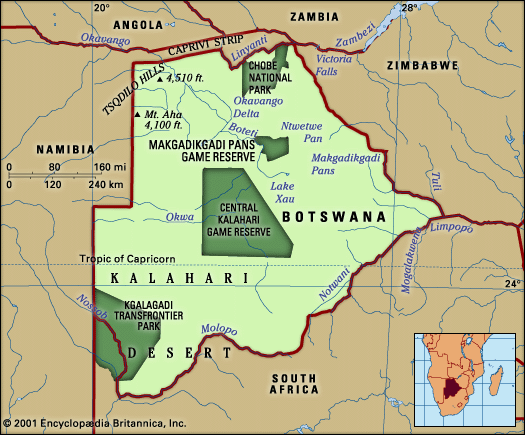
The Northern Cape province of South Africa features a diverse range of wildlife, particularly within its arid landscapes and protected conservation areas like the Kgalagadi Transfrontier Park.
Wildlife in the Kalahari Region
The Kgalagadi Transfrontier Park, located in the province’s desert northwest, is a vital sanctuary for migratory animals. The park’s ecosystem supports:
- Large Herbivores: Herds of gemsbok (a subspecies of oryx), gnu (wildebeest), springbok, and red hartebeest graze on the region’s shrubs and grasses.11
- Predators: The area is home to lions, as well as smaller cats such as caracals and servals. Other carnivores include wild dogs and black-backed jackals.11
- Birds: The park hosts a variety of bird species, including ostriches.11
Broader Provincial Biodiversity
Beyond the specific confines of the Kgalagadi, the Northern Cape’s arid environment and thornveld vegetation support a wider array of South African fauna. Across the country, including the drier western regions, one can find more than 200 mammal species, such as leopards, baboons, zebras, and various antelope. The province also contributes to South Africa’s rich biodiversity of over 800 bird species, numerous reptiles—including various snakes—and a highly diverse population of insects.3
Sources
- Alexander Bay — Encyclopædia Britannica
- Orange River — Encyclopædia Britannica
- Northern Cape — Encyclopædia Britannica
- Orange River - Study and exploration — Encyclopædia Britannica
- Orange River - People and economy — Encyclopædia Britannica
- Orange River - Irrigation — Encyclopædia Britannica
- mining - Marine beaches and continental shelves — Encyclopædia Britannica
- Oranjemund — Encyclopædia Britannica
- mining - The seafloor — Encyclopædia Britannica
- Sperrgebiet — Encyclopædia Britannica
- Kgalagadi Transfrontier Park — Encyclopædia Britannica
- Namaqualand — Encyclopædia Britannica
- South Africa - Flora and fauna — Encyclopædia Britannica
Published on · 3 min read