Angel Falls
Angel Falls serves as a significant natural attraction within Venezuela’s tourism industry, which has become an increasingly important component of the…
What role does Angel Falls play in Venezuela’s tourism industry?
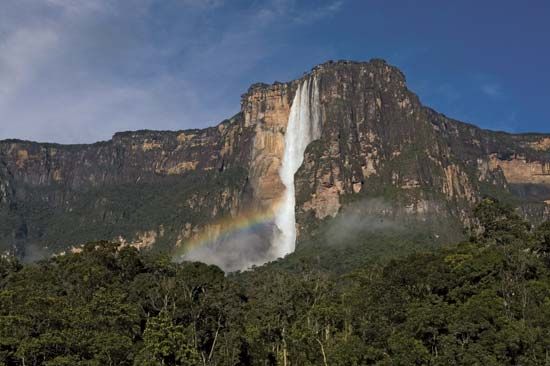
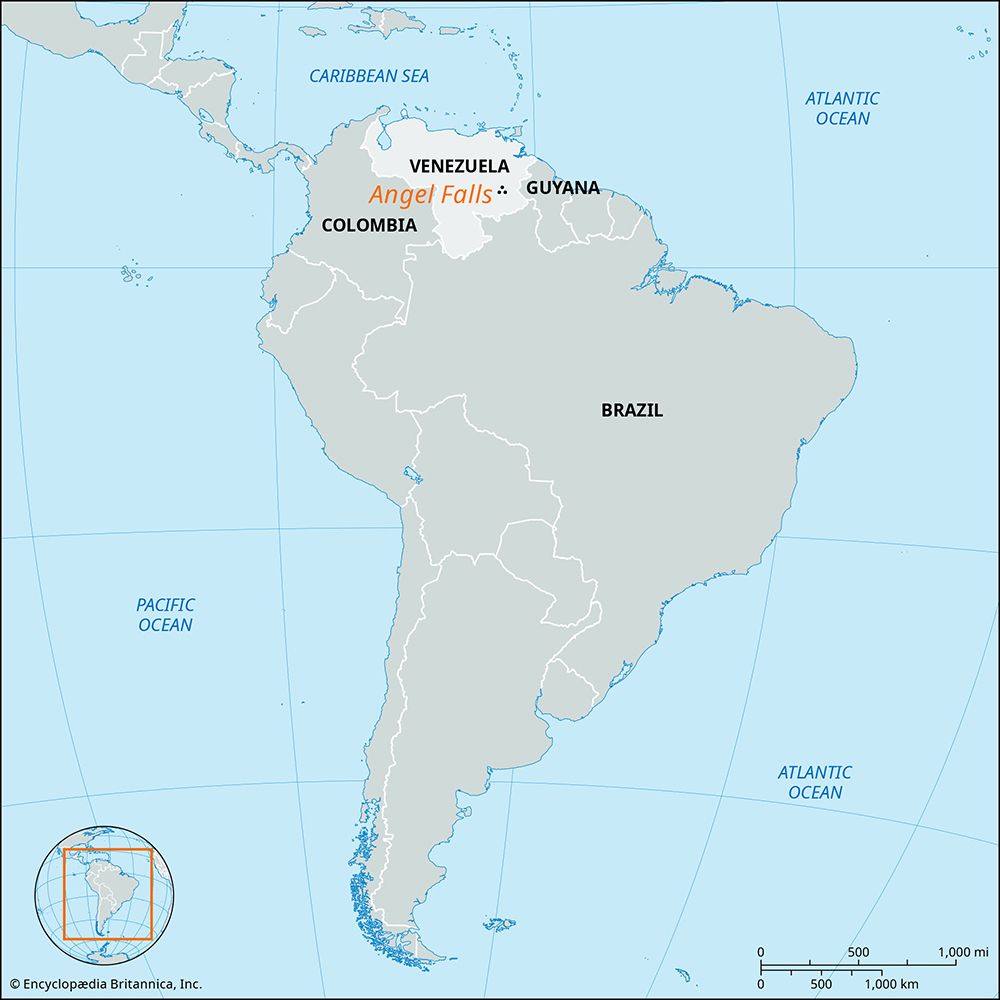
Angel Falls serves as a significant natural attraction within Venezuela’s tourism industry, which has become an increasingly important component of the nation’s economy. As the world’s highest waterfall, dropping 3,212 feet (979 metres) from the Auyán-Tepuí plateau, it is a premier example of the country’s celebrated natural wonders.123
The falls are located within Canaima National Park, a UNESCO World Heritage site that draws visitors to the Guiana Highlands. Because the surrounding jungle is dense, the falls are most commonly viewed by tourists via aerial excursions. Along with the region’s unique tepuis (flat-topped mountains), the site highlights the country’s focus on promoting its diverse landscapes to international and domestic travelers.241
Who was Jimmy Angel, and how is he connected to the discovery of Angel Falls?
James Angel was an American adventurer who became linked to the world’s highest waterfall after he crash-landed his plane on a mesa near the site in 1937. While the falls were first sighted by outsiders in the 1930s, they were subsequently named in his honor.1
It is important to note that while the name “Angel Falls” is widely recognized, the site has deep Indigenous roots. In late 2009, Venezuelan President Hugo Chávez declared that the falls should be referred to by the Indigenous name Kerepakupai Merú.1
How tall is Angel Falls and how does it compare to other famous waterfalls?
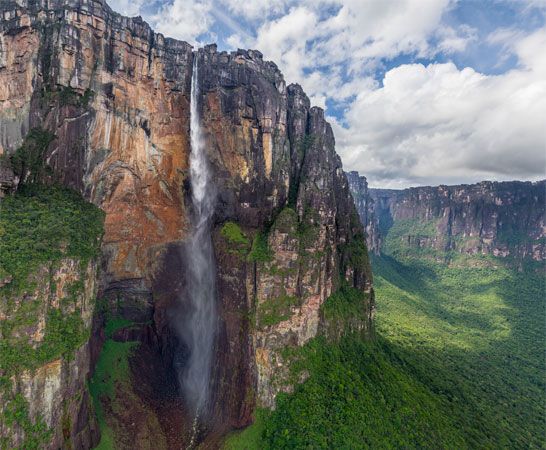
Angel Falls is the highest waterfall in the world, with a total height of 3,212 feet (979 metres) and a greatest uninterrupted leap of 2,650 feet (807 metres).156
When comparing waterfalls, it is important to distinguish between height and volume of discharge. While Angel Falls holds the record for height, it is not the largest by volume.76
Comparison with Other Famous Waterfalls
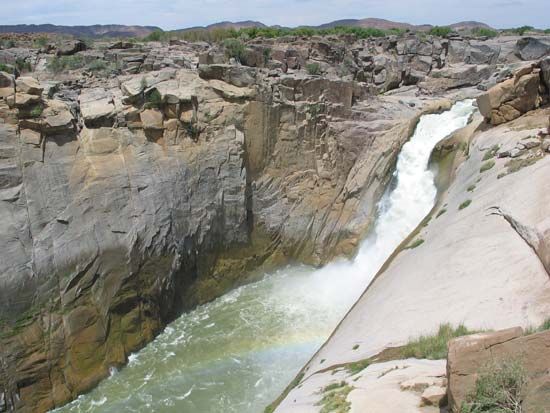
- Height: Angel Falls is followed in height by Tugela Falls in South Africa (948 metres) and Mtarazi Falls in Zimbabwe (762 metres).56
- Volume: Waterfalls with significantly higher discharge volumes are often much shorter. For example, Khone Falls on the Mekong River has an average discharge of approximately 11,600 cubic metres per second, despite a height of only 14–70 metres. Similarly, Niagara Falls and Victoria Falls are frequently cited as “the world’s greatest” due to their massive water flow, even though they are much shorter than Angel Falls.756
In general, the world’s tallest waterfalls are rarely those with the greatest water discharge, as many high-altitude falls exhibit only modest flow.6
How accessible is Angel Falls to tourists, and what are the best ways to experience it?
Angel Falls is located in a remote region of Canaima National Park in southeastern Venezuela. Due to the dense, rugged jungle terrain surrounding the site, the falls are notoriously difficult to reach by land. Consequently, the most common and recommended way to experience the landmark is by air, which provides the clearest view of the cataract as it leaps from the flat-topped Auyán-Tepuí plateau.1
While aerial tours are the primary method for viewing the falls, travel to the region typically involves navigating the Churún River and the broader Caroní river system, often starting from nearby hubs like Ciudad Bolívar. Because of the challenging environment, visitors should plan their trips through established local operators who specialize in navigating the Guiana Highlands.1
Sources
- Angel Falls — Encyclopædia Britannica
- Venezuela - Services of Venezuela — Encyclopædia Britannica
- Venezuela - Conservation — Encyclopædia Britannica
- Venezuela - Relief — Encyclopædia Britannica
- waterfall — Encyclopædia Britannica
- river - High plateaus — Encyclopædia Britannica
- river - Waterfalls — Encyclopædia Britannica
Published on · 3 min read