Aniakchak National Monument and Preserve
Aniakchak National Monument and Preserve is a remote wilderness area, and recreational opportunities are primarily centered on its unique volcanic landscape…
What recreational activities are available for visitors to Aniakchak National Monument and Preserve?
Aniakchak National Monument and Preserve is a remote wilderness area, and recreational opportunities are primarily centered on its unique volcanic landscape and river system.
Visitors to the monument can engage in the following activities:
- River Rafting: The Aniakchak River is designated as a national wild river, and it is a popular destination for those interested in rafting trips.1
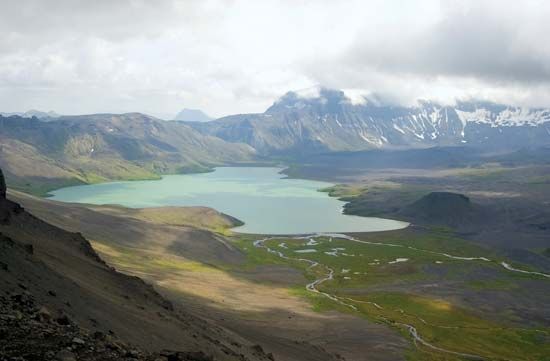
- Exploring the Caldera: The area features a massive dry caldera that includes cinder cones, lava fields, and Surprise Lake, offering a unique environment for wilderness exploration.1
Because the monument is located in a remote part of the Alaska Peninsula, access is typically limited to travel by float plane.1
What unique features can be found within the Aniakchak caldera?
The Aniakchak National Monument and Preserve contains a massive, dry caldera that serves as a primary geological feature of the Aleutian Range. Within this crater, which spans an average diameter of approximately 6 miles (10 km), several distinct features can be found:1
- Lava Fields and Cinder Cones: The interior of the caldera is characterized by extensive lava deposits and various cinder cones.1
- Surprise Lake: Located at the bottom of the caldera, Surprise Lake is a prominent water feature.1
- The Crater Rift: A significant 1,500-foot (450-metre) breach in the crater wall allows water from Surprise Lake to drain, which subsequently forms the headwaters of the Aniakchak River.1
The volcano associated with this caldera last erupted in 1931.1
What types of flora and fauna are present in Aniakchak National Monument and Preserve?
The provided search results do not contain specific information regarding the flora and fauna present within the boundaries of Aniakchak National Monument and Preserve. While the monument is located on the Alaska Peninsula, where general regional wildlife such as moose, brown bears, caribou, and various tundra vegetation are found, the available data does not explicitly detail the species inhabiting this specific protected area.13
We could dive deeper into the general ecology of the Alaska Peninsula or explore the wildlife found in other national parks across Alaska.
How large is the Aniakchak National Monument and Preserve, and where is it located in Alaska?
Aniakchak National Monument and Preserve is located in southwestern Alaska on the southern shore of the Alaska Peninsula, approximately 450 miles (720 km) south of Anchorage.1
The protected area is divided into two distinct designations with the following sizes:1
- National Monument: Covers 214 square miles (554 square km).1
- National Preserve: Covers an additional 725 square miles (1,878 square km).1
Together, these areas encompass a vast wilderness centered around a massive, dry caldera within the Aleutian Range.1
Sources
- Aniakchak National Monument and Preserve — Encyclopædia Britannica
- Aniakchak Crater — Merriam-Webster
- Alaskan mountains - Plant and animal life — Encyclopædia Britannica
- Alaska - Plant and animal life — Encyclopædia Britannica
Published on · 2 min read