Frog and Toad
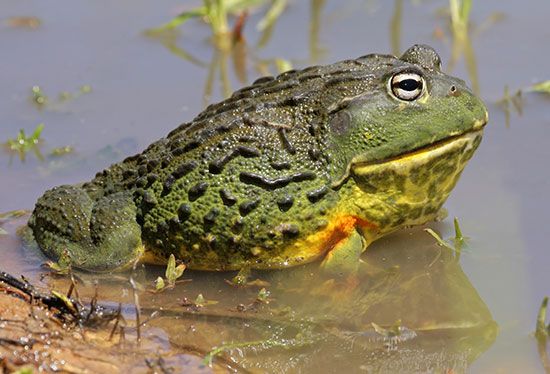
Frogs and toads belong to the order Anura, a group of amphibians characterized by several distinct physical and biological traits that set them apart from…
What are the main characteristics that distinguish frogs and toads from other animals?
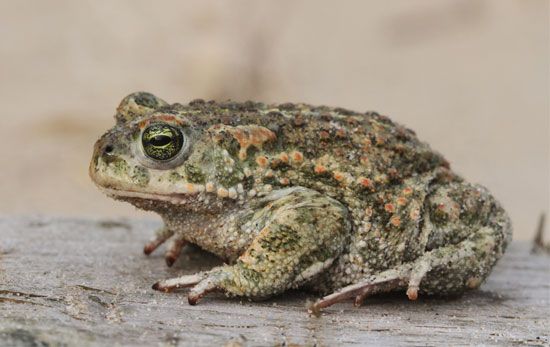
Frogs and toads belong to the order Anura, a group of amphibians characterized by several distinct physical and biological traits that set them apart from other animals.123
Key Physical Characteristics
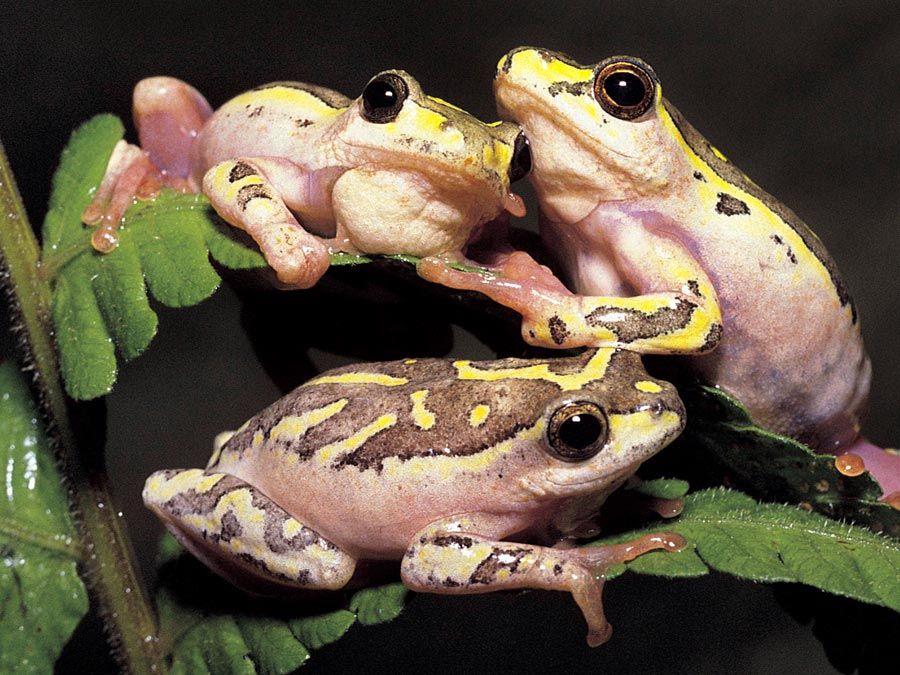
- Body Plan: Anurans are easily recognized by their short, compact bodies, the absence of a visible neck, and the complete lack of a tail in the adult stage.14
- Skeletal Structure: Their compact form is achieved through a reduced number of trunk vertebrae and the fusion of tail vertebrae into a single rodlike bone called the coccyx or urostyle.1
- Limbs: They possess elongated, powerful hind limbs adapted for leaping and swimming.13
- Sensory Features: Many species have prominent tympanic membranes on the sides of their heads and well-developed larynxes, often paired with resonating sacs for sound production.1
Biological Traits
As amphibians, they typically undergo metamorphosis, transitioning from an aquatic, free-swimming tadpole stage to an adult form. They also rely on moist skin for cutaneous respiration and possess unique features like pedicellate teeth and green rods in their retinas2.253
How do frogs and toads produce and use vocalizations for communication?
Frogs and toads (order Anura) utilize specialized vocalizations primarily for communication during the breeding season, serving as a critical mechanism for mate attraction and species recognition.78
Production of Sound
Unlike many other vertebrates, anurans produce sound without expelling air. Instead, they cycle air back and forth between the lungs and the buccal cavity. Sound is generated when air is forced over the vocal cords within the larynx, causing them to vibrate.97
This sound is then amplified by a vocal sac—a throat pouch that acts as a resonating chamber to emphasize specific frequencies. Depending on the species, these sacs may be a single median throat sac or paired sacs located at the throat or the sides of the head.97
Communication and Function
- Mating Calls: Males use distinct calls to attract females to breeding sites. Females are capable of discriminating between the calls of their own species and those of others, which serves as a primary barrier to hybridization.7
- Territoriality: Beyond mating, vocalizations are used to defend territories. Males of certain species, such as bullfrogs, may issue territorial calls to warn off intruders, sometimes escalating to physical combat if the warning is ignored.7
What role do frogs and toads play in various cultures and mythologies around the world?
While frogs and toads are frequently studied for their biological and ecological significance, their presence in global mythology is often tied to their environmental roles and physical characteristics.
In the oral traditions of northeastern Indigenous American cultures, such as those of the Algonquian-speaking peoples, frogs appear in significant narratives. A prominent example is the story of the culture hero GlusKap (or GlusKabe), who is celebrated for his altruistic deeds. One of his most well-known exploits involves defeating a “Monster Frog” that had been impounding the world’s water supply, thereby restoring the natural flow of water to the land.10
Beyond mythology, these animals have held practical roles in various cultures. For instance, traditional Chinese medicine has long utilized dried toad secretions for the treatment of various ailments. Similarly, certain South American Indigenous groups have historically used the potent toxins secreted by specific poison frogs to coat arrows and darts for hunting.1112
How do frogs and toads undergo metamorphosis during their life cycle?
The metamorphosis of frogs and toads is a complex, hormone-driven process that transforms an aquatic tadpole into a terrestrial adult. This transition is regulated by the thyroid gland, which releases thyroxine into the bloodstream to coordinate structural and physiological changes across the body.13
Key Developmental Changes
During this transformation, the animal undergoes radical modifications to adapt to life on land:
- Respiration and Circulation: Gills and their associated blood circulation disappear as lungs develop and pulmonary ventilation begins.1415
- Skeletal and Muscular Growth: Limbs develop, with hind limbs appearing first, followed by the emergence of forelimbs through the opercular wall. The vertebral column and limb bones ossify.1415
- Resorption of Larval Features: The tail is gradually resorbed by the body, and larval mouthparts are replaced by adult jaws and teeth.1415
- Digestive and Sensory Systems: The long, coiled intestine of the herbivorous tadpole shortens to accommodate the adult diet. Additionally, eyes enlarge and develop eyelids, and the skin thickens with the formation of dermal glands.1415
The duration of this process varies significantly by species, ranging from as little as two weeks in some arid-environment toads to up to three years in species like the bullfrog.415
Sources
- frog and toad - Form and function — Encyclopædia Britannica
- amphibian — Encyclopædia Britannica
- What’s the Difference Between a Frog and a Toad? — Encyclopædia Britannica
- frog and toad - From tadpole to adult — Encyclopædia Britannica
- frog — Encyclopædia Britannica
- amphibian - Size range and diversity of structure — Encyclopædia Britannica
- vocal sac — Encyclopædia Britannica
- frog and toad - Breeding behaviour — Encyclopædia Britannica
- sound reception - Auditory sensitivity of amphibians — Encyclopædia Britannica
- frog and toad — Encyclopædia Britannica
- Mythologies of the Indigenous peoples of the Americas - Northeast — Encyclopædia Britannica
- toad — Encyclopædia Britannica
- tadpole — Encyclopædia Britannica
- amphibian - Metamorphosis — Encyclopædia Britannica
- Animal development - Metamorphosis — Encyclopædia Britannica
Published on · 4 min read