Asian Carp
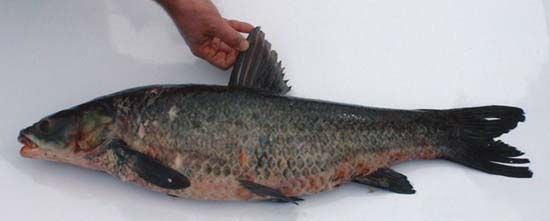
Asian carp is a collective term for four species of freshwater fish in the carp family (Cyprinidae): the grass carp, bighead carp, black carp, and silver…
What are Asian carp and where do they originally come from?
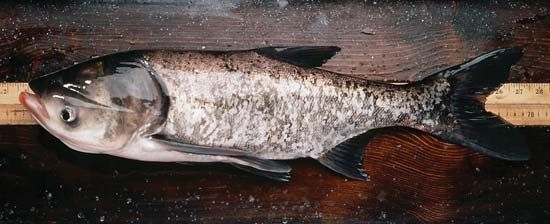
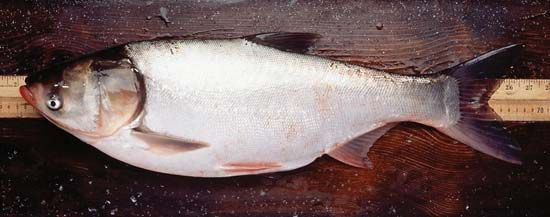
Asian carp is a collective term for four species of freshwater fish in the carp family (Cyprinidae): the grass carp, bighead carp, black carp, and silver carp. These fish are native to eastern Asia, specifically regions within China and Russia.12
They were imported to the United States during the 1960s and 1970s to serve as a natural method for controlling aquatic plants, snails, and other pests in fish farm retention ponds. However, due to flooding and accidental releases, they escaped into the Mississippi River system.12
Asian carp are considered highly invasive and detrimental to native ecosystems because they are prolific breeders with voracious appetites, often consuming several times their body weight in plankton or vegetation daily. Their rapid spread has prompted significant efforts to prevent them from entering the Great Lakes, including the use of electric barriers and chemical treatments.12
What role do Asian carp play in their native habitats in Asia?
In their native habitats in eastern Asia, particularly China and Russia, Asian carp species function as part of established aquatic ecosystems. While they are notorious for their invasive behavior in North America, where they disrupt food webs by consuming vast quantities of plankton, vegetation, and other organisms, their role in their home range is balanced by natural ecological checks and evolutionary history.21
In these native environments, these fish are integrated into the local food chain, where their populations are typically regulated by natural predators, competition, and environmental conditions that do not exist in the same way in the foreign waterways they have colonized. Because they are native to these regions, they have co-evolved with other local species, meaning they do not cause the same level of ecological collapse that occurs when they are introduced to non-native environments where native species have no defense against their rapid reproduction and voracious feeding habits.231
What methods are being used to control or prevent the spread of Asian carp?
To prevent the spread of invasive Asian carp into the Great Lakes, several strategies have been implemented:
- Electric Barriers: Beginning in 2002, the U.S. Army Corps of Engineers constructed a series of electric fish barriers in the Chicago Sanitary and Ship Canal to deter the fish from moving between the Mississippi River system and Lake Michigan.2
- Chemical Treatment: In 2009, the Illinois Department of Natural Resources utilized rotenone, a piscicide, to conduct a massive fish kill in the canal. This was intended to assess the carp’s range and halt their encroachment.2
- Physical Separation: In 2012, the Great Lakes Commission recommended the permanent physical separation of the Mississippi River and Great Lakes watersheds to provide a definitive barrier against migration.2
- Monitoring and Legal Action: Authorities conduct ongoing DNA testing to detect the presence of carp. Additionally, states have pursued legal avenues, such as lawsuits, to compel the closure of locks to slow the spread of the species.2
How have Asian carp affected the Great Lakes ecosystem in North America?
Asian carp—a group including grass carp, bighead carp, black carp, and silver carp—pose a significant threat to the Great Lakes ecosystem. While these species were originally introduced to North America in the 1960s and 1970s for aquatic pest control, they have since colonized the Mississippi River system, disrupting native food webs by consuming vast amounts of plankton and aquatic vegetation2.2
The primary concern for the Great Lakes is the potential for these fish to enter through the Chicago Sanitary and Ship Canal. Scientists fear that if established, Asian carp would fundamentally alter the ecological dynamics of the lakes. Evidence of this threat is already present; in 2013, researchers confirmed that grass carp were naturally reproducing in the Sandusky River, a tributary of Lake Erie. This reproduction, occurring without human stocking, suggests that other rivers feeding into the Great Lakes could also serve as spawning grounds, potentially leading to a severe reduction in essential aquatic vegetation.32
Sources
- Asian carp — Merriam-Webster
- Asian carp — Encyclopædia Britannica
- carp — Encyclopædia Britannica
Published on · 3 min read