Aoba
The island of Aoba, located in Vanuatu, is also known by its indigenous name, Ambae.
What is the indigenous name for Aoba island, and what does it mean?
The island of Aoba, located in Vanuatu, is also known by its indigenous name, Ambae.1
While the provided information confirms the name Ambae, it does not specify the linguistic meaning of the term.1
What is the geological significance of Aoba island?
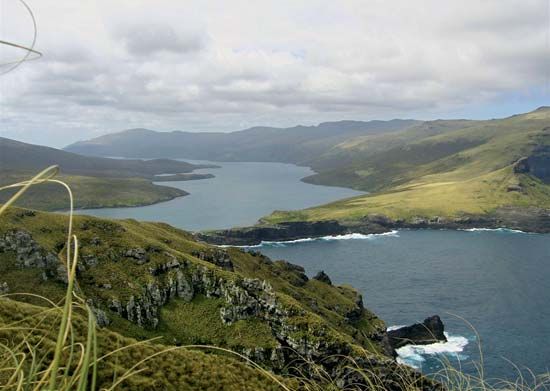
Aoba (also known as Ambae) is a significant volcanic island in Vanuatu, dominated by the 4,907-foot (1,496-metre) peak known as Manaro. The island’s geological importance is defined by its active caldera, which contains three distinct lakes.12
Following a long period of dormancy that began in the mid-19th century, the volcano became active again in 1991, marked by earthquakes and gas discharges. This renewed activity led to significant safety concerns, including near-evacuations in 1995 and a major eruption in 2005 that forced the displacement of local residents due to the release of ash, steam, and gases. Because of this ongoing geological instability, a seismological station was established on the island to monitor volcanic activity and provide critical data for the safety of the population.1
How has Aoba’s volcanic activity affected the island’s history and development?
Aoba’s history and development have been profoundly shaped by its volcanic nature. The island’s dramatic landscape, dominated by the 4,907-foot Manaro peak, served as the inspiration for the fictional island of Bali Ha’i in James Michener’s Tales of the South Pacific.1
Geological instability has frequently disrupted life on the island. After remaining dormant since the mid-19th century, the volcano’s renewed activity in 1991 necessitated the installation of a seismological station to monitor potential threats. Subsequent eruptions, particularly in 2005, forced the evacuation of local villages due to the release of ash, steam, and gases, directly impacting the stability of human settlement.1
Despite these challenges, the island has maintained a role in regional development. In 1861, the Anglican Diocese of Melanesia established its headquarters at Lolowaï, which encouraged further missionary presence. Today, the island’s economy relies on the export of copra, and its infrastructure includes two hospitals and several airstrips, which support the local population amidst the ongoing geological risks.1
Where is Aoba island located within Vanuatu?
Aoba (also known as Ambae) is a volcanic island located in the southwestern Pacific Ocean as part of the nation of Vanuatu. Geographically, it is situated 30 miles (50 km) east of Espiritu Santo and is positioned within the island chain that forms an irregular Y shape across the region.13
Sources
- Aoba — Encyclopædia Britannica
- Vanuatu — Encyclopædia Britannica
- list of islands - Vanuatu — Encyclopædia Britannica
Published on · 2 min read