Aransas National Wildlife Refuge
The Aransas National Wildlife Refuge serves as a critical habitat for avian species due to its strategic location along the Gulf Coast. Its diverse…
What role does the Aransas National Wildlife Refuge play in bird migration patterns?
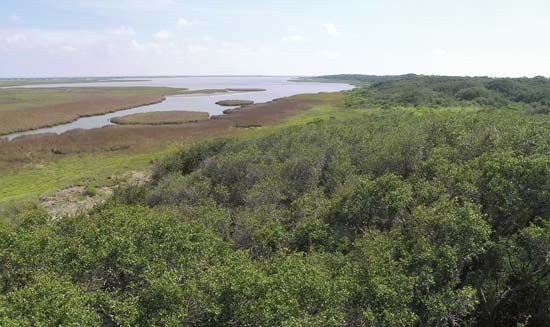
The Aransas National Wildlife Refuge serves as a critical habitat for avian species due to its strategic location along the Gulf Coast. Its diverse environment—comprising salt and freshwater marshes, ponds, and grasslands—supports one of the highest species counts in the national refuge system.1
The refuge plays a vital role in bird migration and seasonal survival in the following ways:
- Wintering Ground: It is the primary wintering site for the rare whooping crane, a species for which the refuge was specifically established in 1937 to prevent extinction.1
- Seasonal Diversity: The area attracts nearly 400 species of waterfowl and other birds that vary by season, including geese, ducks, pelicans, herons, egrets, gulls, roseate spoonbills, ibises, and various shorebirds.1
- Migratory Stopover: The refuge provides essential resources for a wide variety of migrating songbirds, serving as a necessary sanctuary during their seasonal journeys.1
How was the Aransas National Wildlife Refuge established, and what is its historical background?
The Aransas National Wildlife Refuge was established in 1937 through a presidential executive order.1
The primary historical motivation for its creation was the urgent need to protect the whooping crane from extinction. At the time of the refuge’s founding, the species’ population had dwindled to critical levels, and the refuge was designated specifically to provide a secure wintering ground for these birds.1
Since its inception, the refuge has remained dedicated to this conservation mission, which has been instrumental in the recovery of the whooping crane population. Located in southern Texas, the refuge encompasses a diverse coastal landscape of oak uplands, grasslands, and marshes along the Gulf of Mexico. Today, it continues to serve as a vital sanctuary for nearly 400 species of birds and various wildlife, maintaining its status as a cornerstone of conservation efforts in the region.1
What is the Aransas National Wildlife Refuge and where is it located in Texas?
The Aransas National Wildlife Refuge is a coastal conservation area located in southern Texas, approximately 50 miles (80 km) northeast of Corpus Christi.1
Spanning 181 square miles (469 square km) along the Gulf of Mexico, the refuge is situated on a peninsula between San Antonio Bay and St. Charles Bay, with additional land on Matagorda Island and three smaller tracts. Its diverse landscape features oak uplands, grasslands, and extensive wetlands, which support a high density of wildlife, including the rare whooping crane and nearly 400 other bird species. The refuge headquarters are located in Austwell.1
What recreational activities are available for visitors at the Aransas National Wildlife Refuge?
Visitors to the Aransas National Wildlife Refuge can engage in several recreational activities, though access is limited to specific areas to protect the habitat.
- Bird-watching: This is the primary recreational activity at the refuge, which hosts nearly 400 species of birds, including the rare whooping crane.1
- Automobile Touring: Visitors can utilize an automobile touring road to view the landscape and wildlife.1
- Hiking: There are designated hiking trails available for those wishing to explore the refuge on foot.1
- Observation: An observation tower is available, providing a vantage point for wildlife viewing.1
- Education: A wildlife education centre is open to visitors to learn more about the refuge’s conservation efforts and local ecology.1
While these facilities are available, it is important to note that much of the refuge remains closed to the public to ensure the safety and preservation of the wildlife populations.1
Sources
- Aransas National Wildlife Refuge — Encyclopædia Britannica
Published on · 3 min read