Arches National Park
Arches National Park is distinct among Utah’s national parks for its high concentration of natural sandstone arches, with more than 2,000 cataloged within…
How does Arches National Park compare to other national parks in Utah?
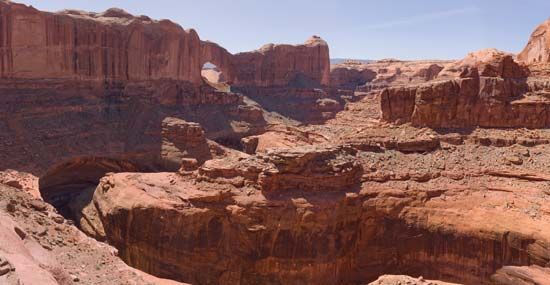
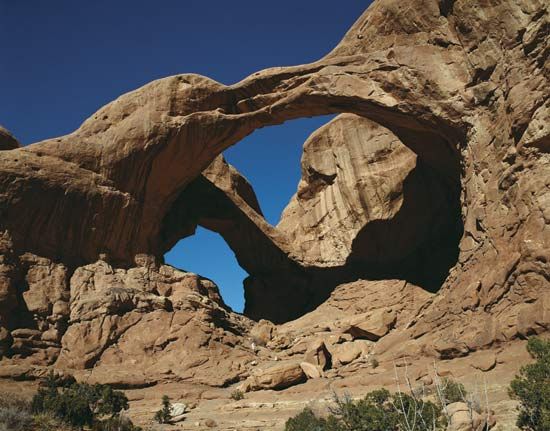
Arches National Park is distinct among Utah’s national parks for its high concentration of natural sandstone arches, with more than 2,000 cataloged within its 120 square miles. While other parks in the region also feature dramatic geology, Arches is specifically defined by the erosion of salt-bed-derived sandstone into windows, pinnacles, and arches.1
In comparison:
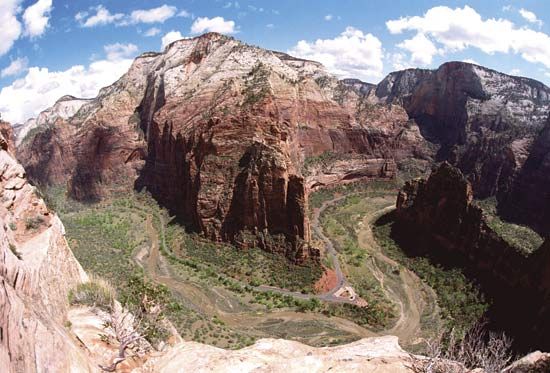
- Zion National Park: Known for its deep, narrow canyons carved by the Virgin River and towering monoliths like the Great White Throne, Zion offers a more vertical, canyon-focused landscape compared to the arch-heavy terrain of Arches.2
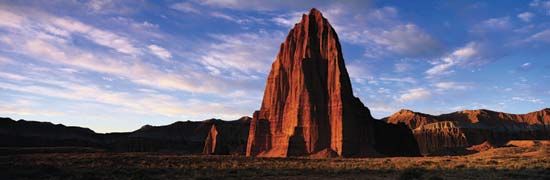
- Capitol Reef National Park: Centered on the 100-mile-long Waterpocket Fold, this park features a monocline of cliffs and domes. While it contains arches, its defining characteristic is the dramatic “reef” of folded Earth crust and the historical remnants of the Fruita community.3
- Grand Staircase–Escalante National Monument: Significantly larger and more rugged than Arches, this area is characterized by its vast, remote “staircase” of colorful cliffs and complex, narrow canyon systems.4
What types of plants and animals can be found in the park’s ecosystem?
Arches National Park features a desert ecosystem adapted to an arid climate with significant temperature fluctuations. The park’s vegetation and wildlife are diverse, reflecting the unique conditions of the Colorado Plateau.
Flora
The rocky soils of the park support a variety of plant life:
- Scrub and Grasses: These are common throughout the landscape.
- Cacti: Several species are present, most notably the prickly pear.
- Trees: Forests of scattered juniper and piñon pine cover approximately half of the park. Along streambeds, you can find cottonwoods and box elders, as well as nonnative, invasive species such as Russian olives and tamarisks.
- Wildflowers: A wide variety of wildflowers bloom throughout the park, particularly during the spring season.1
Fauna
The park provides a habitat for various animal species:
- Mammals: Common inhabitants include jackrabbits, foxes, and mule deer.
- Birds: Dozens of species reside in the park, including golden eagles and piñon jays.
- Other Wildlife: The ecosystem also supports a variety of reptiles and amphibians.1
How has Arches National Park been featured in popular culture and media?
The provided search results do not contain information regarding how Arches National Park has been featured in popular culture and media.
Sorry, the Britannica knowledge base does not contain this information.
What are some of the most famous arches or landmarks within Arches National Park?
Arches National Park, located in eastern Utah, is home to more than 2,000 cataloged arches formed by the erosion of red sandstone. Some of the most notable landmarks and formations include:
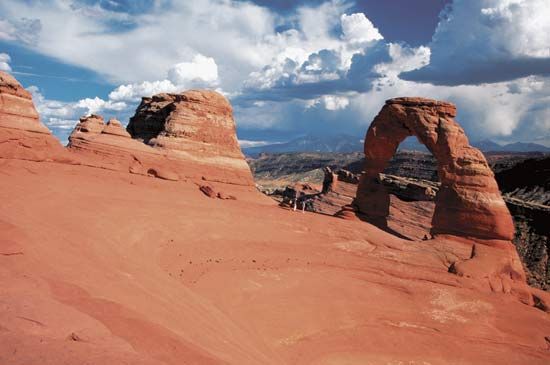
- Delicate Arch: Perhaps the most iconic formation in the park.
- Landscape Arch: Measuring approximately 290 feet (88 meters) from base to base, it is one of the longest natural freestanding rock spans in the world.
- Balanced Rock: A massive boulder perched precariously atop a pedestal.
- Courthouse Towers: A collection of towering spires that resemble city skyscrapers.
- The Windows Section: A prominent area featuring several large, window-like arches.
- Fiery Furnace: A labyrinthine area of sandstone fins named for the way it glows during sunset.
- Devils Garden: A region containing a high concentration of arches and fins.
While these formations are enduring, the landscape is dynamic; for instance, Wall Arch, once among the park’s most-photographed features, collapsed in 2008.1
Sources
- Arches National Park — Encyclopædia Britannica
- Grand Staircase–Escalante National Monument — Encyclopædia Britannica
- Zion National Park — Encyclopædia Britannica
- Capitol Reef National Park — Encyclopædia Britannica
- Tundra - Use of sunlight and carbon dioxide — Encyclopædia Britannica
- Arches National Park — Merriam-Webster
- landscape architecture — Encyclopædia Britannica
Published on · 3 min read