Are Beagles Hypoallergenic?
Beagles are not hypoallergenic. Like all dog breeds, Beagles produce allergenic proteins, such as Can f 1, which are found in their saliva, urine, and dander…

Are Beagles Hypoallergenic?
Beagles are not hypoallergenic. Like all dog breeds, Beagles produce allergenic proteins, such as Can f 1, which are found in their saliva, urine, and dander (skin flakes).1
While some breeds are marketed as “allergy-friendly” due to lower shedding, scientific evidence does not consistently support the existence of truly hypoallergenic dogs. Beagles have a thick double coat and shed steadily throughout the year, which can cause allergen-carrying dander to accumulate in the home. Furthermore, their affectionate nature—often involving licking and close contact—increases exposure to these proteins.1
To manage allergies while living with a dog, experts recommend regular brushing, frequent vacuuming, and the use of HEPA air purifiers. It is also advisable to keep pets out of bedrooms and spend time with a specific dog before adoption to gauge your personal reaction.1
What exactly is pet dander?
Pet dander refers to the microscopic flakes of skin shed by animals, including dogs, cats, and other pets. These skin fragments typically range in size from 1 to 40 micrometers, making them small enough to remain suspended in the air or settle on surfaces like furniture, clothing, and carpets.21
Dander is a significant component of indoor dust and serves as a primary carrier for allergenic proteins, such as Can f 1 in dogs. When pets groom themselves, shed their fur, or interact with people, these dander particles—along with proteins from saliva and urine—are dispersed into the environment. For individuals with sensitivities, inhaling or coming into contact with these particles can trigger the immune system to release histamine, leading to common allergic symptoms like sneezing, itching, and watery eyes.21
How does the immune system react to allergens?
The immune system reacts to allergens—typically harmless substances—by mistakenly identifying them as threats, similar to how it responds to infectious agents. This inappropriate response is known as an allergy or hypersensitivity.345
The Sensitization Process
Upon first exposure to an allergen, the body becomes sensitized by developing specific antibodies or T cells. No symptoms typically occur during this initial event. However, upon reexposure, the immune system launches a reaction that can be categorized into four types based on the mechanisms involved:345
- Type I (Immediate): The most common type, involving IgE antibodies bound to mast cells and basophils. When an allergen binds to these antibodies, the cells release histamine and other chemicals, causing rapid symptoms like sneezing, swelling, and asthma.635
- Type II (Cytotoxic): Antibodies bind to antigens on target cells, activating the complement system to destroy those cells.35
- Type III (Immune-complex): Antigen-antibody complexes deposit in blood vessel walls, triggering inflammation and tissue damage.35
- Type IV (Delayed): Mediated by T cells rather than antibodies, these reactions take 12 to 24 hours or longer to manifest, often resulting in conditions like contact dermatitis.35
What are some common dog breeds that shed the least?
It is important to clarify that no dog breed is scientifically established as entirely free of allergens. While some breeds are often marketed as “hypoallergenic” because they shed less, scientific studies have not consistently supported the idea that these dogs produce fewer allergenic proteins than others.1
Breeds frequently cited as being more allergy-friendly due to reduced shedding include:
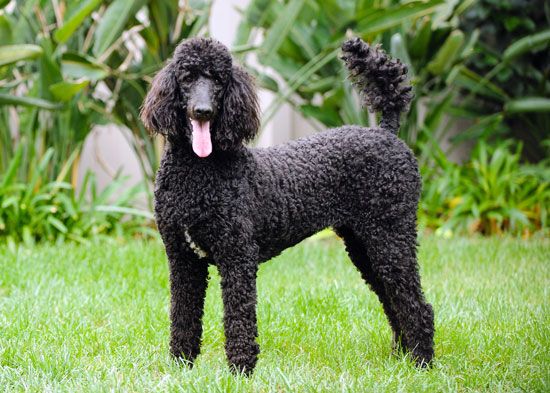
- Poodle
- Bichon Frise
- Portuguese Water Dog
- Various terrier varieties
Regardless of shedding habits, all dogs produce proteins like Can f 1, which are found in their dander, saliva, and urine. Because these proteins are the primary triggers for allergic reactions, even low-shedding dogs can cause symptoms in sensitive individuals. Experts suggest that if you have allergies, it is best to spend time around a specific dog before adoption to gauge your individual reaction.1
We could dive deeper into how HEPA filters and other household management practices can help reduce allergen exposure.
Sources
- Are Beagles Hypoallergenic? — Encyclopædia Britannica
- Dust — Encyclopædia Britannica
- immune system disorder - Type I allergic reactions — Encyclopædia Britannica
- allergen — Encyclopædia Britannica
- mast cell — Encyclopædia Britannica
- Histamine — Encyclopædia Britannica
- immune system - IgE — Encyclopædia Britannica
- human disease - Allergies — Encyclopædia Britannica
- immune system disorder - Allergies — Encyclopædia Britannica
- allergy — Encyclopædia Britannica
- dog - Coats — Encyclopædia Britannica
Published on · 3 min read