Bichon Frise
The Bichon Frise is widely recognized for its vivacious, cheerful, and amiable temperament. These dogs are typically energetic, playful, and affectionate…
What are the typical personality traits and temperament of a Bichon Frise?
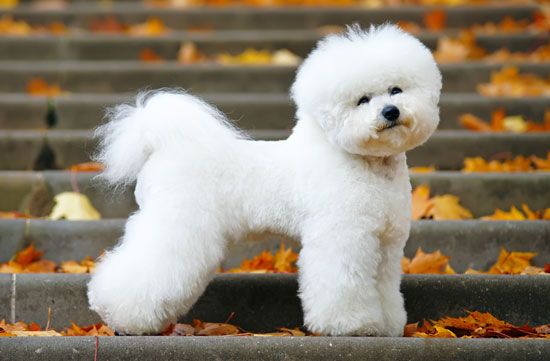
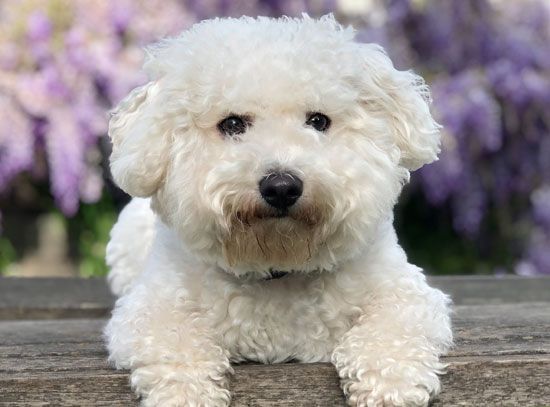
The Bichon Frise is widely recognized for its vivacious, cheerful, and amiable temperament. These dogs are typically energetic, playful, and affectionate, often described as being friendly toward everyone they meet. Because of their social nature, they make charming companions for people of all ages and generally get along well with other household pets.1
Key behavioral traits include:
- Eagerness to please: They are generally easy to train and enjoy interacting with their owners.1
- Affectionate nature: They are as ready to snuggle as they are to play.1
- Excitability: While they are enthusiastic, they can sometimes be overly excitable or prone to excessive barking.1
- Watchdog tendencies: Although they may act as enthusiastic watchdogs, their small size means they are not effective for protection.1
It is important to note that these characteristics are general breed tendencies; individual dogs may vary in their specific behavior and temperament.1
How do Bichon Frises compare to other small dog breeds in terms of care and personality?
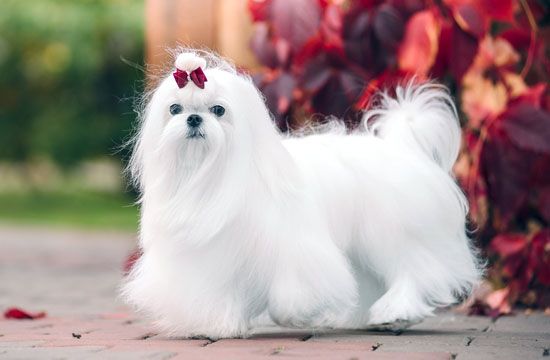
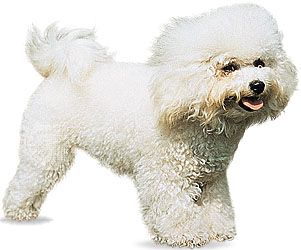
The Bichon Frise is a small, sturdy breed known for its cheerful and amiable personality, often described as being friendly toward everyone. While they share Mediterranean origins with related breeds like the Maltese, Bolognese, and Havanese, their specific care requirements distinguish them from many other small dogs.12
Care and Upkeep
- Coat Maintenance: Unlike some low-maintenance small breeds, the Bichon Frise requires significant grooming. Their coat is prone to matting and must be brushed down to the skin at least every other day, with daily brushing recommended. Professional trimming is necessary every one to two months to maintain their signature shape.1
- Training: While they are eager to please and generally easy to train, housebreaking is noted as the breed’s greatest behavioral challenge.1
- Exercise: They are energetic and enjoy daily walks or vigorous indoor games. However, because they are small, they require protection from larger animals.1
Personality
The Bichon Frise is highly social and affectionate, making them excellent companions. While they are enthusiastic watchdogs, they are not effective for protection due to their size and may be prone to excessive barking or excitability.1
What does the name ‘Bichon Frise’ mean, and how is it pronounced?
The name “Bichon Frise” is a modification of the French phrase bichon à poil frisé, which translates to “curly-haired lapdog.”32
Regarding its pronunciation, the term is typically rendered as bee-shon free-zay (bē-shōn-frē-zā).3
What is the historical origin of the Bichon Frise breed?
The Bichon Frise originated in the Mediterranean region, sharing common ancestry with other small breeds such as the Maltese, Bolognese, and Havanese. These dogs are believed to be descended from water spaniels.12
Historical accounts suggest that Spanish sailors introduced the breed to Tenerife, the largest of the Canary Islands. In the 14th century, Italian sailors discovered the dogs on the island and brought them back to Europe, where they were long known as the “Bichon” or “Tenerife”.12
The breed became a favorite among royalty and the middle class, particularly in France during the 16th century. By the late 19th century, their popularity waned among the aristocracy, and they were often seen performing in circuses or kept by commoners. Following World War I, French breeders worked to standardize the breed, leading to their recognition as show dogs in the 1930s. They were later introduced to the United States in 1956 and received full recognition from the American Kennel Club in 1972.1
Sources
- Bichon Frise — Encyclopædia Britannica
- 17 Words for Dog Breeds | Bichon Frise — Merriam-Webster
- bichon frise — Merriam-Webster
Published on · 3 min read