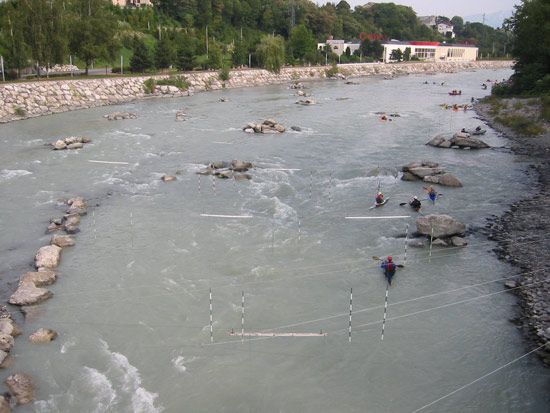
Arve River
The Arve River is a 62-mile (100-km) river located in eastern France and Switzerland. It originates in the Savoy Alps, collecting drainage from the northwest…
What is Arve River?
The Arve River is a 62-mile (100-km) river located in eastern France and Switzerland. It originates in the Savoy Alps, collecting drainage from the northwest face of Mont Blanc.1
As it flows north, the river serves as a source of hydroelectric power and traverses the highly cultivated Arve Valley below Bonneville. Known for its turbid waters, the river eventually flows into the Rhône River within the city of Geneva. Throughout its course, the Arve passes through some of the most varied and scenic Alpine landscapes in the region.12
How does the Arve River affect the water quality of the Rhone?
The Arve River significantly impacts the water quality and appearance of the Rhône River at their confluence just below Geneva.
Before meeting the Arve, the Rhône flows through Lake Geneva, which acts as a settling basin that decants sediment from the water, leaving it relatively clear. However, the Arve, which rushes down from the glaciers of Mont Blanc, carries a heavy load of glacial sediment. Upon joining the Rhône, the Arve imparts a distinct “milky” color to the river, effectively reintroducing the high turbidity characteristic of Alpine rivers that the Rhône had previously lost while passing through the lake.1
What role does Mont Blanc play in feeding the Arve River?
The Arve River relies on the Massif du Mont Blanc as a primary source of its water. The river’s upper section specifically collects the drainage from the mountain’s northwest face, initiating its course through the Savoy Alps.1
This process is driven by the hydrology of mountain glaciers, which act as natural reservoirs. These glaciers store precipitation as ice and snow, releasing it as meltwater during the warmer months. As solar radiation increases throughout the summer, the melting of these ice masses provides a consistent flow of water that is essential for the river’s discharge.45
Furthermore, this glacial runoff is a significant factor in the river’s physical characteristics. As the ice erodes the surrounding bedrock, it produces fine-grained material known as rock flour. This sediment is carried downstream by the meltwater, contributing to the high turbidity and distinct appearance of the Arve as it flows toward the Rhône River.5
How is hydroelectric power generated from Alpine rivers?
Hydroelectric power generation in the Alps leverages the region’s unique geography, characterized by high elevations, steep valleys, and the presence of glaciers. The process typically involves the following components and mechanisms:
The Role of Glacial Runoff
Alpine glaciers act as natural reservoirs that store precipitation as ice and snow. During the warmer months, solar radiation promotes melting, which provides a consistent and regulated flow of water into river systems. This seasonal meltwater is instrumental in filling the deep reservoirs necessary for hydroelectric production, ensuring that power generation can be maintained even during periods of lower natural precipitation.675
Generation Mechanism
The generation of electricity from these rivers relies on several key engineering features:
- Dams and Reservoirs: Large dams are constructed across rivers to impound water, creating reservoirs that store potential energy. These structures allow for the regulation of water flow, enabling power production to be adjusted to meet electricity demand.485
- Pressure and Turbines: Water is funneled from the reservoir downward through high-pressure systems. This falling water spins turbines, which in turn drive generators to produce high-voltage electricity.49
- Infrastructure: In the Alps, the steep terrain has facilitated the construction of sophisticated systems, including large-scale tunnels and subterranean powerhouses, which maximize the energy potential of the river’s drop in elevation.5
While hydroelectricity is a clean and renewable energy source, the construction of these large-scale projects can have significant environmental and social impacts, including the displacement of populations and the disruption of local ecosystems.4810
Sources
- Arve River — Encyclopædia Britannica
- Genève — Encyclopædia Britannica
- Rhône River - Physiography — Encyclopædia Britannica
- Alps - Geology — Encyclopædia Britannica
- glacier - Glacier hydrology — Encyclopædia Britannica
- Did you know? — Merriam-Webster
- Jinping-I Dam — Encyclopædia Britannica
- reservoir — Encyclopædia Britannica
- Switzerland - Resources and power — Encyclopædia Britannica
- dam - Rise of environmental and economic concerns — Encyclopædia Britannica
Published on · 3 min read